Growing set of tools measures the impact of urban form on climate. Hazel Borys reviews highlights of the CNU Climate Summit held last weekend near Washington, D.C.


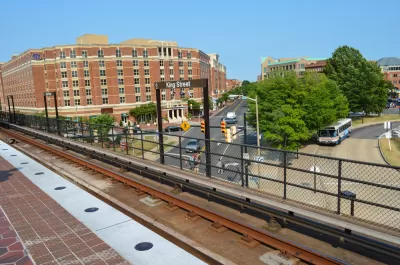
"A group of concerned urban designers, architects, ecologists, and economists gathered last week in Alexandria, Virginia, to discuss resilience at the CNU Climate Summit. Unable to join, I reached a few participants by phone and followed the Twitter hashtag, #CNUClimate, to hear highlights of the presentations and working groups. Several of their ideas resonate with the resilience thread here, and is another step in the process of answering some of the questions we often pose."
"The central idea of the gathering, in the words of Shelly Poticha: 'Urbanists need a lot more friends to make an impact. More cross-sector collaboration is key to climate resilience.' Susan Henderson agrees, 'The Summit was an intense conversation between groups that usually work independently. One outcome is a wiki of resources that spans many organizations and tools, where we can organically learn from one another, post the value of an improved physical environment, and provide the narrative for change.'"
Borys goes on to talk context, storytelling, tools for measuring impacts, equity and adaptation, and lean regulations. She wraps up with an epic #FridayFollow come early of climate changers.
Read the full story: CNU Climate Summit Highlights
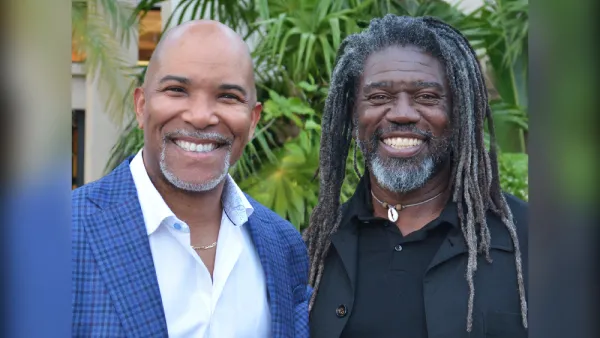
In a Warmer, Wetter and More Disaster-prone World: “Nature is the Greatest Designer”
A conversation with the American Society of Landscape Architects’ CEO Torey Carter-Conneen and board president Kona Gray.
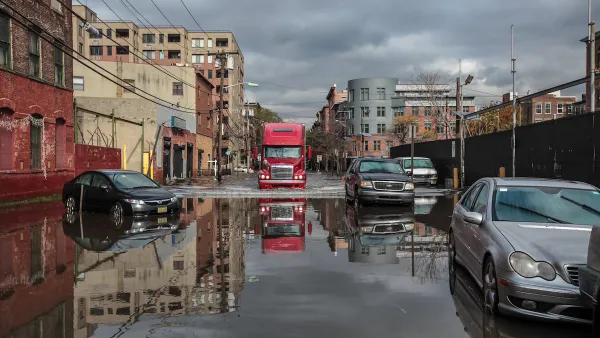
FEMA Resilience Program Cuts Grant Funding
The Building Resilient Infrastructure and Communities program funded projects from flood prevention to power station upgrades.
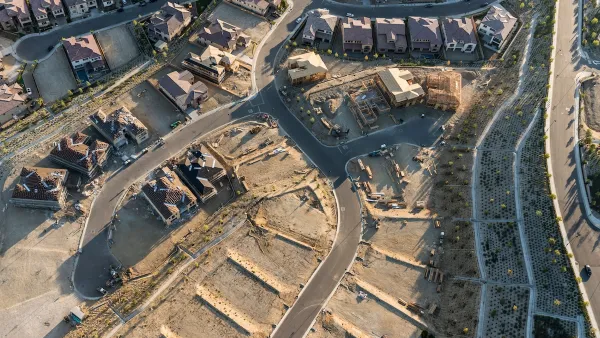
Report Outlines Strategies for Resilient Wildfire Recovery in LA
Project Recovery offers a roadmap for rebuilding more sustainable and climate-resilient communities after wildfires and other disasters.

Planetizen Federal Action Tracker
A weekly monitor of how Trump’s orders and actions are impacting planners and planning in America.

Eastern Nebraska is running out of electricity
Data centers and electrification are straining eastern Nebraska’s grid, throttling economic development.

Study reveals best places in the U.S. for cycling, walking
New research from Streetlight Data examines bicycle and pedestrian miles per capita in the 100 largest U.S. cities by population.

DSA members accuse Mamdani of 'abandoning values' over housing redevelopment
New York City's mayor plans to replace about 2,000 units of public housing with private, mixed-income housing.

All sides of BRT debate unhappy with CDOT’s most recent move
The Colorado Department of Transportation is no longer considering center-running bus lanes for Colorado Boulevard.

Massachusetts bogs generate both power, and cranberries
Putting solar panels above farmland is one way Massachusetts is advancing toward its goal of net-zero carbon emissions by 2050.

FREE Course: Walkable City 1: Why Walkability?
After describing his path towards focusing on walkability as the essence of good planning, Jeff Speck marches through his five principal reasons for making more walkable places.
Reinventing Malls: Planning Alchemy—Turning Gray Fields Into Gold
The course focuses on the opportunities and imperatives that shape reinvention of mall sites.

City of Rosemead
Rutgers University, Edward J. Bloustein School of Planning and Public Policy
One Hundred Miles
University of Michigan School for Environment and Sustainability (SEAS)
Hunter College, City University of New York (CUNY)
The Architects Foundation
City of Cambridge
The Pocatello Development Authority
The Urban Renewal Agency of the City of Pocatello