Since Detroit's new streetcar system started charging, ridership has dropped. Those who are riding aren't necessarily paying anyways.


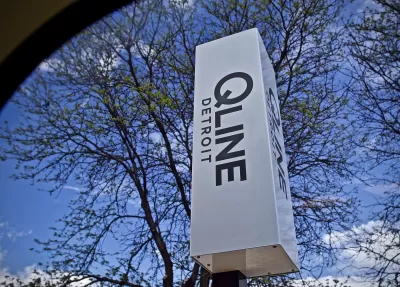
Starting September 5, Detroit's new QLine streetcar system has begun charging fares after a summer where rides were free. The result has been a drop in ridership from 5,000 to 3,000 daily riders. Chad Livengood of Crain's Detroit Business writes that the young system operator's are still bullish on the system's prospects after seeing signs of ridership growth in evening commuters and for special events. However, one of the challenges is still getting riders to pay the fare.
The percentage of riders actually paying was 40 percent, which QLine spokesman Dan Lijana said is higher than 32.5 percent national average of similar downtown city rail systems.
At a 40 percent pay rate, that means an average of 1,200 riders are paying fares on a daily basis through either daily, monthly or annual passes.
The QLine's operators have a goal of an average daily ridership of 5,000 from this month through next September.
In addition to ongoing education programs on the new fare system through "QLine ambassadors," Livengood reports that payment enforcement through transit police may be required in the future.
Read the full story: 40% of QLine riders paying as ridership falls

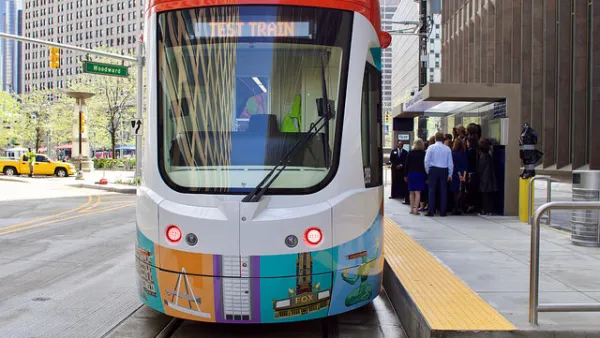
Op-Ed: Detroit's QLINE Is 'At Times an Embarrassment'
Randy Essex details why it is that "rely" isn't a word that comes to mind for many Detroiters when they think about downtown's QLINE streetcar system.
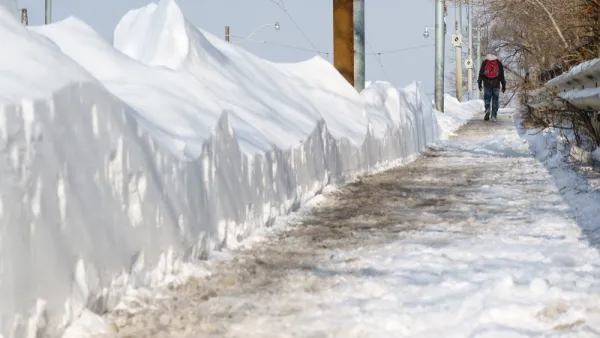
Polar Vortex Shuts Down Detroit's Q-Line Streetcar
Other polar vortex-related transit news included fire on the tracks in Chicago.
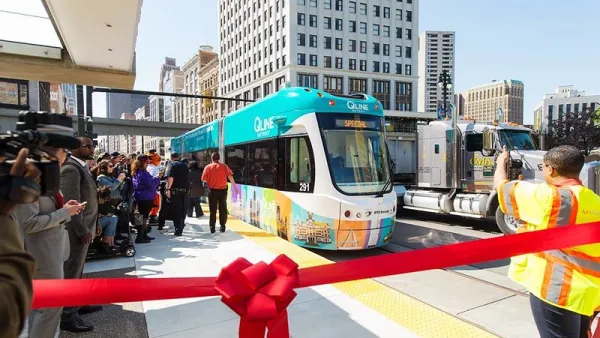
How Detroit's QLine Streetcar Got Off Track
The QLine could ride its own dedicated lane and serve a real need for commuters. Instead, it's a slow circulator for a small part of downtown.

Planetizen Federal Action Tracker
A weekly monitor of how Trump’s orders and actions are impacting planners and planning in America.

California plans to bury El Niño’s downpour
If the state plays its cards right, it may be able to store a billion acre-feet of El Niño’s water in aquifers.

Desperate measures: Advocates weigh draining Lake Powell to fill Colorado River
Draining the reservoir could reduce evaporation losses by a couple hundred thousand acre-feet.

Chicago Avenue bridge construction delays enrages city leaders
The bridge has been closed since 2025. The city originally aimed to re-open it in December, and now expects to finish construction in 2027.

NYC bus network redesign speeds up Queens buses
Rush routes have seen a 4.6% speed increase after the redesign.

California High-Speed Rail Authority picks trainset manufacturer
The California High-Speed Rail Authority aims to start servicing passengers by 2033.

FREE Course: Walkable City 1: Why Walkability?
After describing his path towards focusing on walkability as the essence of good planning, Jeff Speck marches through his five principal reasons for making more walkable places.
Reinventing Malls: Planning Alchemy—Turning Gray Fields Into Gold
The course focuses on the opportunities and imperatives that shape reinvention of mall sites.

City of Rosemead
Rutgers University, Edward J. Bloustein School of Planning and Public Policy
One Hundred Miles
Hunter College, City University of New York (CUNY)
The Architects Foundation
University of Cincinnati Online
City of Cambridge
Montrose County
The Pocatello Development Authority