Hoping a concrete diagnosis of the problem will help Maryland solve its food desert problem, John Hopkins Center for a Livable Future has built a map of the areas most in need of fresh groceries.


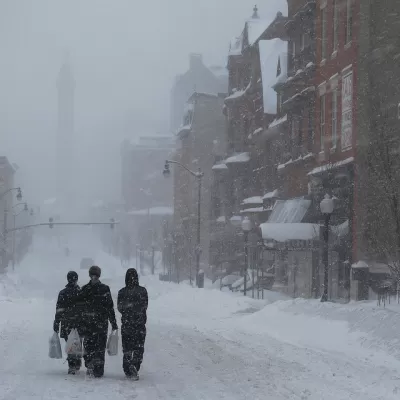
"About 25 percent of Baltimoreans live in city-designated “food deserts," areas at least a quarter of a mile from a grocery store, where median income is low and many residents lack access to a vehicle," Natalie Delgadillo reports for Governing. The problem is not unfamiliar to people and officials in the in the city, but it was a hard thing to quantify, as there weren’t comprehensive statistics around food deserts. "That's starting to change with the help of a mapping tool from the Johns Hopkins Center for a Livable Future (CLF)," Natalie Delgadillo writes for Governing.
The CLF site Maryland Food System Map collects and maps food access in Baltimore and across the state(LINK). Holy Freishtat, Baltimore's Food Policy Director, told Delgadillo the maps are already affecting policy, including, "HB 1492, a bill signed by the Governor in May, authorizes the Department of Housing and Community Development to make small loans to food desert projects in the state," Delgadillo writes
Read the full story: Food Deserts and the Policy Power of Maps


Making economic sense of city-owned grocery stores
Several cities are moving to create municipal stores, but do they actually save low-income households money?

Baltimore Bans Gas Leafblowers
The devices release as much air pollution as driving 1,100 miles and have been banned in over 100 U.S. cities.

Even in ‘Food Deserts,’ Independent Grocers Struggle to Survive
Government support has helped open stores in underserved communities, but cost and scale make it difficult for small businesses to survive long-term.

Planetizen Federal Action Tracker
A weekly monitor of how Trump’s orders and actions are impacting planners and planning in America.

Colorado’s Largest Data Center Could Rise Next to Homes — Without a Public Hearing
The proposed campus would consume 11 times the power of Denver International Airport; as it has across the country, opposition mounts.

US to reduce Colorado River water deliveries to Mexico
A new Colorado Treaty amendment reduces Mexico’s Colorado River water allocation by 250,000 acre feet.

'This is going to be painful:’ Virginia stares down $1.7 billion funding gap for highway maintenance
The state may address the deficit by shifting $290 million from its construction budget to maintenance projects.
Judges permit Denver to divert 77,000 acre feet from the Colorado River for reservoir expansion
Overuse and climate change have caused the Colorado River’s water levels to plummet.

Amtrak, CN end decades-long dispute with eight-year agreement
The new operating agreement establishes an updated framework for the companies to work together, including processes to resolve disputes.

FREE Course: Walkable City 1: Why Walkability?
After describing his path towards focusing on walkability as the essence of good planning, Jeff Speck marches through his five principal reasons for making more walkable places.
Reinventing Malls: Planning Alchemy—Turning Gray Fields Into Gold
The course focuses on the opportunities and imperatives that shape reinvention of mall sites.

KFH Group Inc.
Greater Baltimore Committee
Eagle County Government
The Architects Foundation
University of Cincinnati Online
The Pocatello Development Authority
The Urban Renewal Agency of the City of Pocatello