A team of researchers at Brookings suggests ways for Pittsburgh to lock in its status as a hub of the next economy, leaving all talk of the "Rust Belt" behind.



In a report, a team of four researchers argue that "Today, the competitive advantage of the Pittsburgh region is no longer its rivers and raw materials but its high-skilled workers, world-class research institutions, and technology-intense advanced manufacturing."
Assembled via a collaboration between the Brookings Institution and Project for Public Spaces, the report discusses Pittsburgh's potential for an "innovation-based" economy. To get there, "greater investment and activity is needed in four broad areas: innovation clusters, the Oakland innovation district, high-growth entrepreneurs, and workforce development."
The report recommends close collaboration between the private sector and the city's universities, as well as the city itself. "Pittsburgh's broader economy will flourish when the lines between academic research and industry innovation are indistinguishable. [...] Well-resourced and coordinated education and workforce programs identify and attack unemployment in high poverty neighborhoods."
Read the full story: Capturing the next economy: Pittsburgh’s rise as a global innovation city

How Public-Private Partnerships Shape Urban Development
Explore the significant role of public-private partnerships in shaping urban development and driving collaboration and innovation for sustainable city growth.
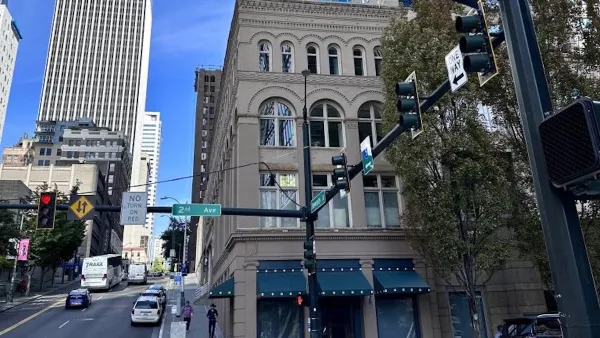
Could an ‘Urban Innovation Lab’ Spur Downtown Revitalization?
In his fifth article for GeekWire, Chuck Wolfe asks whether an onsite “living lab” could spur more entrepreneurship and impact downtown regeneration in Seattle.

Kansas City: 'Silicon Prairie?'
The city's growth and the arrival of tech giants like Meta could signal a tech-based renaissance.

Planetizen Federal Action Tracker
A weekly monitor of how Trump’s orders and actions are impacting planners and planning in America.

Washington state to charge fee to drivers with fuel-efficient cars
Revenue from the fee will go towards supporting the state’s highways.

Illinois considers spending $1 billion in taxpayer money on data center
A quantum computing campus and data center are currently under construction in Chicago.

Senate passes bill overhauling permitting
The bill still needs to pass the House.

Did data centers change how voters cast their ballots?
Texas, Ohio, and Georgia all flipped party control. But in rural counties, the effect of local data centers was mixed.

Amtrak invests in eight new Airo trainsets
The new trainsets will begin serving passengers in 2031.

FREE Course: Walkable City 1: Why Walkability?
After describing his path towards focusing on walkability as the essence of good planning, Jeff Speck marches through his five principal reasons for making more walkable places.
Reinventing Malls: Planning Alchemy—Turning Gray Fields Into Gold
The course focuses on the opportunities and imperatives that shape reinvention of mall sites.

City of Charlotte
City of Rosemead
Rutgers University, Edward J. Bloustein School of Planning and Public Policy
University of Michigan School for Environment and Sustainability (SEAS)
Hunter College, City University of New York (CUNY)
The Architects Foundation
University District Partnership