As Philadelphia's Breeze Point gets more expensive, a market-rate developer is claiming that an affordable housing development's surface parking lot is taking up land that could be homes.


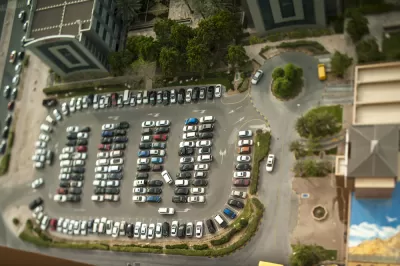
Developers in Philadelphia filed a court challenge against an affordable housing project for its surface parking lot. "The zoning board approved the construction of 20 multifamily housing units and a parking lot with 11 spaces on the 1300 block of Capitol and 2000 block of Reed," Claudia Vargas writes for The Philadelphia Inquirer.
The developers claim that the Women's Community Revitalization Project has more land than it needs, and that the parking lot will make the neighborhood less walkable.
"Both city and Redevelopment Authority officials have said that reserving land in rapidly gentrifying areas such as Point Breeze is crucial to maintaining affordability in the city," Vargas writes.
Read the full story: Gentrification fight in Point Breeze pivots to parking spaces

How to Create More Affordable Housing in Philadelphia
Eliminating parking minimums and reforming Philadelphia's tax abatement program could do a lot in making Philadelphia affordable, Inga Saffron argues.
The Philadelphia Loan Program Transforming the Demographics of Development
The Jumpstart loan program is helping Black and female residents become developers.

Philadelphia Mayor Vetoes Several Development-Related Bills
Among a package of bills that died in the pocket of Philadelphia Mayor Jim Kenney at the beginning of the New Yer was a bill intended to ensure that developers contribute to communities.

Planetizen Federal Action Tracker
A weekly monitor of how Trump’s orders and actions are impacting planners and planning in America.

California plans to bury El Niño’s downpour
If the state plays its cards right, it may be able to store a billion acre-feet of El Niño’s water in aquifers.

Desperate measures: Advocates weigh draining Lake Powell to fill Colorado River
Draining the reservoir could reduce evaporation losses by a couple hundred thousand acre-feet.

Mamdani’s pied-à-terre tax survives legal challenge
A panel of judges found that the plaintiffs failed to demonstrate injury as a result of New York City's implementation of the tax.

Eastern Nebraska is running out of electricity
Data centers and electrification are straining eastern Nebraska’s grid, throttling economic development.

Seattle passes record-breaking transit services expansion
Proposition 1 will double the city’s transit tax to add 95,000 more bus trips and preserve 180,000 bus trips annually.

FREE Course: Walkable City 1: Why Walkability?
After describing his path towards focusing on walkability as the essence of good planning, Jeff Speck marches through his five principal reasons for making more walkable places.
Reinventing Malls: Planning Alchemy—Turning Gray Fields Into Gold
The course focuses on the opportunities and imperatives that shape reinvention of mall sites.

City of Rosemead
Rutgers University, Edward J. Bloustein School of Planning and Public Policy
One Hundred Miles
University of Michigan School for Environment and Sustainability (SEAS)
Hunter College, City University of New York (CUNY)
The Architects Foundation
City of Cambridge
Montrose County
The Pocatello Development Authority