Vigorous continued demand for Houston homes left some realtors surprised after the city endured catastrophic flooding. For a lot of new construction, elevated homes may become the norm.


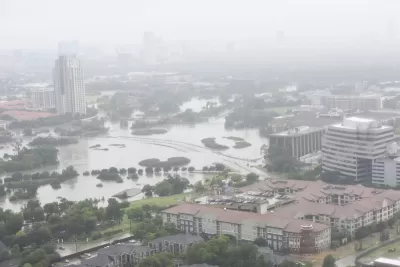
Houston has long symbolized the Sun Belt's magic brew of abundant housing and plentiful jobs. Annie Correal and Conor Dougherty write, "The Houston metropolitan area grows by about 400 people a day and builds 40,000 housing units a year, making it the nation's largest new-housing market, with 7 percent of residential construction. With light regulation and a civic model tied to growth, it has kept housing prices low by building everywhere and anywhere, and fast."
All of that got thrown into question when Harvey did its damage. But now there seems to be little doubt that Houston's bumper housing market will live on. "But as insurance and government money comes in, developers and real estate agents are betting that the area will quickly clear the backlog and continue along its normal trajectory of adding homes and people."
In the short term, undamaged homes may be at a premium. "At the same time, many economists are forecasting that the price of undamaged homes will rise as demand outstrips supply. Early estimates suggest that tens of thousands of homes were damaged, and developers are worried about labor shortages as repairs get priority over new construction."
As you'd expect, elevated homes fared better in the floods. They may become the new normal as flood insurers make elevation a requirement to head off future storms.
FULL STORY: Houston’s Unsinkable Housing Market Undaunted by Storm

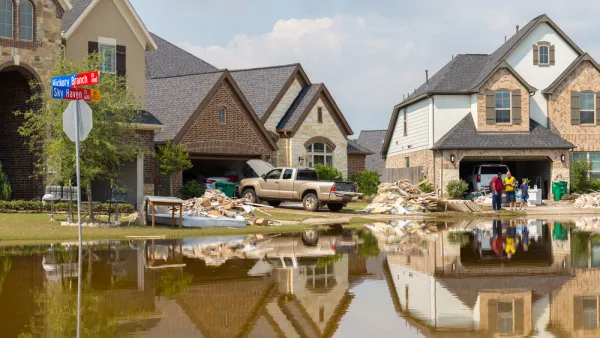
A Year After Harvey, Homes Still Going Up on Houston Flood Plain
Despite the devastation wrought by Hurricane Harvey, builders and buyers alike are sustaining a market for new construction on land likely to get flooded again.
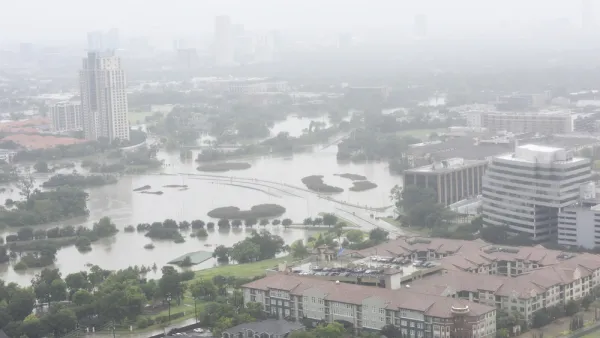
Houston Seriously Tightens Rules on Floodplain Construction
It was the city's "first major regulatory response" to Hurricane Harvey.
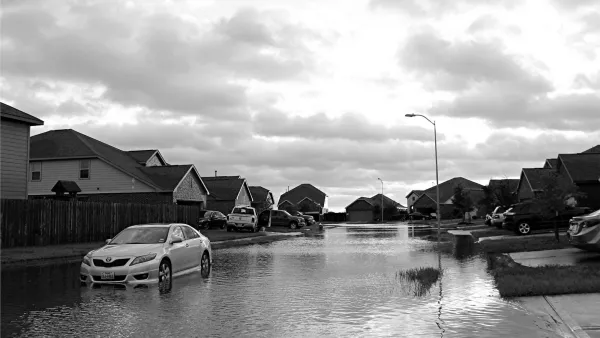
How the National Flood Insurance Program Sabotaged Itself
Having charged low rates during years of bumper development, the National Flood Insurance Program worked at cross-purposes with itself while development continued on.

The state-sanctioned urbicide of Austin
People don’t kill cities. Freeways do.

US to reduce Colorado River water deliveries to Mexico
A new Colorado Treaty amendment reduces Mexico’s Colorado River water allocation by 250,000 acre feet.

New Jersey’s second-largest city bans standalone data centers
Jersey City will continue to allow co-location facilities, such as those meant for research institutions that store their own data.

Amtrak not solely to blame for New Jersey commuter rail's unreliability, report finds
A new study from the Garden State Initiative found that NJ Transit’s budget grew 20% across a 4 year period, but reliability declined significantly over the same period.

EPA erases limits on planet-warming pollution from power plants
Under Monday’s plan, power plants would still have some limits on how much mercury, arsenic and other contaminants they can emit.

Phoenix announces new on-demand transit service, more frequent RAPID buses
Both new services will launch in October, and are part of Phoenix's Project Effective Access Solutions for Easing Congestion.

FREE Course: Walkable City 1: Why Walkability?
After describing his path towards focusing on walkability as the essence of good planning, Jeff Speck marches through his five principal reasons for making more walkable places.
Reinventing Malls: Planning Alchemy—Turning Gray Fields Into Gold
The course focuses on the opportunities and imperatives that shape reinvention of mall sites.

Eagle County Government
Harvard University Graduate School of Design
Nashville Planning Department
The Architects Foundation
University of Cincinnati Online
The Pocatello Development Authority
The Urban Renewal Agency of the City of Pocatello
Journal of the American Planning Association