It was the city's "first major regulatory response" to Hurricane Harvey.


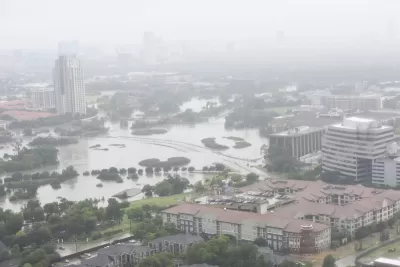
Last week, in an "unusually tight" vote, the Houston City Council ruled that starting in September, "all new construction in the city’s floodplains will have to be built two feet above the projected water level in a 500-year storm." Under current rules, it's only one foot, and from only the 100-year level.
"The vote marks a shift away from Houston’s longtime aversion to constraining," writes Rebecca Elliot, who also reports that the vote was largely along party lines—as well as supported by the mayor.
Harris County started using the 500- year floodplain in January, but entire region's distaste for regulation has been a popular topic of conversation in the months since Hurricane Harvey, which according to some studies was more like a 1,000-year storm.
It might seem unwise, after Harvey, tokeep building in the floodplain at all, but the city's real estate market barely paused in the wake of the massive storm, and buyers of both new and old structures will still be protected by the National Flood Insurance Program.
FULL STORY: City Council adopts stricter development rules for Houston’s floodplains

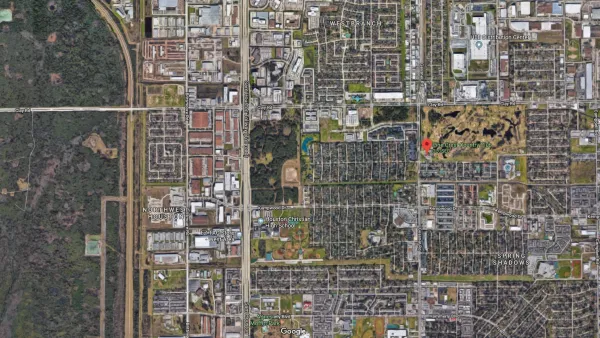
800 New Homes Approved for Houston's Floodplain
The city of Houston approved a new development that doesn't meet new elevations standards approved by the city of Houston earlier this month.
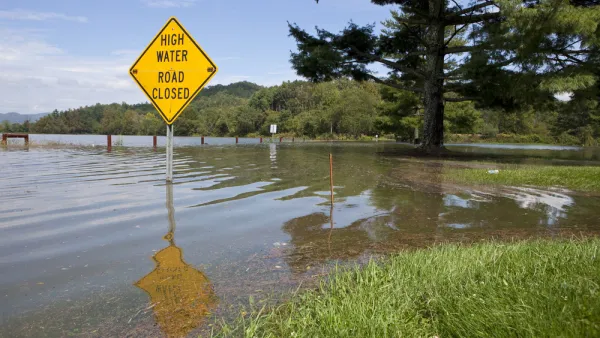
Houston-Area Floodplain Regulations to Expand from 100-Year to 500-Year Levels
Harris County, home to Houston and the scene of widespread devastation during Hurricane Harvey and other weather events, will make large-scale changes to development regulations on floodplains for the first time in almost 20 years.
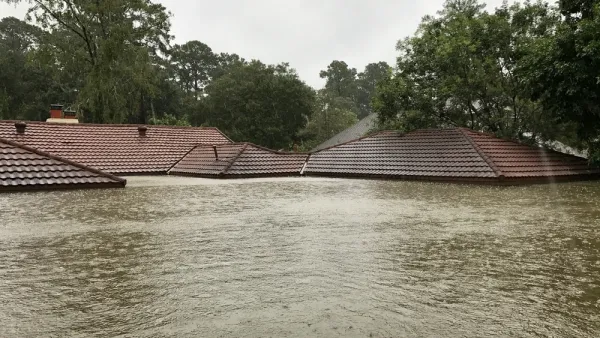
Connecting the Issues of Flooding and Affordable Housing in Texas
A study released this week by the Greater Houston Flood Mitigation Consortium ( the University of Houston, the Kinder Institute, the Local Initiatives Support Corporation, and more) raises concerns that new floodplain regulations could harm renters.

The state-sanctioned urbicide of Austin
People don’t kill cities. Freeways do.

US to reduce Colorado River water deliveries to Mexico
A new Colorado Treaty amendment reduces Mexico’s Colorado River water allocation by 250,000 acre feet.

New Jersey’s second-largest city bans standalone data centers
Jersey City will continue to allow co-location facilities, such as those meant for research institutions that store their own data.

Amtrak not solely to blame for New Jersey commuter rail's unreliability, report finds
A new study from the Garden State Initiative found that NJ Transit’s budget grew 20% across a 4 year period, but reliability declined significantly over the same period.

EPA erases limits on planet-warming pollution from power plants
Under Monday’s plan, power plants would still have some limits on how much mercury, arsenic and other contaminants they can emit.

Phoenix announces new on-demand transit service, more frequent RAPID buses
Both new services will launch in October, and are part of Phoenix's Project Effective Access Solutions for Easing Congestion.

FREE Course: Walkable City 1: Why Walkability?
After describing his path towards focusing on walkability as the essence of good planning, Jeff Speck marches through his five principal reasons for making more walkable places.
Reinventing Malls: Planning Alchemy—Turning Gray Fields Into Gold
The course focuses on the opportunities and imperatives that shape reinvention of mall sites.

Eagle County Government
Harvard University Graduate School of Design
Nashville Planning Department
The Architects Foundation
University of Cincinnati Online
The Pocatello Development Authority
The Urban Renewal Agency of the City of Pocatello
Journal of the American Planning Association