For every Pittsburgh or Cleveland success story, there's a story waiting to be told in smaller cities like Gary and Lowell.


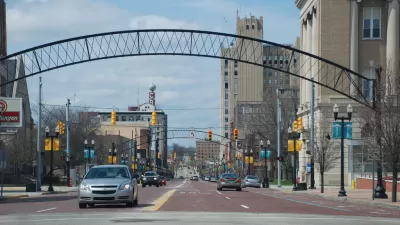
According to an article on the Lincoln Institute of Land Policy blog, "from Gary, Indiana, to Lowell, Massachusetts, smaller post-industrial cities are taking strategic steps to regenerate."
The path taken by such small "Legacy Cities" is the subject of a new report from the Lincoln Institute and the Greater Ohio Policy Center.
"The report, Revitalizing America’s Smaller Legacy Cities, by Torey Hollingsworth and Alison Goebel, examines at 24 cities with populations of 30,000 to 200,000 across seven midwestern and northeastern states: Michigan, Indiana, Ohio, Pennsylvania, New York, New Jersey, and Massachusetts."
According to the post, each of the stories are unique, but they also share some common traits. The report also suggests eight strategies for revitalization, with more detail in the article and, obviously, the report:
- Build civic capacity and talent
- Encourage a shared public- and private-sector vision.
- Expand opportunities for low-income workers
- Build on an authentic sense of place
- Focus regional efforts on rebuilding a strong downtown
- Engage in community and strategic planning
- Stabilize distressed neighborhoods
- Strategically leverage state policies
Read the full story: Revitalizing smaller legacy cities, from Gary to Lowell


How Legacy Cities Can Support Equitable Development
A new report outlines seven strategies for balancing economic development and equity specifically aimed at smaller, post-industrial cities.

New Revitalization Toolkit for Smaller Legacy Cities
Not every Legacy City has the size and cultural cache of a Pittsburgh or a New Orleans to aid in its recovery, but there are resources available for smaller cities examining pragmatic revitalization strategies.

'Supporting Shrinkage': Lessons for U.S. Cities
An excerpt from "Supporting Shrinkage: Better Planning and Decision-Making for Legacy Cities," written by Michael P. Johnson, Justin B. Hollander, Eliza W. Kinsey, and George R. Chichirau and published by SUNY Press.

Planetizen Federal Action Tracker
A weekly monitor of how Trump’s orders and actions are impacting planners and planning in America.

Data reveals that NYC’s bet on congestion pricing has paid off
After almost two years of the program, reports show positive impacts on traffic and air quality and no disruptions to parking.

HUD modernizes 50-year-old manufactured housing framework
The Next Generation Manufactured Housing Action Plan establishes new energy-efficiency standards for manufactured homes, and new guidelines for anchoring them.

Florida could lose billions in funding for infrastructure, parks
If Amendment 3 passes, Miami-Dade would lose about $445 million annually by fiscal year 2028-29.

New Mexico spent millions drafting climate goals. Data centers are unraveling them
Three data centers in New Mexico and El Paso will release more emissions yearly than 2 million cars in the same timeframe.

This Ohio town is using AI to speed up transit analysis
The Greater Dayton Regional Transit Authority’s new AI tool correctly determined riders’ preferred ways to reach key commuter routes.

FREE Course: Walkable City 1: Why Walkability?
After describing his path towards focusing on walkability as the essence of good planning, Jeff Speck marches through his five principal reasons for making more walkable places.
Reinventing Malls: Planning Alchemy—Turning Gray Fields Into Gold
The course focuses on the opportunities and imperatives that shape reinvention of mall sites.

One Hundred Miles
County of Mendocino
planning NEXT
The Architects Foundation
University of Cincinnati Online
Montrose County
Northern Illinois Transit Authority (NITA)
The Pocatello Development Authority