The Ford Motor Company picks a side in the traffic safety debate.


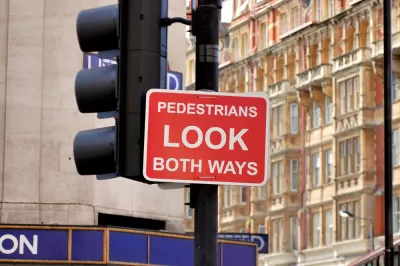
A post by the Ford Motor Company offers this likely controversial take on pedestrian safety:
One pedestrian is injured in a motor vehicle crash every eight minutes, a number that’s been on the rise in recent years. The National Highway Traffic Safety Administration has equated this increase in injuries to a global influx of “petextrians” – pedestrians who simultaneously walk and text. This, combined with the rise of distracted driving due to smartphones, created a massive new safety problem for drivers and pedestrians alike.
To "combat this issue," Ford is touting a new technology called "Pre-Collision Assist with Pedestrian Detection," which is available on the 2017 Ford Fusion. Here is how the Ford Motor Company describes their creation of the technology:
Along with the safety team utilizing 240 terabytes of test data, we used 12 vehicles and conducted over 500,000 miles of development testing on this technology spanning the world. Through this, Pre-Collision Assist was able to record 3 million scans of roadside objects, vehicles and pedestrians across both highway and non-highway roads.
The Ford Motor Company even created a video to show how the technology works, and why it was necessary.
FULL STORY: One Step Ahead of Pedestrians


Against Victim Blaming
One common scapegoat for rising pedestrian death rates is "distracted walking." But there is little reason to believe that smartphone-wielding pedestrians are a major cause of roadway carnage.

Report: Dangers of Pedestrian Texting Overblown
Distracted walking is never a great idea. But in New York City at least, texting while walking only led to 2 out of 534 pedestrian deaths from 2014 through 2017.
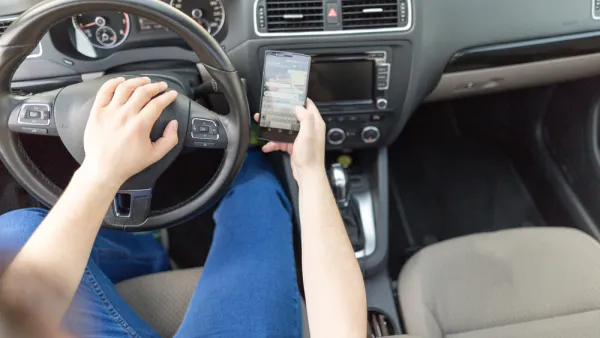
Studies: Drivers Far More Distracted Than Walkers
Two articles in national publications share findings from recent studies that make it harder to accept the "distracted walking" excuse for increased traffic fatalities.

The state-sanctioned urbicide of Austin
People don’t kill cities. Freeways do.

US to reduce Colorado River water deliveries to Mexico
A new Colorado Treaty amendment reduces Mexico’s Colorado River water allocation by 250,000 acre feet.

New Jersey’s second-largest city bans standalone data centers
Jersey City will continue to allow co-location facilities, such as those meant for research institutions that store their own data.

Amtrak not solely to blame for New Jersey commuter rail's unreliability, report finds
A new study from the Garden State Initiative found that NJ Transit’s budget grew 20% across a 4 year period, but reliability declined significantly over the same period.

EPA erases limits on planet-warming pollution from power plants
Under Monday’s plan, power plants would still have some limits on how much mercury, arsenic and other contaminants they can emit.

Phoenix announces new on-demand transit service, more frequent RAPID buses
Both new services will launch in October, and are part of Phoenix's Project Effective Access Solutions for Easing Congestion.

FREE Course: Walkable City 1: Why Walkability?
After describing his path towards focusing on walkability as the essence of good planning, Jeff Speck marches through his five principal reasons for making more walkable places.
Reinventing Malls: Planning Alchemy—Turning Gray Fields Into Gold
The course focuses on the opportunities and imperatives that shape reinvention of mall sites.

Eagle County Government
Harvard University Graduate School of Design
Nashville Planning Department
The Architects Foundation
University of Cincinnati Online
The Pocatello Development Authority
The Urban Renewal Agency of the City of Pocatello
Journal of the American Planning Association