Since the beginning of September, 400 employees have left the U.S. Environmental Protection Agency. The reduced staffing levels are by design.


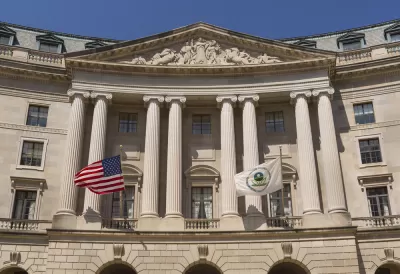
"Buyouts offered by the Trump administration to more than 1,200 Environmental Protection Agency (EPA) employees have prompted 400 people to leave their posts since the end of last month," according to an article by Aggie Mika.
Mika is reporting news first broadcast by the Wall Street Journal in an article that might be behind a paywall for some readers.
"This mass exit has resulted in a 2.5 percent cut in the agency’s staff, the report states, and if workers continue to take the buyouts, the EPA could be facing its smallest operating staff since the late 1980s," adds Mika.
EPA Administrator Scott Pruitt boasted about the exodus, releasing a statement, saying: “We’re proud to report that we’re reducing the size of government, protecting taxpayer dollars and staying true to our core mission of protecting the environment and American jobs."
Read the full story: Hundreds of EPA Workers Leave the Agency


Federal Appeals Court Orders EPA to Ban Harmful Pesticide
The ruling puts another stain on former EPA Administrator Scott Pruitt's legacy as it rebukes his denial of a petition to ban a pesticide that causes neurodevelopmental damage in children. Pruitt had rejected his own scientists' recommendation.
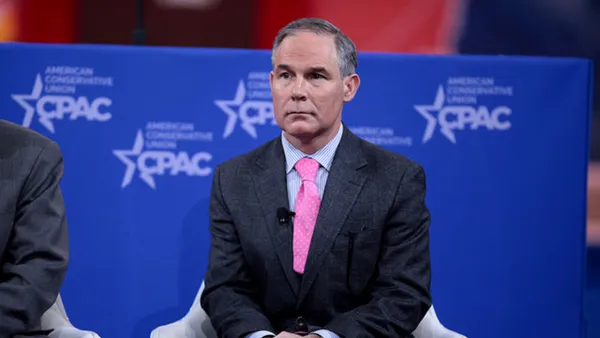
EPA Chief Scott Pruitt Resigns
Climate change denier Scott Pruitt, head of the U.S. Environmental Protection Agency, submitted his resignation on Thursday, to take effect July 6. On Monday, EPA Deputy Administrator Andrew R. Wheeler becomes the acting administrator.
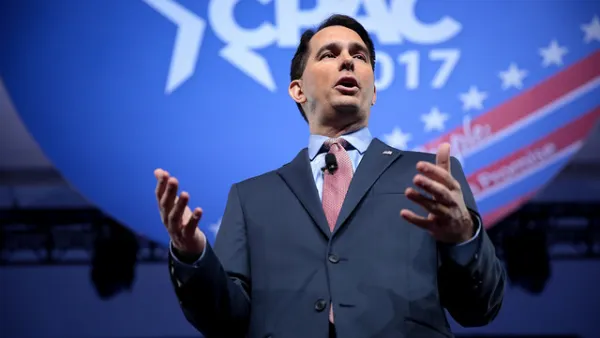
Another EPA Rollback, Tailor-Made for Gov. Walker and Southeast Wisconsin
Politics and economics win over public health in Racine County as the EPA exempted the area around the Foxconn's massive facility from meeting stricter ozone pollution standards, saving the company from investing in smog-reducing equipment.

Planetizen Federal Action Tracker
A weekly monitor of how Trump’s orders and actions are impacting planners and planning in America.

Amtrak, CN end decades-long dispute with eight-year agreement
The new operating agreement establishes an updated framework for the companies to work together, including processes to resolve disputes.

Northwest rail fans eager for Sept. 30 debut of Amtrak’s Airo fleet
Get ready for that new train smell and more seats. But they won’t go faster or run more frequently on the Cascades route in Washington and Oregon.

LAX SkyLink opening delayed again, contractor won’t commit to new deadline
The project was supposed to open its doors to the public in 2023.

Caltrain may slash over one-third of its stations
If Bay Area voters reject two transit tax measures, Caltrain, BART and AC Transit will see steep service cuts.

A 'dangerous' precedent: North Carolina successfully pressures communities into voting for toll roads
Two mayors resigned from the Charlotte Regional Transportation Planning Organization after it voted in favor of the toll roads.

FREE Course: Walkable City 1: Why Walkability?
After describing his path towards focusing on walkability as the essence of good planning, Jeff Speck marches through his five principal reasons for making more walkable places.
Reinventing Malls: Planning Alchemy—Turning Gray Fields Into Gold
The course focuses on the opportunities and imperatives that shape reinvention of mall sites.

City of Thousand Oaks
City of Wisconsin Rapids
Harvard University Graduate School of Design
The Architects Foundation
University of Cincinnati Online
The Pocatello Development Authority
The Urban Renewal Agency of the City of Pocatello