Saudi Arabia's government has made huge investments in the hopes of building new cities and districts to attract investment and tourism, despite past failures.


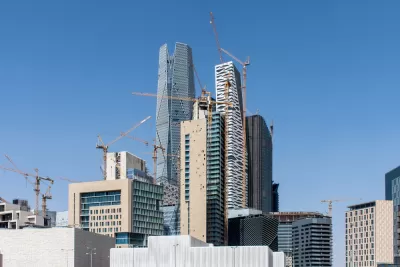
Saudi Arabia's program to build new "Economic Cities" includes more than one plan for developments over 50 square miles, whether these will attract the tourists and business development they seek to spur, remains to be seen. "The kingdom is converting thousands of square kilometers of sand into new cities as it seeks to diversify away from crude, create jobs and boost investment," Sarah Algethami writes in Bloomberg Business.
These initiatives look to kickstart some projects that have been slow to take off and will include two new projects. One project announced in July aims to attract tourists to Saudi Arabia's beaches on over 50 islands in the Red Sea. The area of this project is bigger than Belgium. Some have pointed out cultural barriers to attracting tourists including the country's alcohol restrictions and clothing requirements.
Plans were also announced for a city called Al Faisaliyah, "The city will have residential units, entertainment facilities, an airport and sea port," Algethami reports. The kingdom announced these plans despite the slow growth of its many previous attempts at mega projects including the King Abdullah Financial District of 70 buildings that has yet to attract a single institution.
Read the full story: Saudi Arabia Builds Cities in the Sand to Move Beyond Oil

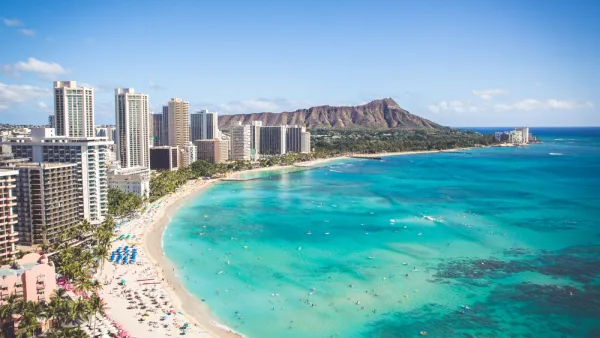
Study: Oahu Could Lose 40 Percent of its Beaches by 2050
A new study calls for changes to coastal management policies to better protect sandy shorelines retreating under the pressure of rising sea levels.
Bridge Planned Between Egypt and Saudi Arabia
A proposed 20-mile bridge would span the Red Sea to connect Egypt and Saudi Arabia -- connecting Arab states and reducing reliance on land passage through Israel.
AEG Making Downtown L.A. NFL Stadium Pitch
Having brought the Staples Center, L.A. Live, and a convention center hotel complex to the South Park neighborhood in Downtown Los Angeles, Tim Leiweke, is now pitching an NFL stadium that will double as an addendum to the convention center.

Planetizen Federal Action Tracker
A weekly monitor of how Trump’s orders and actions are impacting planners and planning in America.

Amtrak, CN end decades-long dispute with eight-year agreement
The new operating agreement establishes an updated framework for the companies to work together, including processes to resolve disputes.

Judges permit Denver to divert 77,000 acre feet from the Colorado River for reservoir expansion
Overuse and climate change have caused the Colorado River’s water levels to plummet.

NYC DOT wants faster, more permanent street upgrades
The city is examining ways to build more concrete infrastructure without getting entangled in 'decades-long' projects.

'Something we’ve never seen before:' rising utility rates could strain city finances nationwide
Data centers, climate change and other factors have caused utility rates in the United States to increase by 38% since 2020.

Trump to overrule local leaders, lease millions of acres of America’s Pacific Island territories’ seafloors to mining companies
International law says that the Indigenous people of America’s territories have a right to prior and informed consent regarding projects that impact their countries.

FREE Course: Walkable City 1: Why Walkability?
After describing his path towards focusing on walkability as the essence of good planning, Jeff Speck marches through his five principal reasons for making more walkable places.
Reinventing Malls: Planning Alchemy—Turning Gray Fields Into Gold
The course focuses on the opportunities and imperatives that shape reinvention of mall sites.

Harvard University Graduate School of Design
KFH Group Inc.
Greater Baltimore Committee
The Architects Foundation
University of Cincinnati Online
The Pocatello Development Authority
The Urban Renewal Agency of the City of Pocatello