A proposed 20-mile bridge would span the Red Sea to connect Egypt and Saudi Arabia -- connecting Arab states and reducing reliance on land passage through Israel.


The project has been in the works since 1988, but was pu on hold 5 years ago by then-President Hosni Mubarak.
"For the Arabs, the massive construction project would be a triumph. For the first time since 1948, when the modern state of Israel was founded, Arab states in North Africa would have a direct road link with fellow Arab states in the Middle East without having to cross Israeli territory. It would also reduce dependence on sometimes perilous ferry crossings over the Red Sea and Arab ports on the Mediterranean.
Planners believe that tolls paid by millions of Muslim pilgrims on their way to holy sites in Saudi Arabia could make up for the roughly $5 billion (€3.6) the bridge is expected to cost. They also believe the bridge will significantly increase the number of pilgrims. "
Read the full story: Egypt Approves Massive Bridge to Saudi Arabia

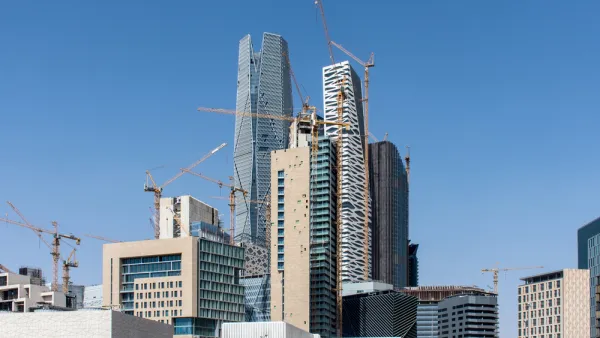
'Economic Cities,' Saudi Arabia's Mega Projects
Saudi Arabia's government has made huge investments in the hopes of building new cities and districts to attract investment and tourism, despite past failures.
Israelis and Palestinians Find Common Ground on Water
An historic agreement between Israel, Jordan and the Palestinians aims to slow the disappearance of the Dead Sea and stabilize the supply of drinking water for all three groups.
Finding Public Space Wherever They Can in Cairo
Dense Cairo has few sanctioned public spaces. So residents make do wherever they can.

Planetizen Federal Action Tracker
A weekly monitor of how Trump’s orders and actions are impacting planners and planning in America.

Amtrak, CN end decades-long dispute with eight-year agreement
The new operating agreement establishes an updated framework for the companies to work together, including processes to resolve disputes.

Judges permit Denver to divert 77,000 acre feet from the Colorado River for reservoir expansion
Overuse and climate change have caused the Colorado River’s water levels to plummet.

NYC DOT wants faster, more permanent street upgrades
The city is examining ways to build more concrete infrastructure without getting entangled in 'decades-long' projects.

'Something we’ve never seen before:' rising utility rates could strain city finances nationwide
Data centers, climate change and other factors have caused utility rates in the United States to increase by 38% since 2020.

Trump to overrule local leaders, lease millions of acres of America’s Pacific Island territories’ seafloors to mining companies
International law says that the Indigenous people of America’s territories have a right to prior and informed consent regarding projects that impact their countries.

FREE Course: Walkable City 1: Why Walkability?
After describing his path towards focusing on walkability as the essence of good planning, Jeff Speck marches through his five principal reasons for making more walkable places.
Reinventing Malls: Planning Alchemy—Turning Gray Fields Into Gold
The course focuses on the opportunities and imperatives that shape reinvention of mall sites.

Harvard University Graduate School of Design
KFH Group Inc.
Greater Baltimore Committee
The Architects Foundation
University of Cincinnati Online
The Pocatello Development Authority
The Urban Renewal Agency of the City of Pocatello