A piece in The Nation argues a Denver highway plan will further shrink the black community in that city through the use of eminent domain.


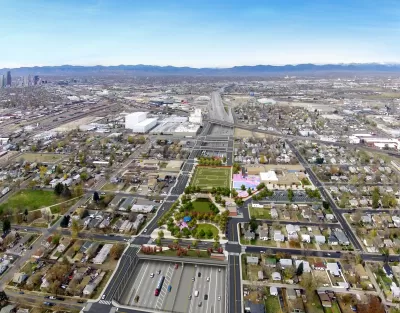
The Colorado Department of Transportation (CDOT) is revamping the section of I-70 that runs through Denver, and some worry it will further divide the community. "The CDOT’s plan would condemn 56 homes and 17 businesses—a more extensive use of eminent domain than was required for the construction of the highway in the first place," Caroline Tracey reports for The Nation. Activists opposing the project point out that there were other possible reroutes that would have left more homes undisturbed.
"The resurgence of urban highway expansion comes at a moment of demographic transition. After decades of exodus, affluent white residents are returning to city centers," Tracey writes. The article points out that in many cities with increasing property values, there's been a rush to create improvements.
Tracey argues that these improvements cater to the desires of newer, richer, whiter residents. Saying that those whose homes are not taken by eminent domain may lose their homes to increasing property values.
Read the full story: Redlining Returns To Denver, but With a Neoliberal Twist
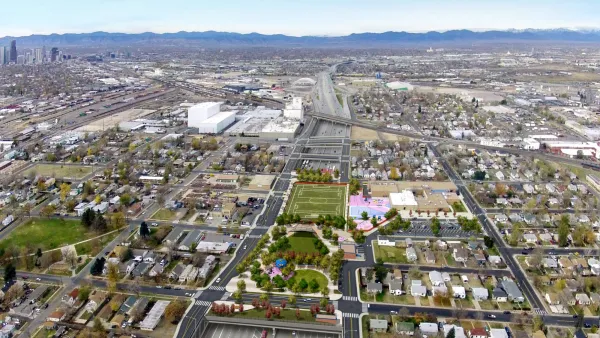
I-70 Expansion in Denver Still Facing Scrutiny
A planned expansion of Interstate 70 through Denver might have federal approval, but a growing coalition of local groups and state political leaders are pushing back on the idea.
Stormwater Improvements Linked to Freeway Project in Northeast Denver
The funding needed to complete the Two Basin Drainage Project in Denver would come as a package deal with a $1.2 billion plan to overhaul I-70. Residents are concerned that they might be getting more than they bargained for.
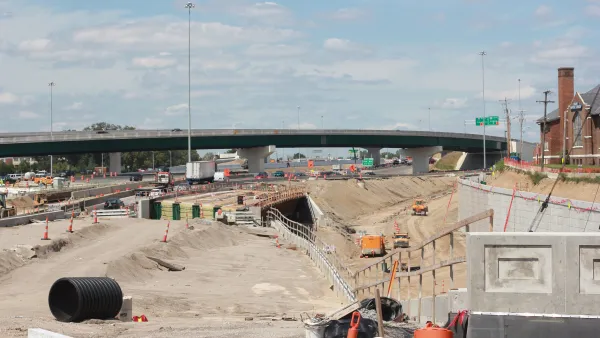
Denver's I-70 Expansion Undercuts Alternatives
To fund a wider I-70 on its route through Denver, the regional planning commission set aside $50 million in federal funds before considering other projects.

Planetizen Federal Action Tracker
A weekly monitor of how Trump’s orders and actions are impacting planners and planning in America.

Washington state to charge fee to drivers with fuel-efficient cars
Revenue from the fee will go towards supporting the state’s highways.

Illinois considers spending $1 billion in taxpayer money on data center
A quantum computing campus and data center are currently under construction in Chicago.

Did data centers change how voters cast their ballots?
Texas, Ohio, and Georgia all flipped party control. But in rural counties, the effect of local data centers was mixed.

Amtrak invests in eight new Airo trainsets
The new trainsets will begin serving passengers in 2031.

HUD to end aid for mixed-immigration-status households
The new rule is projected to impact 80,000 people, nearly half of whom are children.

FREE Course: Walkable City 1: Why Walkability?
After describing his path towards focusing on walkability as the essence of good planning, Jeff Speck marches through his five principal reasons for making more walkable places.
Reinventing Malls: Planning Alchemy—Turning Gray Fields Into Gold
The course focuses on the opportunities and imperatives that shape reinvention of mall sites.

City of Charlotte
City of Rosemead
Rutgers University, Edward J. Bloustein School of Planning and Public Policy
University of Michigan School for Environment and Sustainability (SEAS)
Hunter College, City University of New York (CUNY)
The Architects Foundation
University District Partnership