The suburban, master planned community of Columbia, Maryland is many of the things urbanists hope their cities will become.


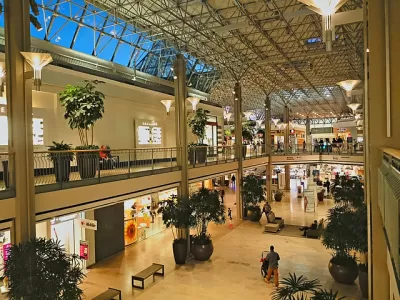
Amanda Kolson Hurley reports on a "suburban experiment" that offers lessons for cities. "In an era when city living is virtually synonymous with cool, Columbia, Md., emanates suburban uncool," writes Kolson Hurley. The community flies in the face of almost everything Jane Jacobs cherished about cities, but "as Columbia marks the 50th anniversary since the first residents moved in, it has become clear that [Columbia developer James] Rouse got some important things right."
Kolson Hurley describes Rouse's approach to the project as a response to the "soulless sprawl" that defined most suburban construction of the 1970s. Rouse was "ahead of his time," according to the article, "in his pursuit of an ecologically sensitive, mixed-income and colorblind community in an era when redlining was common. And Columbia’s success on those fronts stands out next to most of the planned communities that came after it."
Among the other successes now apparent in Columbia, 50 years after its creation: prosperity and racial and economic integration that shouldmake New York City, San Francisco, and Washington, D.C. blush.
Read the full story: Here’s a suburban experiment cities can learn from


First Model Homes Revealed in Disney-Built Community
Disney’s Cotino, in the Southern California desert, is the first of the company’s ‘Storybook Living’ developments.

Utah’s Daybreak Shows a Way Forward for American Suburbs
Suburban dwellers are increasingly calling for more mixed-use development, walkability, and access to transit.

How Trump's Version of the Suburbs Gets it Wrong
Analysis of Trump's favorability ratings with suburban voters and the demographic trends of recent years could doom his recent messages regarding the Democratic agenda for the suburbs.

Planetizen Federal Action Tracker
A weekly monitor of how Trump’s orders and actions are impacting planners and planning in America.

Amtrak, CN end decades-long dispute with eight-year agreement
The new operating agreement establishes an updated framework for the companies to work together, including processes to resolve disputes.

Northwest rail fans eager for Sept. 30 debut of Amtrak’s Airo fleet
Get ready for that new train smell and more seats. But they won’t go faster or run more frequently on the Cascades route in Washington and Oregon.

Brightline Florida files for bankruptcy
The transit company is over $5 billion in debt.

St. Louis Metro to test if single-car trains can reduce operating costs, maintain rider satisfaction
The pilot program will run from October to spring 2027, and begin with one single-car train operating on Metrolink’s Red and Blue lines.

Pennsylvania is building data centers in abandoned mines
Housing data centers in mines provides an alternative to destroying local forests and may spare residents from data centers’ noise and air pollution.

FREE Course: Walkable City 1: Why Walkability?
After describing his path towards focusing on walkability as the essence of good planning, Jeff Speck marches through his five principal reasons for making more walkable places.
Reinventing Malls: Planning Alchemy—Turning Gray Fields Into Gold
The course focuses on the opportunities and imperatives that shape reinvention of mall sites.

City of Thousand Oaks
City of Wisconsin Rapids
Harvard University Graduate School of Design
The Architects Foundation
University of Cincinnati Online
The Pocatello Development Authority
The Urban Renewal Agency of the City of Pocatello