As America's VMT returns to record highs, more of the miles are coming from cities than ever before.


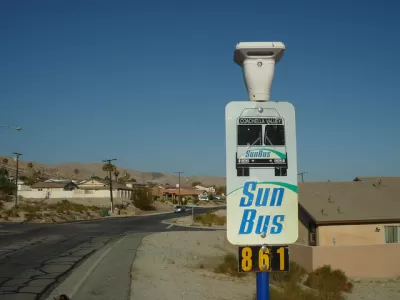
"Urban driving is up 33 percent in that time; rural driving has fallen 12 percent," Henry Garbar writes for Slate. That is a huge change in vehicle miles traveled (VMT) and, while it's tempting to look for reasons in the classification of roads or in demographic change, those only account for part of the jump. "America’s cities (by which I mean, mostly, their sprawling exurbs) have grown by 19 percent in that time—meaning that bigger cities account for just 58 percent of the urban driving mileage increase," Garbar reports.
The missing 42 percent is hard to account for. It could be a result of transit decline, which is concentrated in cities, it could be that city drivers drive more when gas costs are lower, or it could have to do with the kinds of cities that are growing. "We know that urban growth—especially over the past few years—has been concentrated in sprawling Sun Belt metropolises, so it would make sense for driving to outpace urban population growth," Garbar writes.
Urbanists have long touted less need to drive as an advantage to city life. If cities and the way we use them continue to follow this trend, some of that advantage may whither away.
Read the full story: Urban America Is Driving More. Rural America Is Driving Less. What Gives?

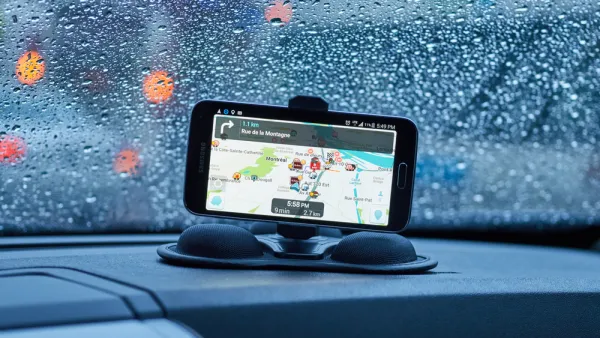
Waze Wants To Be a Carpooling Matchmaker
The Google-owned company has the data to connect commuters to possible carpool buddies, Whether Waze can stem the long-term decline in carpooling remains to be seen.
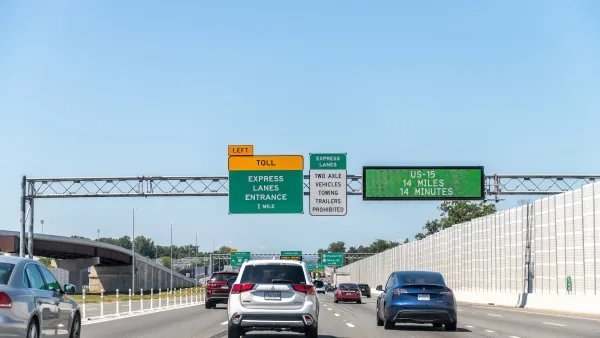
Congestion Costing Reality Check, Part 2: A congestion costing critique
There are good reasons to be skeptical of highway industry claims that traffic congestion is a growing problem. Their analysis is often incomplete and biased. Let’s pull back the curtain on some major congestion cost studies.
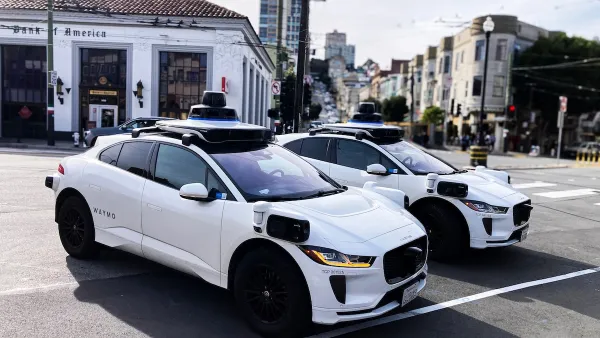
How Autonomous Cars Can Induce Sprawl and Sabotage Climate Goals
Robotaxis can lead to longer, more frequent trips and are projected to increase VMT by as much as 83 percent.

Planetizen Federal Action Tracker
A weekly monitor of how Trump’s orders and actions are impacting planners and planning in America.

Amtrak, CN end decades-long dispute with eight-year agreement
The new operating agreement establishes an updated framework for the companies to work together, including processes to resolve disputes.

Judges permit Denver to divert 77,000 acre feet from the Colorado River for reservoir expansion
Overuse and climate change have caused the Colorado River’s water levels to plummet.

NYC DOT wants faster, more permanent street upgrades
The city is examining ways to build more concrete infrastructure without getting entangled in 'decades-long' projects.

'Something we’ve never seen before:' rising utility rates could strain city finances nationwide
Data centers, climate change and other factors have caused utility rates in the United States to increase by 38% since 2020.

Trump to overrule local leaders, lease millions of acres of America’s Pacific Island territories’ seafloors to mining companies
International law says that the Indigenous people of America’s territories have a right to prior and informed consent regarding projects that impact their countries.

FREE Course: Walkable City 1: Why Walkability?
After describing his path towards focusing on walkability as the essence of good planning, Jeff Speck marches through his five principal reasons for making more walkable places.
Reinventing Malls: Planning Alchemy—Turning Gray Fields Into Gold
The course focuses on the opportunities and imperatives that shape reinvention of mall sites.

Harvard University Graduate School of Design
KFH Group Inc.
Greater Baltimore Committee
The Architects Foundation
University of Cincinnati Online
The Pocatello Development Authority
The Urban Renewal Agency of the City of Pocatello