A history of segregation and other barriers have made California's beaches and oceanfront disproportionately white.



Legislators and activists around California are trying new tactics to get people to the beach who seldom get the opportunity to go or would, in the past, have been unwelcome there. "Their efforts range from encouraging inexpensive and culturally sensitive coastal lodging, to forcing the state to consider the impacts of coastal development on poorer, often minority residents,"Jill Replogle reports for High Country News.
When surveyed, many black and Latino Californians who chose not to go to the beach cited an inability to swim. This is an issue that organizations like Azul and the Surf Bus Foundation have worked to address. Another difficulty has to do with infrastructure. "Limited public transportation is also a problem, though Los Angeles recently expanded metro service to within a few blocks of the popular Santa Monica shoreline," Replogle writes.
Read the full story: Making the California coast public for all


L.A.'s Long History of Informal Housing
The story of informal housing is one of changing racial and class demographics, economic opportunity and needs, and regulatory control.

When Whites Return to the Black Neighborhoods They Fled
Los Angeles Times op-ed writer Erin Aubry Kaplan shares her feelings upon seeing whites return to Inglewood, California half a century after they fled. One consistent theme emerges: "Whatever black people have can be taken away."

'Surfer Gang' Beach Fort Causes Problems
A rowdy collection of Palos Verdes surfers, some of them middle-aged, will resort to criminal tactics to keep outsiders away from their favorite spot. They've even built a fort, and officials are having trouble getting rid of it.

Planetizen Federal Action Tracker
A weekly monitor of how Trump’s orders and actions are impacting planners and planning in America.

Colorado’s Largest Data Center Could Rise Next to Homes — Without a Public Hearing
The proposed campus would consume 11 times the power of Denver International Airport; as it has across the country, opposition mounts.

US to reduce Colorado River water deliveries to Mexico
A new Colorado Treaty amendment reduces Mexico’s Colorado River water allocation by 250,000 acre feet.
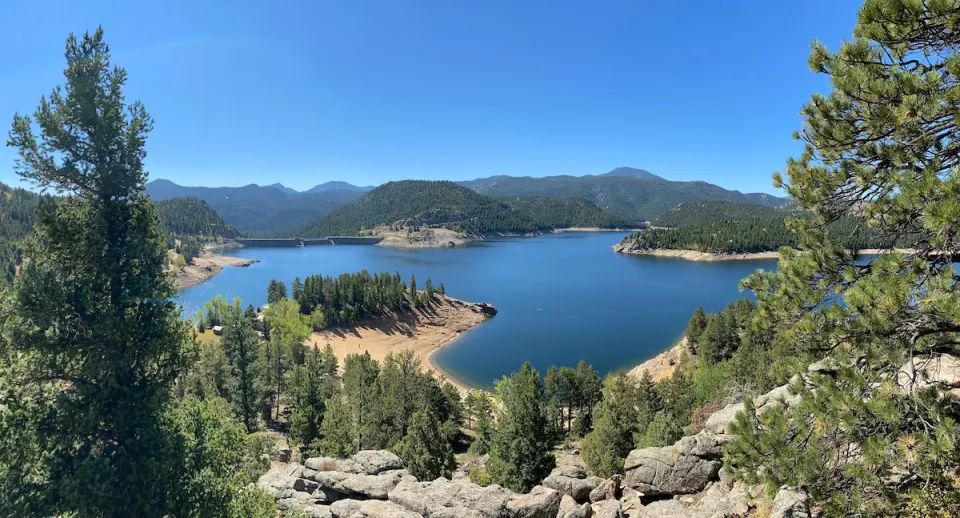
Judges permit Denver to divert 77,000 acre feet from the Colorado River for reservoir expansion
Overuse and climate change have caused the Colorado River’s water levels to plummet.

Amtrak, CN end decades-long dispute with eight-year agreement
The new operating agreement establishes an updated framework for the companies to work together, including processes to resolve disputes.

Raised interest rates may kill financially vulnerable construction projects
The chief economist at ConstructConnect warns that if construction project owners are negatively impacted by the raised rates, it could result in delayed payments to contractors.

FREE Course: Walkable City 1: Why Walkability?
After describing his path towards focusing on walkability as the essence of good planning, Jeff Speck marches through his five principal reasons for making more walkable places.
Reinventing Malls: Planning Alchemy—Turning Gray Fields Into Gold
The course focuses on the opportunities and imperatives that shape reinvention of mall sites.

KFH Group Inc.
Greater Baltimore Committee
Eagle County Government
The Architects Foundation
University of Cincinnati Online
The Pocatello Development Authority
The Urban Renewal Agency of the City of Pocatello