A city controller's audit finds lots of room for improvement at the Houston Fire Department's Life Safety Bureau.


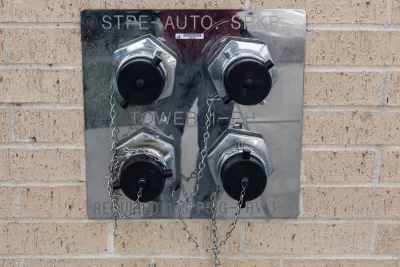
Rebecca Elliott reports: "The branch of the Houston Fire Department responsible for ensuring building safety keeps inadequate records, does not examine buildings on a regular schedule and inflated its inspection numbers, all while blowing past its overtime budget, according to an audit released by the city controller's office Thursday."
The city controller's audit is only the most recent in "a series of blistering critiques of the Life Safety Bureau," adds Elliott. Fire Chief Samuel Peña has promised reforms in response to the audit, including "working with a consultant to develop a risk-based inspection program and establish a regular inspection cycle by this summer; improving the bureau's database; requiring inspectors to log daily activities; and conducting a staffing analysis."
Although fire safety and building codes are in the International news this week after a tragic fire in a London residential high-rise, Houston has its own concerning history. Last year, "a Spring Branch warehouse storing more than 40,000 pounds of hazardous chemicals burned down, eight years after the fire department last inspected it."
Read the full story: Fire department inspection process in disarray, audit finds
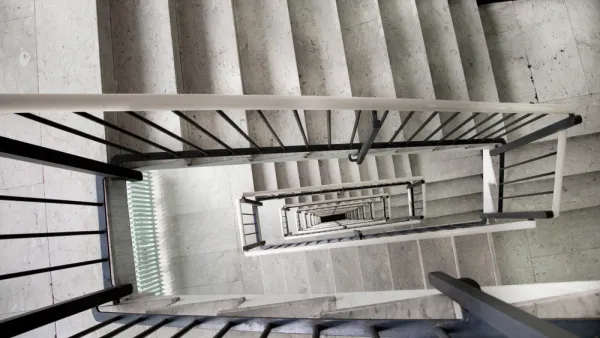
How a Staircase Requirement Can Impact Housing Affordability
Critics of the double-staircase mandate for multi-story buildings argue that it does little to improve fire safety while raising the costs of housing construction and limiting community interaction.

How Building Standards Failed London's Grenfell Tower
Fire safety experts are rushing to explain the horrific scene in London's Kensington neighborhood last night—after a fire destroyed a residential high rise. The building was recently retrofitted to meet efficiency standards.

Air taxis to connect Texas airports to business hubs
Archer Aviation says its taxis will turn 90 minute drives into 20 minute flights.

Planetizen Federal Action Tracker
A weekly monitor of how Trump’s orders and actions are impacting planners and planning in America.

California plans to bury El Niño’s downpour
If the state plays its cards right, it may be able to store a billion acre-feet of El Niño’s water in aquifers.

Desperate measures: Advocates weigh draining Lake Powell to fill Colorado River
Draining the reservoir could reduce evaporation losses by a couple hundred thousand acre-feet.

Housing is the top priority of Seattle’s sole new councilmember
Jenks campaigned on building 1,000 new units of affordable housing.

New tax cuts may slash $1.5 billion in funding for Miami transit, public parks
Amendment 3 will save Miami-Dade homeowners $2,700 in 2028.

Arizona, Wisconsin, Pennsylvania hope to finally advance climate goals post-midterms
The three states have spent years under Republican or divided control.

FREE Course: Walkable City 1: Why Walkability?
After describing his path towards focusing on walkability as the essence of good planning, Jeff Speck marches through his five principal reasons for making more walkable places.
Reinventing Malls: Planning Alchemy—Turning Gray Fields Into Gold
The course focuses on the opportunities and imperatives that shape reinvention of mall sites.

City of Rosemead
Rutgers University, Edward J. Bloustein School of Planning and Public Policy
One Hundred Miles
University of Michigan School for Environment and Sustainability (SEAS)
Hunter College, City University of New York (CUNY)
The Architects Foundation
City of Cambridge
Montrose County
The Pocatello Development Authority