The 'L' train has survived calls to be disbanded and a tumultuous century and a quarter to become a, sometimes unreliable, city icon.


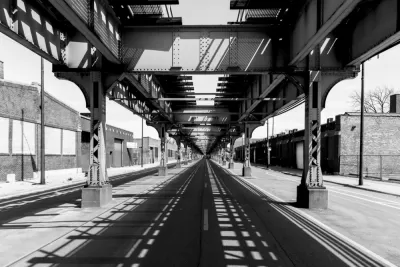
The 1890s were a time of growth for Chicago and, when the city opened its above ground rail line, it was popular immediately. "The wooden train, run by the private Chicago and South Side Rapid Transit Railroad Co. along what is now the Green Line," Mary Wisniewski writes for the Chicago Tribune. "The 'L' also promoted democracy, since it forced people from different income levels, races and ethnic groups to sit together," Greg Brozo, author of The Chicago 'L' told Wisniewski, a claim transit boosters still make today.
Chicago was seeing skyscrapers built along the transit route so it's only fitting that Chicago's train should be elevated, too, Brozo commented.
Read the full story: Chicago's elevated train system started 125 years ago

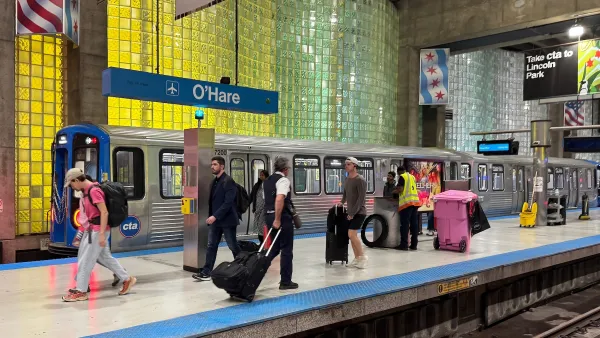
Costumed Chicagoans try to 'Catch That Train' in new viral trend
Residents are donning costumes and running to board CTA trains in a whimsical nod to the age-old problem of missing your train.

The Subversive Car-Free Guide to Trump's Great American Road Trip
Car-free ways to access Chicagoland’s best tourist attractions.
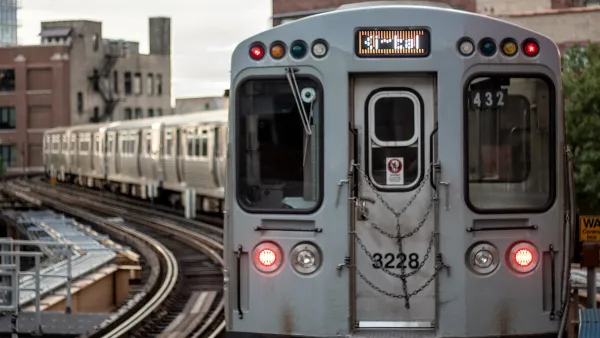
Chicago Secures Funding for Southside L Extension
The city was awarded almost $2 billion to build four new stations in Southside neighborhoods long underserved by transit.

Planetizen Federal Action Tracker
A weekly monitor of how Trump’s orders and actions are impacting planners and planning in America.

Amtrak, CN end decades-long dispute with eight-year agreement
The new operating agreement establishes an updated framework for the companies to work together, including processes to resolve disputes.

Judges permit Denver to divert 77,000 acre feet from the Colorado River for reservoir expansion
Overuse and climate change have caused the Colorado River’s water levels to plummet.

NYC DOT wants faster, more permanent street upgrades
The city is examining ways to build more concrete infrastructure without getting entangled in 'decades-long' projects.

'Something we’ve never seen before:' rising utility rates could strain city finances nationwide
Data centers, climate change and other factors have caused utility rates in the United States to increase by 38% since 2020.

Trump to overrule local leaders, lease millions of acres of America’s Pacific Island territories’ seafloors to mining companies
International law says that the Indigenous people of America’s territories have a right to prior and informed consent regarding projects that impact their countries.

FREE Course: Walkable City 1: Why Walkability?
After describing his path towards focusing on walkability as the essence of good planning, Jeff Speck marches through his five principal reasons for making more walkable places.
Reinventing Malls: Planning Alchemy—Turning Gray Fields Into Gold
The course focuses on the opportunities and imperatives that shape reinvention of mall sites.

Harvard University Graduate School of Design
KFH Group Inc.
Greater Baltimore Committee
The Architects Foundation
University of Cincinnati Online
The Pocatello Development Authority
The Urban Renewal Agency of the City of Pocatello