All the coal industry's money has not been able to stem the growth of renewable energy and distributed generation. For the electricity grid, the future is already here.


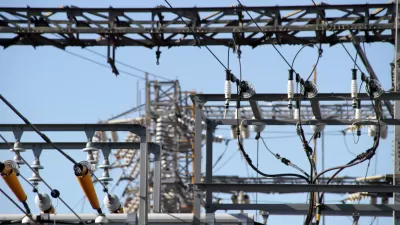
Michael J. Coren surveys the scene with the U.S. electricity grid, detailing the almost-complete overhaul of the nation's electricity infrastructure in recent years. The days of centralized production, with users mostly out of the loop on the economics of the market, are over. "Solar and wind power generation is so affordable now that many consumers can be producers as well as consumers," writes Coren. The electricity gird is being rapidly redesigned, based on entirely new principles.
According to Coren, "investments in solar, wind, and storage comprised the majority of new money flowing into US energy infrastructure in 2016," and algorithms "can now trade electricity to procure and deliver the cheapest power in real-time."
To many, the electricity grid resembles another kind of grid: the Internet. Now too, utilities are starting to resemble Internet start-ups. Coren's case in point:
Drift launched one of New York’s newest utility and electricity retailers. The team of self-described “software engineers and athletes,” registered as an utility and energy services company under state and federal authorities. is buying, trading and selling energy. By putting electricity management and trading under one roof, it claims it can optimize for price rather than just reliability.
Like an Internet start-up, Drift is attracting investment funding from Silicon Valley companies.
Read the full story: Utility startups are making the electric grid work more like the internet

Why Developers are Getting Into Energy Efficiency and Power Generation
As utilities and energy companies move towards distributed power, building owners, businesses, and developers are seeing the possibilities.

Climate change could double household water costs in some cities, study finds
New research suggests that climate change-related stressors are straining municipal water systems.
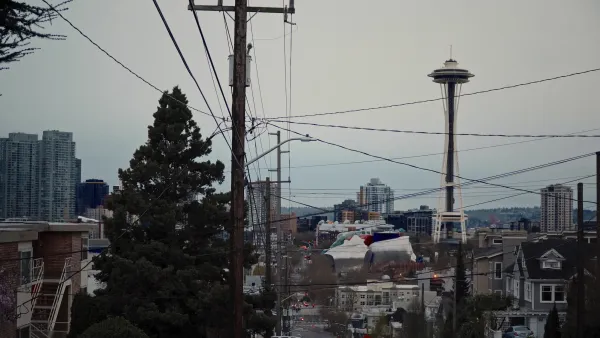
Seattle Density Increase Stymied by Underground Power Line Requirement
A new policy that requires buildings with four or more units to bury their electrical lines is making housing development more costly and causing months-long delays.

Planetizen Federal Action Tracker
A weekly monitor of how Trump’s orders and actions are impacting planners and planning in America.

‘Going backwards:’ Baltimore mayor, students rally against state's transit funding plan
Maryland's proposed six-year plan provides no funding for Baltimore’s BMORE bus program and reduces its road maintenance funding.

Detroit to transform waterfront with $2.2 billion investment
Developers will convert about 18 acres of unused parking lot space into civic spaces.

Planned $2 billion courthouse in MA sparks tension with local government
Springfield owns an essential piece of the land developers intend to build on, and some city officials do not want to see the project come to fruition.

Californians can now transform balconies into power generators
Gov. Gavin Newsom has legalized plug-in solar technology, which allows residents to plug solar panels directly into their outlets

This 85-year-old ranch is Texas’ newest state park
The 650 acre ranch is one of the largest parcels of land along Lake Palestine.

FREE Course: Walkable City 1: Why Walkability?
After describing his path towards focusing on walkability as the essence of good planning, Jeff Speck marches through his five principal reasons for making more walkable places.
Reinventing Malls: Planning Alchemy—Turning Gray Fields Into Gold
The course focuses on the opportunities and imperatives that shape reinvention of mall sites.

City of Thousand Oaks
City of Wisconsin Rapids
Harvard University Graduate School of Design
The Architects Foundation
University of Cincinnati Online
Northern Illinois Transit Authority (NITA)
The Pocatello Development Authority
The Urban Renewal Agency of the City of Pocatello