While the debates around transit-oriented residential development continue, commercial TOD is picking up speed. Offices with nearby transited to fetch much higher rents than their car-only counterparts.


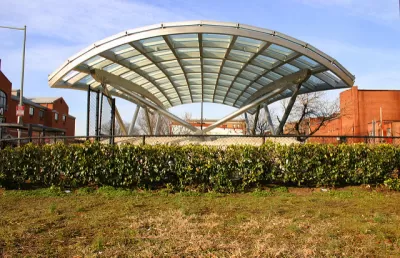
Getting to work without a car has its charms, especially for the young professional set. Increasingly, commercial developers are prioritizing projects within walking distance of transit hubs.
Joe Gose writes, "Office buildings with access to transit are outshining those without, fetching rents nearly 80 percent higher. That amounts to $45.57 a square foot versus $25.39 a square foot, according to a report released this year by Jones Lang LaSalle. Those same buildings have a vacancy rate 3.7 percentage points lower than offices without transit access."
As new transit gets built, office districts are liable to spring up nearby. "Areas that have experienced development near new rail systems or station openings include Fulton Market in Chicago; downtown Kansas City, Mo.; Austin, Tex.; and the RiNo neighborhood of Denver, to name a few."
Read the full story: Transit Hubs: A Growing Lure for Developers

Massachusetts Releases Transit-Oriented Multifamily Housing Rules
Communities near transit stations will have to comply with a new set of regulations that support multifamily development and increased housing density.
Portland Transit Station to Get Multi-Modal Mixed-Use Overhaul
The regional transit agency for Portland, Oregon is working on a development plan that would drastically multiple the planning considerations at a local transit station.
What Makes a Transit System Great in the U.S.
Transit should make people's lives better, with density a key component of successful systems.

Planetizen Federal Action Tracker
A weekly monitor of how Trump’s orders and actions are impacting planners and planning in America.

Amtrak, CN end decades-long dispute with eight-year agreement
The new operating agreement establishes an updated framework for the companies to work together, including processes to resolve disputes.

Judges permit Denver to divert 77,000 acre feet from the Colorado River for reservoir expansion
Overuse and climate change have caused the Colorado River’s water levels to plummet.

NYC DOT wants faster, more permanent street upgrades
The city is examining ways to build more concrete infrastructure without getting entangled in 'decades-long' projects.

'Something we’ve never seen before:' rising utility rates could strain city finances nationwide
Data centers, climate change and other factors have caused utility rates in the United States to increase by 38% since 2020.

Trump to overrule local leaders, lease millions of acres of America’s Pacific Island territories’ seafloors to mining companies
International law says that the Indigenous people of America’s territories have a right to prior and informed consent regarding projects that impact their countries.

FREE Course: Walkable City 1: Why Walkability?
After describing his path towards focusing on walkability as the essence of good planning, Jeff Speck marches through his five principal reasons for making more walkable places.
Reinventing Malls: Planning Alchemy—Turning Gray Fields Into Gold
The course focuses on the opportunities and imperatives that shape reinvention of mall sites.

Harvard University Graduate School of Design
KFH Group Inc.
Greater Baltimore Committee
The Architects Foundation
University of Cincinnati Online
The Pocatello Development Authority
The Urban Renewal Agency of the City of Pocatello