According to Smart Growth America, more than 1,000 local, regional, and state agencies have adopted Complete Streets policies, which means many suburban communities, like Vancouver, Washington, are focusing on safety for all users.


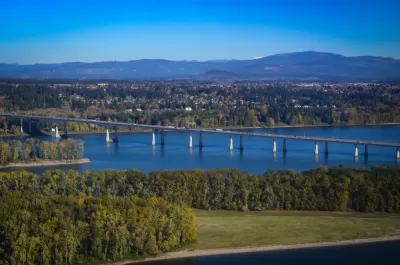
The suburban community of Vancouver, located across the Columbia River from Portland in the state of Washington, is focusing its transportation planning and engineering efforts on complete streets.
"In an effort to make Vancouver’s roads safe, convenient and more comfortable to a broader array of users, the city is in the works of adopting a Complete Streets policy to guide future road development and upgrades," reports Dameon Pesanti.
Pesanti calls on several planners from departments at the city to describe how the complete streets policy would be implemented. City staff is currently putting the finishing touches on the final draft of the complete streets policy. A public hearing of the complete streets policy is scheduled for June 19. The complete streets policy is also expected to guide the city's upcoming update of its 20-year transportation plan.
Read the full story: Vancouver plans for easy streets
‘Complete Streets’ Webpage Deleted in Federal Purge
Basic resources and information on building bike lanes and sidewalks, formerly housed on the government’s Complete Streets website, are now gone.
‘Safe Land Use:’ A Key to Road Safety
How approaching transportation planning through a public health lens can reduce traffic deaths.
Olympia Draft Transportation Plan Zeroes in on Complete Streets, Bike Infrastructure
The city’s comprehensive plan update could signal a shift in transportation planning priorities to a more comprehensive approach that ensures safer roads for all users.

Planetizen Federal Action Tracker
A weekly monitor of how Trump’s orders and actions are impacting planners and planning in America.

California plans to bury El Niño’s downpour
If the state plays its cards right, it may be able to store a billion acre-feet of El Niño’s water in aquifers.

Desperate measures: Advocates weigh draining Lake Powell to fill Colorado River
Draining the reservoir could reduce evaporation losses by a couple hundred thousand acre-feet.

In Texas, data centers are swallowing promised parkland
Residents who moved to Taylor, Texas for a rural community now have to contend with three data centers in their backyard.

How a Chicago-sized wind farm beat the odds and powered on
The project spanned five presidential administrations and a standoff with a U.S. military base.

MTA gives itself 30 days to transform pit into basketball court
The site has been under construction since 2022; the city originally estimated it would finish the court in 2024.

FREE Course: Walkable City 1: Why Walkability?
After describing his path towards focusing on walkability as the essence of good planning, Jeff Speck marches through his five principal reasons for making more walkable places.
Reinventing Malls: Planning Alchemy—Turning Gray Fields Into Gold
The course focuses on the opportunities and imperatives that shape reinvention of mall sites.

City of Rosemead
Rutgers University, Edward J. Bloustein School of Planning and Public Policy
One Hundred Miles
Hunter College, City University of New York (CUNY)
The Architects Foundation
University of Cincinnati Online
City of Cambridge
Montrose County
The Pocatello Development Authority