Colombia joins New Zealand and India as countries that have recognized the legal status of rivers in recent months.


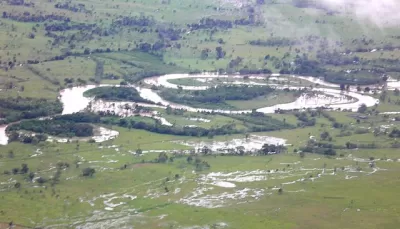
"In a landmark verdict, Colombia’s Constitutional Court has recognized the Atrato River basin as having rights to 'protection, conservation, maintenance and restoration,'" reports Sarah Bardeen for the International Rivers site.
The river is the third around the world to receive legal protections, after the Whanganui River in New Zealand was granted the status of a human entity in March. The ruling on the legal status of the Atrato River actually came earlier, in November 2016, but has only recently been publicized. As explained by Bardeen, Colombia's decision regarding the Atrato River doesn't include the same language about the river's human or living status. The decision does, however, "offer protection to the Atrato River while simultaneously guaranteeing the fundamental rights of the communities that inhabit its banks. Under this new paradigm, known as 'biocultural rights,' the Court has asserted that the most effective way to protect ethnic communities’ rights is through biodiversity conservation and ecosystem restoration."
In March, the Yamuna and Ganges rivers in India were also granted legal status as living entities, following the lead set by New Zealand.
FULL STORY: Colombian River Gains Legal Rights

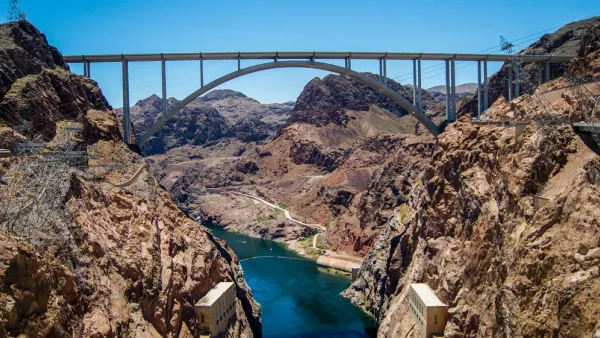
Lawsuit Would Recognize the Human Rights of the Colorado River
Corporations have rights in the United States, and an organization called Deep Green Resistance is going to federal court in Colorado to argue that rivers should too.
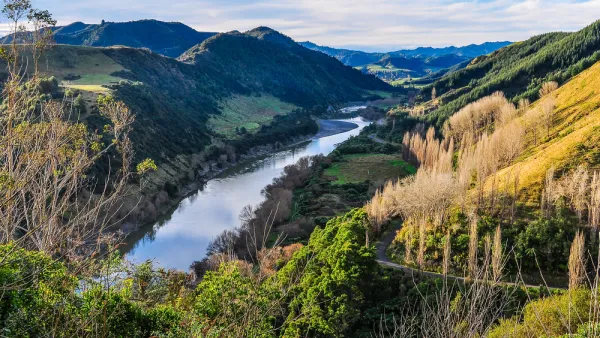
River Given Human Status
A New Zealand river revered by the Maori people is granted the status of a living being by the country's parliament.
Bill Would Double Protections for Montana Rivers
The Montana Headwaters Legacy Act would double the number of wild and scenic rivers in the state of Montana.

The state-sanctioned urbicide of Austin
People don’t kill cities. Freeways do.

US to reduce Colorado River water deliveries to Mexico
A new Colorado Treaty amendment reduces Mexico’s Colorado River water allocation by 250,000 acre feet.

New Jersey’s second-largest city bans standalone data centers
Jersey City will continue to allow co-location facilities, such as those meant for research institutions that store their own data.

Amtrak not solely to blame for New Jersey commuter rail's unreliability, report finds
A new study from the Garden State Initiative found that NJ Transit’s budget grew 20% across a 4 year period, but reliability declined significantly over the same period.

EPA erases limits on planet-warming pollution from power plants
Under Monday’s plan, power plants would still have some limits on how much mercury, arsenic and other contaminants they can emit.

Phoenix announces new on-demand transit service, more frequent RAPID buses
Both new services will launch in October, and are part of Phoenix's Project Effective Access Solutions for Easing Congestion.

FREE Course: Walkable City 1: Why Walkability?
After describing his path towards focusing on walkability as the essence of good planning, Jeff Speck marches through his five principal reasons for making more walkable places.
Reinventing Malls: Planning Alchemy—Turning Gray Fields Into Gold
The course focuses on the opportunities and imperatives that shape reinvention of mall sites.


Eagle County Government
Harvard University Graduate School of Design
Nashville Planning Department
The Architects Foundation
University of Cincinnati Online
The Pocatello Development Authority
The Urban Renewal Agency of the City of Pocatello
Journal of the American Planning Association