According to this survey, many Houston residents increasingly prefer mixed-use areas over single-family suburbia. But there's only so much downtown available.


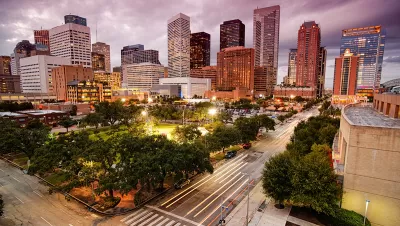
Houston isn't exactly known for walkable urbanism. Glissette Santana writes, "Fewer than 7 percent of city residents walk, bike or take transit to work, according to Census estimates." At the same time, "this year, Houston finally approved a bike plan, after much delay; it finalized its latest light-rail expansion; and it launched a new pedestrian-friendly plaza in the heart of downtown."
The Kinder Houston Area Survey 2017, a long-standing regional survey out of the Kinder Institute for Urban Research, shows a bump in support for mixed-use lifestyles. "When asked if they would prefer to live in 'an area with a mix of developments, including homes, shops and restaurants,' rather than in 'a single-family residential area,' 56 percent of the survey's respondents said they'd prefer the mixed-use area."
Much of this enthusiasm may be coming from Millennials' purported preference for urban living. But the question is whether that preference, if it really exists, will continue. Predictably, prices are also escalating in downtown Houston, which may shut out many urban hopefuls.
Read the full story: Houston Has Long Been A Car City. Today, Residents Are Seeking Something Else.
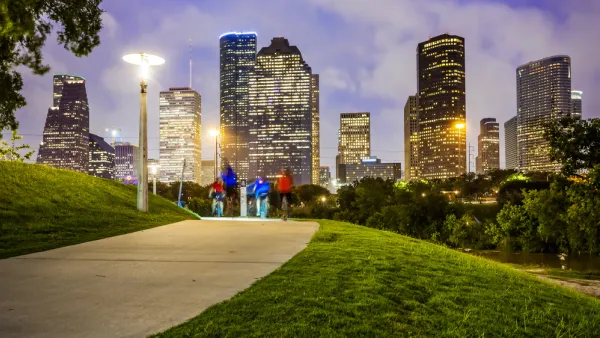
Houston's Latest Push for Walkable Neighborhoods
Building on 2009's Transit Corridor Ordinance, Houston's Walkable Places Committee is creating a process for specific neighborhoods to adopt new rules emphasizing walkability.

Houston improved walkability ahead of the World Cup. Will it last?
Some mobility advocates say the city's 'Green Corridor' amounts to 'lipstick on a pig' rather than a true commitment to better transit and walking infrastructure.
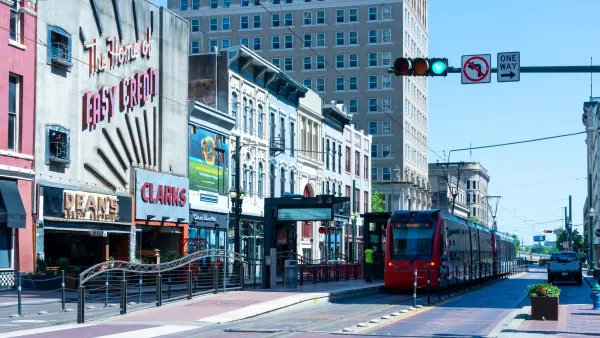
Houston's pedestrian promenade on track to be ready for World Cup crowds
The city is transforming seven downtown blocks along a light rail line into a car-free zone focused on outdoor dining and entertainment.

Planetizen Federal Action Tracker
A weekly monitor of how Trump’s orders and actions are impacting planners and planning in America.

California plans to bury El Niño’s downpour
If the state plays its cards right, it may be able to store a billion acre-feet of El Niño’s water in aquifers.

Desperate measures: Advocates weigh draining Lake Powell to fill Colorado River
Draining the reservoir could reduce evaporation losses by a couple hundred thousand acre-feet.

Chicago voters approve permanent festival grounds, penalty for vacant property owners
Currently, major summer and fall festivals take over public parks for weeks at a time, drawing criticism from nearby residents

NYC votes to cut outdoor dining red tape, speed up permitting
New York City also voted to allow the Department of Transportation to begin work on urgent projects before notifying elected officials.

California appears to reject Prop. 45
The proposition would have expanded the projects that qualify for a streamlined environmental review, effectively paring down the California Environmental Quality Act.

FREE Course: Walkable City 1: Why Walkability?
After describing his path towards focusing on walkability as the essence of good planning, Jeff Speck marches through his five principal reasons for making more walkable places.
Reinventing Malls: Planning Alchemy—Turning Gray Fields Into Gold
The course focuses on the opportunities and imperatives that shape reinvention of mall sites.

City of Rosemead
Rutgers University, Edward J. Bloustein School of Planning and Public Policy
One Hundred Miles
Hunter College, City University of New York (CUNY)
The Architects Foundation
University of Cincinnati Online
City of Cambridge
Montrose County
The Pocatello Development Authority