Can we use Jeff Bezos's distinction between "Day 1" and "Day 2" companies to compare cities? If so, Pittsburgh may be a prime example of the former.


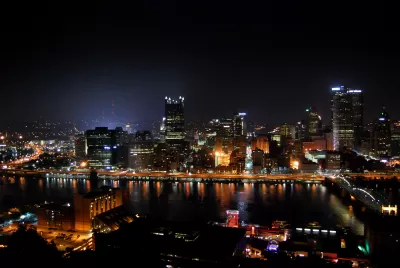
Cities are undoubtedly more complex than private corporations, but that doesn't mean analogies can't be drawn. Harry Alford sees Pittsburgh as a prime example of an innovative "Day 1 city."
"Cities, much like internet companies such as Amazon, can be susceptible to a state in which things do not change, move, or progress. This can often occur unknowingly by simply being dictated by the process instead of the outcomes."
It's hard to deny one aspect of the city's appeal: cost of living. "Pittsburgh is creating a welcoming atmosphere for entrepreneurs without negatively impacting them with the high cost of living like we're seeing in coastal cities."
Alford makes the case that being too concerned with established procedure can lead to inertia. "If the city/region you live and work in is slowing down and on the verge of irrelevance, then it's probably a Day 2 city [...] A Day 1 city, much like a startup, doesn't have to know all the answers in order to be successful. Sometimes it just has to decide and commit."
Read the full story: How To Know If You’re In A Day 1 City

Electric Pickup Truck Manufacturer Scores Huge 'Climate' Order from Amazon
To show his company's commitment to becoming carbon neutral by 2040, Jeff Bezos announced Thursday that Amazon would purchase 100,000 battery-electric delivery vans from Michigan-based Rivian. The trucks will begin service in 2021.

Watch Saturday Night Live's Hilarious Take on Amazon's HQ2 Decision
Saturday Night Love comes up with a novel hot take on the thinking behind Amazon's decision to split its new second headquarters between New York City and Northern Virginia.
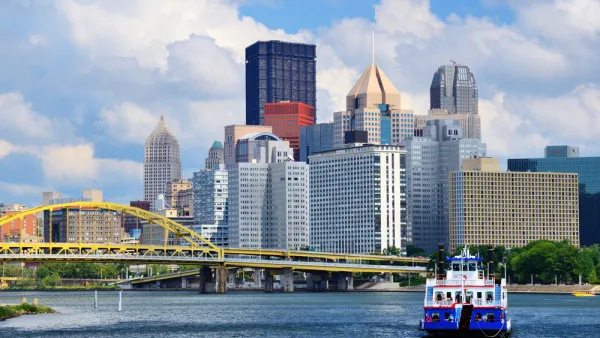
Judge: Pittsburgh Can't Hide Amazon HQ2 Offer From the Public
City and county officials have already appealed a decision that would require them to release the details of a proposal designed to entice Amazon into locating its second headquarters in Pittsburgh.

Planetizen Federal Action Tracker
A weekly monitor of how Trump’s orders and actions are impacting planners and planning in America.

Chicago breaks ground on $3 billion megadevelopment
The new neighborhood, titled Foundry Park, will one day host 3,700 residences.

This MA town is drowning in its own sewage — and residents like it that way
Susan Murcott, a waste water expert, said if Carlisle didn't address their leaking sewage, the problem could turn “deadly.”

Feds to more closely scrutinize proposed Amtrak facility’s environmental impact
The Federal Railroad Administration had initially said the facility qualified for a less extensive environmental review.

Boston is hard to build housing in: its chief of planning wants to keep it that way
Chief of Planning Kairos Shen said she would not make changes to Boston’s affordability requirements for new housing, which critics say have slowed down development.

California plans to bury El Niño’s downpour
If the state plays its cards right, it may be able to store a billion acre-feet of El Niño’s water in aquifers.

FREE Course: Walkable City 1: Why Walkability?
After describing his path towards focusing on walkability as the essence of good planning, Jeff Speck marches through his five principal reasons for making more walkable places.
Reinventing Malls: Planning Alchemy—Turning Gray Fields Into Gold
The course focuses on the opportunities and imperatives that shape reinvention of mall sites.

City of Rosemead
Rutgers University, Edward J. Bloustein School of Planning and Public Policy
One Hundred Miles
Hunter College, City University of New York (CUNY)
The Architects Foundation
University of Cincinnati Online
Montrose County
The Pocatello Development Authority
The Urban Renewal Agency of the City of Pocatello