According to new data released from the real estate website Trulia, Washington, D.C. experienced the largest gain in Black homeownership in the United States over the past 25 years, Chicago had the biggest expansion of Latino homeownership.



A report from Trulia details the changes in home ownership among Blacks and Latinos between 1990 and 2015. Washington, D.C. topped the list for growth in Black homeownership at 9.6%, while Chicago topped the list for growth in Latino home ownership at 13%. "The only other two areas that were in the top 10 for increases in both Black and Latino homeownership were Fairfield County, Connecticut and Worcester, Massachusetts," Christina Sturdivant writes for DCist.
According to Census data for the first quarter of 2017 home ownership rates for all Americans is 63.6%. National Black homeownership rates are lower at only 42.7% and Latino rates are at 46.6%.
Read the full story: D.C. Has Largest Increase Of Black Homeowners In The Country


It’s Time to Embrace Congestion Pricing
Charging based on demand and for access is commonplace—except on roads.
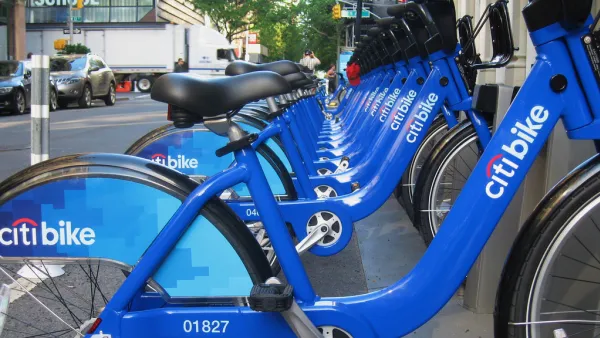
Subsidizing Bike Share for Low-Income Riders
In New York, SNAP recipients to get access to Citi Bikes at discount like DIVY riders already do in Chicago.

The City With the Most Rats Is...
It's the day everyone has been waiting for! The 2017 "Rattiest Cities" list has been announced.

Planetizen Federal Action Tracker
A weekly monitor of how Trump’s orders and actions are impacting planners and planning in America.

Amtrak, CN end decades-long dispute with eight-year agreement
The new operating agreement establishes an updated framework for the companies to work together, including processes to resolve disputes.

Northwest rail fans eager for Sept. 30 debut of Amtrak’s Airo fleet
Get ready for that new train smell and more seats. But they won’t go faster or run more frequently on the Cascades route in Washington and Oregon.

Brightline Florida files for bankruptcy
The transit company is over $5 billion in debt.

St. Louis Metro to test if single-car trains can reduce operating costs, maintain rider satisfaction
The pilot program will run from October to spring 2027, and begin with one single-car train operating on Metrolink’s Red and Blue lines.

Pennsylvania is building data centers in abandoned mines
Housing data centers in mines provides an alternative to destroying local forests and may spare residents from data centers’ noise and air pollution.

FREE Course: Walkable City 1: Why Walkability?
After describing his path towards focusing on walkability as the essence of good planning, Jeff Speck marches through his five principal reasons for making more walkable places.
Reinventing Malls: Planning Alchemy—Turning Gray Fields Into Gold
The course focuses on the opportunities and imperatives that shape reinvention of mall sites.

City of Thousand Oaks
City of Wisconsin Rapids
Harvard University Graduate School of Design
The Architects Foundation
University of Cincinnati Online
The Pocatello Development Authority
The Urban Renewal Agency of the City of Pocatello