A growing Portland has seen many arguments about how to accommodate an influx of residents—recommends the "step back" as a way to add density without adding shadows or creating wind tunnels.


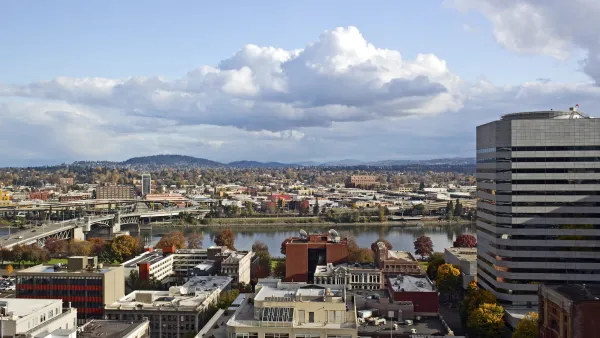
The top of a building can have big impacts on shadows, wind passage, and views. Too often, Portland buildings are just blocks, argues Michael Mehaffy in a piece for Livable Portland. A preferable option would be to build "step backs" (step-like recessions at the tops of buildings) as a way to resolve some of the conflicts between the YIMBY crowd and those concerned about development in the city.
Why don't developers build more step back projects? "Profit-minded developers usually make more money when they go straight up from the street," Mehaffy argues. "But going straight up is precisely what a generation of failed “modernist” projects did in the 1960s, with very unhappy results," he goes on to say. Those who say they're concerned about the look of a project or its potential shadows might not be easily satisfied with this compromise, still the step back seems to be a good option for those that seek to build coalitions and…buildings.
Read the full story: Is it time for Portland to rediscover the “step-back”?

Portland approves expedited permitting for multifamily housing on the Eastside
A city council resolution requires staff to prepare a plan for speeding up rezoning for multifamily projects.

Study: Nearly Half of Portland TOD Residents Commute by Transit
People living in transit-oriented developments are more likely to ditch the car and opt for transit or walking, new research shows.

Portland Approves ‘Residential Infill Project – Part 2' to Add New Forms of Residential Density
The city of Portland is already building upon the historic work of the Residential Infill Project, approved by the city in August 2021, with a new slate of zoning changes dubbed the ‘Residential Infill Project – Part 2.”

Planetizen Federal Action Tracker
A weekly monitor of how Trump’s orders and actions are impacting planners and planning in America.

Amtrak, CN end decades-long dispute with eight-year agreement
The new operating agreement establishes an updated framework for the companies to work together, including processes to resolve disputes.

Northwest rail fans eager for Sept. 30 debut of Amtrak’s Airo fleet
Get ready for that new train smell and more seats. But they won’t go faster or run more frequently on the Cascades route in Washington and Oregon.

Brightline Florida files for bankruptcy
The transit company is over $5 billion in debt.

St. Louis Metro to test if single-car trains can reduce operating costs, maintain rider satisfaction
The pilot program will run from October to spring 2027, and begin with one single-car train operating on Metrolink’s Red and Blue lines.

Pennsylvania is building data centers in abandoned mines
Housing data centers in mines provides an alternative to destroying local forests and may spare residents from data centers’ noise and air pollution.

FREE Course: Walkable City 1: Why Walkability?
After describing his path towards focusing on walkability as the essence of good planning, Jeff Speck marches through his five principal reasons for making more walkable places.
Reinventing Malls: Planning Alchemy—Turning Gray Fields Into Gold
The course focuses on the opportunities and imperatives that shape reinvention of mall sites.

City of Thousand Oaks
City of Wisconsin Rapids
Harvard University Graduate School of Design
The Architects Foundation
University of Cincinnati Online
The Pocatello Development Authority
The Urban Renewal Agency of the City of Pocatello