The state of Oregon is looking to use a gas tax increase to, among other things, fund a billion-dollars worth of highway-widening projects.


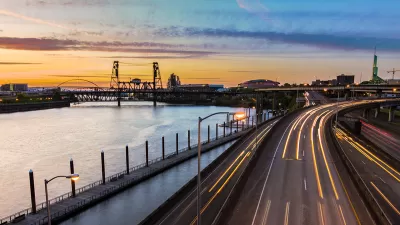
Oregon's infrastructure is in need of maintenance. "The plan is to raise gas taxes and other fees partly to shore up the state’s multi-billion dollar maintenance backlog, but prominently to build three big freeway widening projects in the Portland metropolitan area," Joe Cortright writes in City Observatory. This move was announced despite reports that found the state is falling short of its carbon emission reduction goals.
Cortright points out that Portland is famous for cancelling freeway projects and tearing freeways down. But the city, which has experienced its share of loses this week, may be losing some of its active transit credibility. Some argue that the freeway expansion represents a compromise, and would make a light rail project more palatable to voters, but Cortright argues that expanding capacity will only create demand and increase vehicle emissions.
For more detail on the proposed freeway widening projects, see an article by Jonathan Maus.
FULL STORY: Happy Earth Day, Oregon! Let’s Widen Some Freeways!

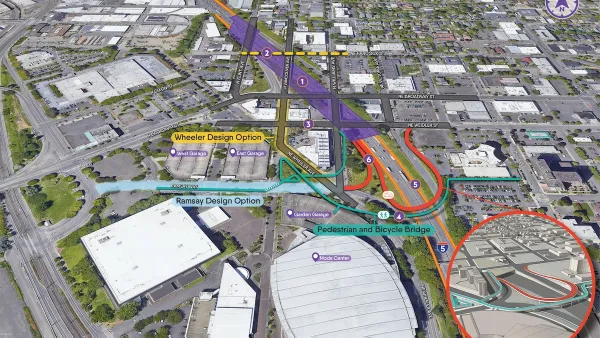
Portland Advocates Call on Feds to Oppose Freeway Expansion
The Oregon DOT is requesting a federal grant to fund a controversial freeway expansion through the Rose Quarter.
The Unceremonious Death of a Freeway Expansion Project
The end of an Oregon freeway project didn't get much fanfare, but the victory is worth celebrating.
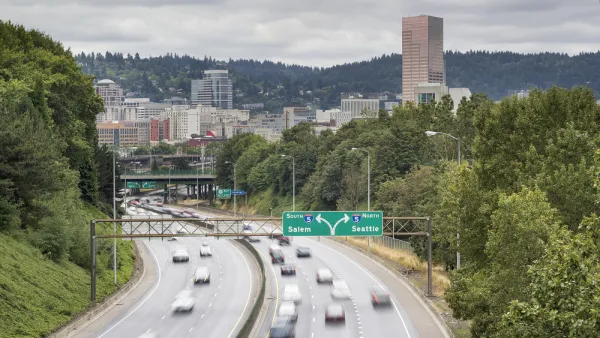
Feds Toss the Environmental Assessment for Portland Controversial Freeway Widening Project
It's back to the drawing board for the I-5 Rose Quarter Improvement Project.

Planetizen Federal Action Tracker
A weekly monitor of how Trump’s orders and actions are impacting planners and planning in America.

The state-sanctioned urbicide of Austin
People don’t kill cities. Freeways do.

US to reduce Colorado River water deliveries to Mexico
A new Colorado Treaty amendment reduces Mexico’s Colorado River water allocation by 250,000 acre feet.

5 New England states march closer to 800 megawatt wind energy project
Securing federal approval for the project may be complicated under the Trump administration, which has historically been hostile towards domestic wind power.

Baltimore to break ground on $50 million Transit Priority Project
The project will bring faster bus trips, safer streets and better bike connections to Baltimore.

Airbnb launches $250 million 'last-dollar financing' housing accelerator, makes first investment in Austin
The company will put $6.4 million towards affordable housing development in Texas’ capital.

FREE Course: Walkable City 1: Why Walkability?
After describing his path towards focusing on walkability as the essence of good planning, Jeff Speck marches through his five principal reasons for making more walkable places.
Reinventing Malls: Planning Alchemy—Turning Gray Fields Into Gold
The course focuses on the opportunities and imperatives that shape reinvention of mall sites.

Eagle County Government
Harvard University Graduate School of Design
Nashville Planning Department
The Architects Foundation
University of Cincinnati Online
The Pocatello Development Authority
The Urban Renewal Agency of the City of Pocatello
Journal of the American Planning Association