Home buyers are likely to pay the cost of a recent decision by the U.S. Commerce Department.


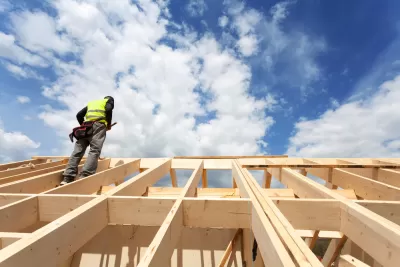
Peter Baker and Ian Austen report: "The Trump administration announced on Monday that it would impose new tariffs on Canadian softwood lumber imports, escalating a longstanding conflict with America’s second-largest trading partner."
"The United States imported $5.7 billion in softwood lumber last year alone, mainly for residential home building," according to the article, which focuses mostly on the trade implications of the Commerce Department's decision to impose the tariff.
In a separate article, Chris Kirkham and Sarah Nassauer dig into the implications of the tariff for the U.S. home-building industry, which they say "has struggled with higher labor costs since the housing crash a decade ago." Here, the reporters explain how lumber fits into the total cost of new homes:
Based on analysis last year, a builder spends an average of $15,413 for the softwood lumber in a single-family home, or about 7% of the total construction cost of a home. Lumber cost increases so far this year have added an estimated $3,000 to the cost of building a typical home, according to the home builders’ association.
Lumber costs are already higher than they have been in a decade, according to the article.
Another article by Diana Olick calculates the expected cost U.S. home buyers will likely pay to cover the new tariff. Based on calculations by the National Association of Home Builders, homebuyers will increase Canadian lumber costs by 6.4 percent, or another $1,236 to the cost of an average single-family home.
Read the full story: In New Trade Front, Trump Slaps Tariff on Canadian Lumber

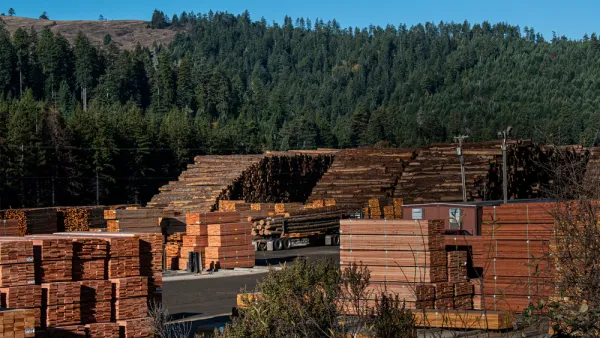
Lumber Prices Spike; Housing Prices Follow
The cost of lumber has more than doubled in the past year, according to industry sources, adding more than $24,000 to the cost of a new home.
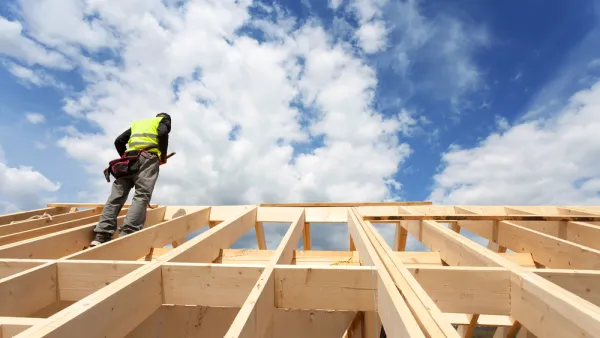
Home Builders Experiencing High Costs and Slow Starts
The Trump Administration's tariffs on Canadian lumber are passing costs down to homebuyers, according to industry experts.
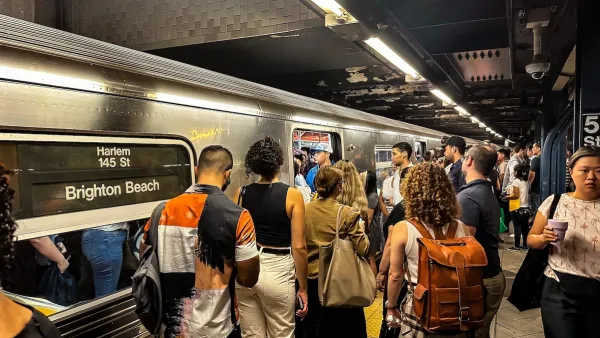
MTA expects Trump’s tariffs to increase new NYC transit costs by $1 billion
The Metropolitan Transit Authority said the cost of new subway cars has risen by 30% since Trump began his second term as president.

Planetizen Federal Action Tracker
A weekly monitor of how Trump’s orders and actions are impacting planners and planning in America.

Data reveals that NYC’s bet on congestion pricing has paid off
After almost two years of the program, reports show positive impacts on traffic and air quality and no disruptions to parking.

HUD modernizes 50-year-old manufactured housing framework
The Next Generation Manufactured Housing Action Plan establishes new energy-efficiency standards for manufactured homes, and new guidelines for anchoring them.

Developers sue Mississippi landowners who object to pipeline through their land
Because the Federal Energy Regulatory Commission approved the pipeline project, the developer can use private land without the consent of the owner.

A gas leak in NYC is costing residents $300 million
More than 90% of NYC’s electricity is from natural gas. About 2% of that gas is leaking and escaping into the air.

CA officials have the power to fix the state’s riskiest dams. They’ve never used it
California’s 40 most hazardous dams would endanger up to 1.5 million people if they failed.

FREE Course: Walkable City 1: Why Walkability?
After describing his path towards focusing on walkability as the essence of good planning, Jeff Speck marches through his five principal reasons for making more walkable places.
Reinventing Malls: Planning Alchemy—Turning Gray Fields Into Gold
The course focuses on the opportunities and imperatives that shape reinvention of mall sites.

One Hundred Miles
County of Mendocino
planning NEXT
The Architects Foundation
University of Cincinnati Online
Montrose County
Northern Illinois Transit Authority (NITA)
The Pocatello Development Authority