A bill with anti-gentrification goals would charge developers who intend to knock down homes along the city’s new bike trail.


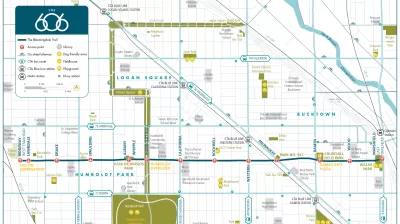
"Aldermen Proco 'Joe' Moreno, 1st, and Roberto Maldonado, 26th, are drafting an ordinance that would increase the demolition fee for residential properties and charge a deconversion fee when multiple-unit buildings are turned into single-family homes within a still-unspecified area," Corilyn Shropshire writes for the Chicago Tribune. Houses along the 606 trail have seen their values increase since the bike path's completion.
"It's twofold — to slow down the pace of gentrification and to create a fund for those existing homes to be improved for home and building owners and their tenants," Maldonado told Shropshire. Some are worried that the new value of land toward the western end of the trail will push out renters. Geoff Smith, executive director of the Institute for Housing Studies, says "[m]ultifamily, small, multiunit affordable housing buildings aren't built anymore."
Read the full story: Aldermen want to 'put a brake' on gentrification along The 606

Obama Library Displacement Concerns: City Council Falls Short of Local Demands
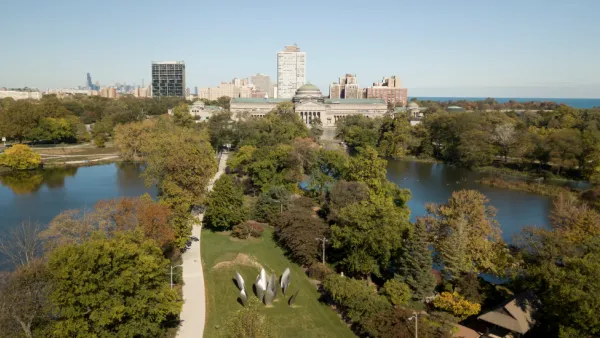
The Chicago City Council has approved an ordinance intended to protect residents of the neighborhoods surrounding the planned Barack Obama Presidential Center.
Chicago's 606 Bike Path Made Gentrification Inevitable, Expert Claims
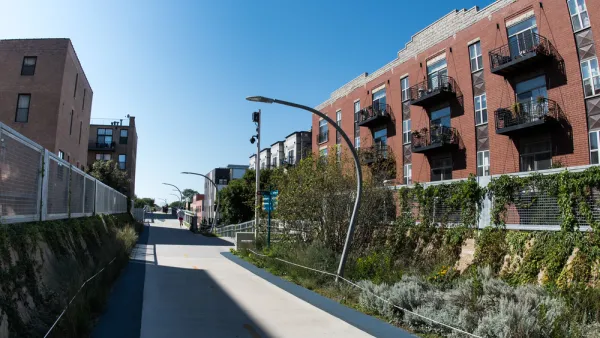
Because the rails to trails project left housing up to the market, rising rents were inevitable, claims a new report.
Are Chicago's Transit Oriented Developments Generating Enough Affordable Housing?
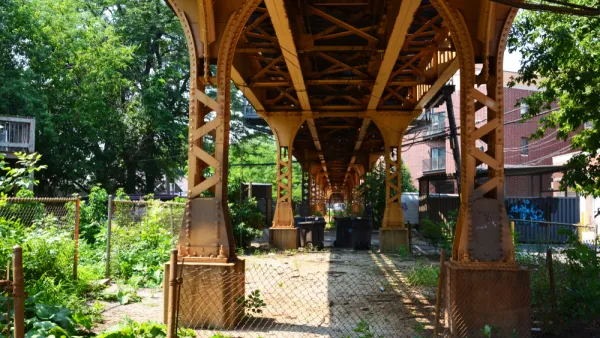
Chicago's Logan Square neighborhood is the scene for a very contemporary land use policy debate: how much affordable housing can cultivated from the development opportunities in proximity to transit lines?

Planetizen Federal Action Tracker
A weekly monitor of how Trump’s orders and actions are impacting planners and planning in America.

Amtrak, CN end decades-long dispute with eight-year agreement
The new operating agreement establishes an updated framework for the companies to work together, including processes to resolve disputes.

Northwest rail fans eager for Sept. 30 debut of Amtrak’s Airo fleet
Get ready for that new train smell and more seats. But they won’t go faster or run more frequently on the Cascades route in Washington and Oregon.

Brightline Florida files for bankruptcy
The transit company is over $5 billion in debt.

St. Louis Metro to test if single-car trains can reduce operating costs, maintain rider satisfaction
The pilot program will run from October to spring 2027, and begin with one single-car train operating on Metrolink’s Red and Blue lines.

Pennsylvania is building data centers in abandoned mines
Housing data centers in mines provides an alternative to destroying local forests and may spare residents from data centers’ noise and air pollution.

FREE Course: Walkable City 1: Why Walkability?
After describing his path towards focusing on walkability as the essence of good planning, Jeff Speck marches through his five principal reasons for making more walkable places.
Reinventing Malls: Planning Alchemy—Turning Gray Fields Into Gold
The course focuses on the opportunities and imperatives that shape reinvention of mall sites.

City of Thousand Oaks
City of Wisconsin Rapids
Harvard University Graduate School of Design
The Architects Foundation
University of Cincinnati Online
The Pocatello Development Authority
The Urban Renewal Agency of the City of Pocatello