Will sprawling cities stay sprawled? Starting in their downtowns, some Sun Belt behemoths are embracing denser, more walkable forms.


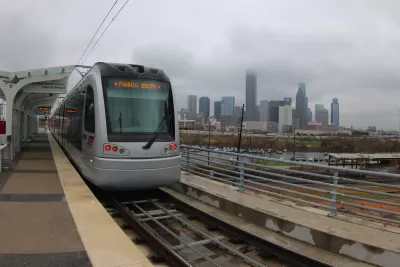
Home to about one-sixth of the U.S. population, "sprawling cities" are small regional centers that ballooned out over the past 60 years into distinctly unwalkable suburban metropolises.
For CNU, Robert Steuteville identifies 25 such locations, characterized by their auto-dependent development patterns since 1950. "Because of the infrastructure and built patterns since 1950, only 6 percent of residents walk, bike, or take transit to work in sprawling cities. Because they are so automobile dependent, they impose much higher transportation costs on residents."
Located in the Sun Belt (and elsewhere in the nation's southern half), "sprawling cities are diverse places—about a third of the population is Hispanic. Average household income tops $54,000, which is about the same as traditional cities. Crime is relatively low in sprawling cities, although death and injury by automobile is higher than traditional cities."
Steuteville points to some signs that despite their unwieldy infrastructure, these cities are becoming more traditionally urban. "Downtowns of sprawling cities were among the first to revive. A prime example is Fort Worth, which rebuilt a walkable downtown over the course of two decades, culminating in the fabulous Sundance Square." Economically vibrant and affordable, "sprawling cities have the market strength to rebuild [old malls] as mixed-use centers."
Read the full story: Sprawling cities are becoming more urban


The Natalist Case For Sprawl (And Why It Fails)
Some commentators defend anti-urban government policies such as exclusionary zoning on the basis that homeowning suburbanites have high birth rates. But this doesn't seem to be true in recent decades.
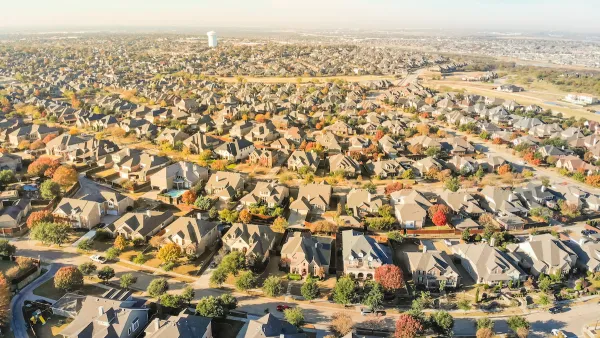
Zoning for Good
A new book highlights the power of zoning to change communities for the better.
The Changing Shape of American Suburbs
Housing costs and availability are pushing more American households, including young families, to suburbs and exurbs — and they’re demanding changes.

Planetizen Federal Action Tracker
A weekly monitor of how Trump’s orders and actions are impacting planners and planning in America.

Amtrak, CN end decades-long dispute with eight-year agreement
The new operating agreement establishes an updated framework for the companies to work together, including processes to resolve disputes.

Northwest rail fans eager for Sept. 30 debut of Amtrak’s Airo fleet
Get ready for that new train smell and more seats. But they won’t go faster or run more frequently on the Cascades route in Washington and Oregon.

Brightline Florida files for bankruptcy
The transit company is over $5 billion in debt.

St. Louis Metro to test if single-car trains can reduce operating costs, maintain rider satisfaction
The pilot program will run from October to spring 2027, and begin with one single-car train operating on Metrolink’s Red and Blue lines.

Pennsylvania is building data centers in abandoned mines
Housing data centers in mines provides an alternative to destroying local forests and may spare residents from data centers’ noise and air pollution.

FREE Course: Walkable City 1: Why Walkability?
After describing his path towards focusing on walkability as the essence of good planning, Jeff Speck marches through his five principal reasons for making more walkable places.
Reinventing Malls: Planning Alchemy—Turning Gray Fields Into Gold
The course focuses on the opportunities and imperatives that shape reinvention of mall sites.

City of Thousand Oaks
City of Wisconsin Rapids
Harvard University Graduate School of Design
The Architects Foundation
University of Cincinnati Online
The Pocatello Development Authority
The Urban Renewal Agency of the City of Pocatello