A dramatic entrance on horseback preceded one of Ryan Zinke's first actions as Secretary of the Department of Interior—rescinding guidance issued by the Fish & Wildlife Service to phase out the use of toxic, lead ammunition on federal lands.



For the equestrians who follow Planetizen, as reported by Juliet Eilperin for The Washington Post:
Zinke — who was confirmed by the Senate on Wednesday [March 1] by a 68-to-31 vote — rode with a nine-person mounted police escort to the Interior Department’s downtown headquarters on Tonto, an Irish sport horse [on Thursday]. The horse, a bay roan gelding standing just over 17 hands tall, is normally kept in stables on the Mall and is owned by the U.S. Park Police.
After settling into his new office, the former Republican congressman from Montana signed two orders which his department's media office lumped, some might say questionably, as "Orders to Expand Access to Public Lands."
Perhaps the rationale for calling Secretarial Order No. 3346 (pdf), the order which rescinds the Jan. 20, 2017 lead ammunition ban on federal lands, as "expanding access" is that "[s]everal gun rights and hunting groups had objected to the policy...on the grounds that non-toxic copper and steel shot is somewhat more expensive," reports Eilperin.
Stephen Gutowski of the Washington Free Beacon quoted now-former U.S. Fish and Wildlife Service Director Dan Ashe, an Obama appointee, to explain the rationale behind the the Jan. 20 ban, President Obama's last day in office:
"Exposure to lead ammunition and fishing tackle has resulted in harmful effects to fish and wildlife species," Ashe said in his order [no longer on the agency's website]. "According to the U.S. Geological Survey, lead poisoning is a toxicosis caused by the absorption of hazardous levels of lead in body tissues."
"Ingested lead pellets from shotgun shells have been a common source of lead poisoning in birds," the order continued. "The Service recognized the problem of avian exposure to lead shot used for waterfowl hunting and enacted restrictions in 1991 and hunting and waterfowl populations have thrived since."
Eilperin reports that advocates of the lead ban claim that is lead poisoning from ammunition is "estimated to kill between 10 and 20 million birds each year, along with other species."
While the older restrictions that pertain to waterfowl hunting will presumably remain, it's the expansion enacted on Jan. 20 that was rescinded on March 2 by the first of the two orders that Secretary Zinke signed. The second order, Secretarial Order No. 3347 (pdf), does, in fact, expand access "by directing bureaus and agencies to immediately identify areas where recreation and fishing can be expanded," according to the press release.
Eilperin also reports on an issue covered recently in Planetizen: the transfer of federal lands to states and municipalities.
Zinke made it clear in his note that he was adamantly opposed to selling off federal lands, as some congressional Republicans had proposed, but he wanted to give Interior employees more flexibility in how they operate.
One final note on President Trump's cabinet: Former Governor of Texas, Rick Perry, was confirmed Thursday, March 2, as Secretary of the Department of Energy on a 62 to 37 vote. Perry, a twice-presidential candidate in the Republican primary, had stated during a 2011 debate that the DOE was one of there federal agencies he wanted to eliminate, though he infamously forgot its name.
Read the full story: The new interior secretary just rode into work on a horse
Antiquities Act Executive Order Calls for Review of Large Designations
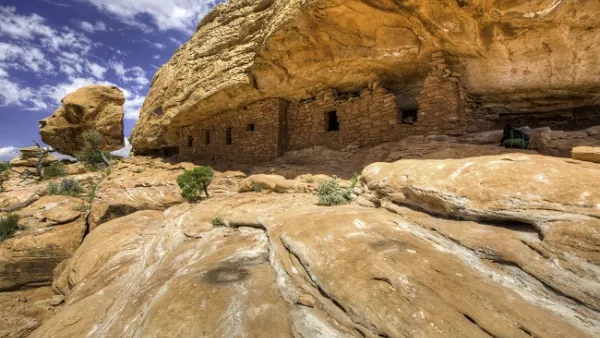
The Executive Order does not roll back the Antiquities Act nor rescind any designations made by presidents Clinton, George W. Bush, or Obama, but does call for their review if over 100,000 acres. President Trump feels that the act has been misused.

Coal Miners Are Going Back to Work, Proclaims Trump Upon Signing Executive Order
Flanked by coal miners, President Trump signed an executive order on Tuesday that begins the roll back of his predecessor's signature environmental rule, the Clean Power Plan, and other environmental regulations to facilitate energy production.

Interior Secretary Issues Order to Expedite Drilling on Public Lands
Secretary Zinke's order is part of the "energy dominance" agenda of the Trump Administration to make the U.S. a major energy exporter. The order will reduce the time needed by the Bureau of Land Management to process permitting for new wells.

Planetizen Federal Action Tracker
A weekly monitor of how Trump’s orders and actions are impacting planners and planning in America.

Eastern Nebraska is running out of electricity
Data centers and electrification are straining eastern Nebraska’s grid, throttling economic development.

Study reveals best places in the U.S. for cycling, walking
New research from Streetlight Data examines bicycle and pedestrian miles per capita in the 100 largest U.S. cities by population.

Why does it take an emergency for the U.S. to expedite infrastructure projects?
In June 2023, Philadelphia repaired a melted interstate in 12 days thanks to an emergency order.

Federal government nominates new FTA administrator
Mark Aesch is currently the founder and CEO of a transportation management consulting firm.

Developers reveal $10 billion stadium plan as ‘Hail Mary’ to keep Bears in Chicago
The plan would also boast a public park, high- and mid-rise buildings and a youth sports complex.

FREE Course: Walkable City 1: Why Walkability?
After describing his path towards focusing on walkability as the essence of good planning, Jeff Speck marches through his five principal reasons for making more walkable places.
Reinventing Malls: Planning Alchemy—Turning Gray Fields Into Gold
The course focuses on the opportunities and imperatives that shape reinvention of mall sites.

City of Charlotte
City of Rosemead
Rutgers University, Edward J. Bloustein School of Planning and Public Policy
University of Michigan School for Environment and Sustainability (SEAS)
Hunter College, City University of New York (CUNY)
The Architects Foundation
City of Cambridge
The Pocatello Development Authority
The Urban Renewal Agency of the City of Pocatello