Politico explores some of the projects that could be scrapped as a result of being located in sanctuary cities.


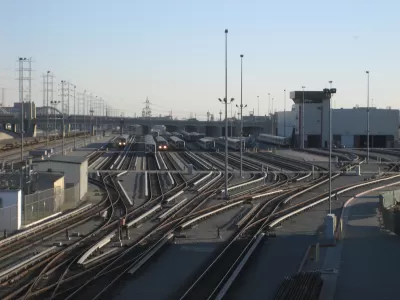
Infrastructure projects throughout the country are in limbo due to Trump's executive order barring jurisdictions that refuse to cooperate with federal immigration officials from receiving federal funds. In Politico, Tanya Snyder profiles a series of the projects that could be affected, and explores how cities are responding to the threat.
"Virtually all of the heavily Democratic urban areas declaring themselves ‘sanctuaries’ have accepted or are seeking hundreds of millions of federal dollars to advance major transportation projects," she notes.
Though billions of dollars' worth of infrastructure could be at stake, it's unclear what is going to happen next. There is not yet a list of specific cities or projects whose funding will be cut off. Nor does there appear to be a plan for distributing funds to regional bodies that might include sanctuary cities—like metropolitan planning organizations (MPOs), transit agencies, and airport or port authorities.
Withholding funds from major cities could also have serious regional impacts.
Considering that Boston, New York, Chicago, San Francisco, Los Angeles and Washington, D.C., have all declared themselves sanctuaries for undocumented immigrants, Trump’s reprisals could end up canceling or delaying major infrastructure projects in some of the nation’s most congested areas — even as the administration touts a $1 trillion proposal to rebuild the United States’ roads, railroads, bridges and airports.
FULL STORY: Trump’s ‘sanctuaries’ crackdown imperils transportation projects

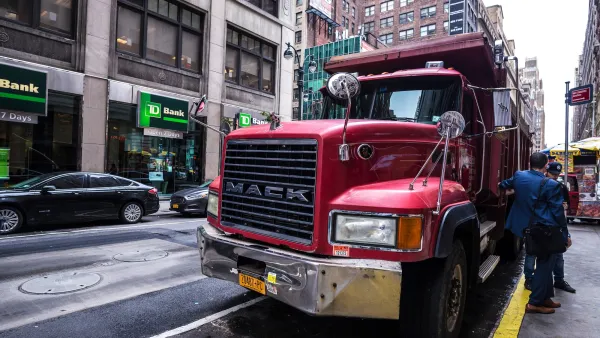
DOT withholds $73M from New York over immigrant trucking licenses
The Trump administration is requiring states to revoke the CDLs of non-domiciled drivers without proof of citizenship or risk losing federal funds.
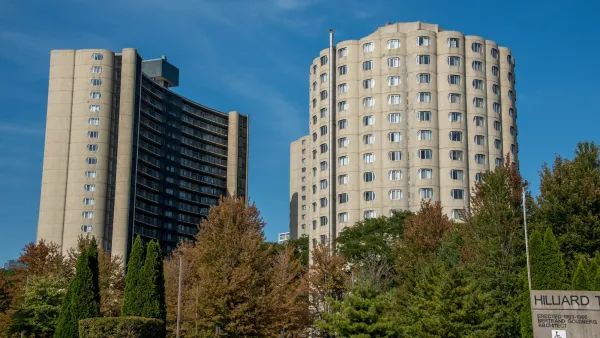
HUD Threatens Sanctions for Housing Authorities That Don’t Verify Resident Immigration Status
The Trump administration continues its crackdown on undocumented immigrants, claiming it is “rooting out abuse of taxpayer-funded resources.”
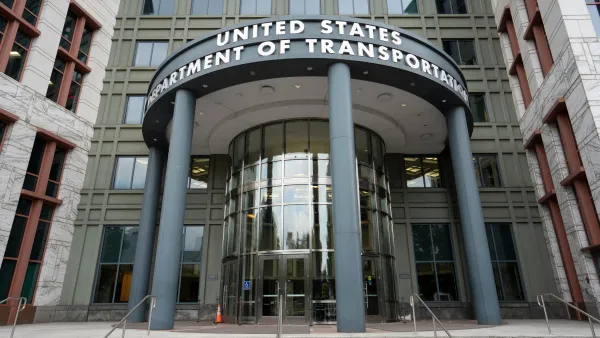
Federal Judge Rules Trump Can’t Tie Transportation Funding to Immigration Policy
The judge said the administration did not offer “any plausible connection” between transportation projects and immigration enforcement.

Planetizen Federal Action Tracker
A weekly monitor of how Trump’s orders and actions are impacting planners and planning in America.

The state-sanctioned urbicide of Austin
People don’t kill cities. Freeways do.

US to reduce Colorado River water deliveries to Mexico
A new Colorado Treaty amendment reduces Mexico’s Colorado River water allocation by 250,000 acre feet.

5 New England states march closer to 800 megawatt wind energy project
Securing federal approval for the project may be complicated under the Trump administration, which has historically been hostile towards domestic wind power.

Baltimore to break ground on $50 million Transit Priority Project
The project will bring faster bus trips, safer streets and better bike connections to Baltimore.

Airbnb launches $250 million 'last-dollar financing' housing accelerator, makes first investment in Austin
The company will put $6.4 million towards affordable housing development in Texas’ capital.

FREE Course: Walkable City 1: Why Walkability?
After describing his path towards focusing on walkability as the essence of good planning, Jeff Speck marches through his five principal reasons for making more walkable places.
Reinventing Malls: Planning Alchemy—Turning Gray Fields Into Gold
The course focuses on the opportunities and imperatives that shape reinvention of mall sites.

Eagle County Government
Harvard University Graduate School of Design
Nashville Planning Department
The Architects Foundation
University of Cincinnati Online
The Pocatello Development Authority
The Urban Renewal Agency of the City of Pocatello
Journal of the American Planning Association