Philadelphia City Council seeks ways to spur development without creating new traffic issues.


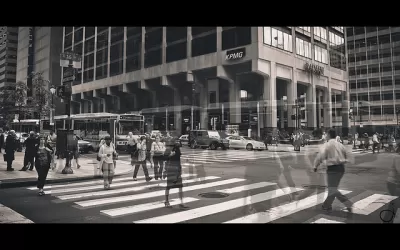
Philadelphia is considering allowing developers to build higher, more dense buildings with less parking in Transit-Oriented Development (TOD) zones, according to Jacob Adelman of the Philadelphia Inquirer. The city established TOD zones with an earlier ordinance, but this plan intends to streamline regulations for these developments and make them more "user friendly."
City Council members described the move as a win-win for the city, providing more residences without necessarily increasing the transit burden. While they have not designated which stations the city would target, some are already speculating. "The most natural locations for such zones would be around stations along the Broad Street Line and underground portions of the Market-Frankford Line, which offer the most ground-level space to develop, said Erick Guerra, an assistant professor at the University of Pennsylvania School of Design," Adelman reports.
Read the full story: Philly Council members propose plan to boost development near transit stops

How Effective are Philadelphia’s Keystone Opportunity Zones?
The impacts of a tax break designed to create jobs, stimulate development, and reduce blight are proving hard to track.
Affordable Housing Bonus Program Expanded in Philadelphia
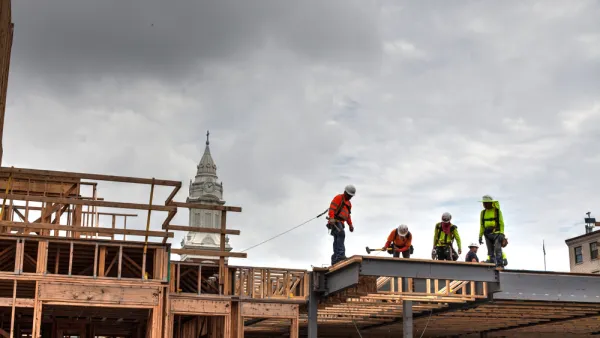
The city of Philadelphia launched a height and density bonus in 2018 to create incentives for the development of affordable housing, but so far the results have proven underwhelming.

Developers Rush to Build in Final Days of Philly's Tax Abatement
Neighborhoods that have been stubbornly resistant to investment for decades are suddenly the scene of waves of permitting activity as the city of Philadelphia prepares to tighten its tax abatement program.

Planetizen Federal Action Tracker
A weekly monitor of how Trump’s orders and actions are impacting planners and planning in America.

California plans to bury El Niño’s downpour
If the state plays its cards right, it may be able to store a billion acre-feet of El Niño’s water in aquifers.

Desperate measures: Advocates weigh draining Lake Powell to fill Colorado River
Draining the reservoir could reduce evaporation losses by a couple hundred thousand acre-feet.

Los Angeles just elected an urban planner as its mayor
Transportation analysts are optimistic that Raman will be more aggressive in addressing transit issues than Bass.

Mamdani’s pied-à-terre tax survives legal challenge
A panel of judges found that the plaintiffs failed to demonstrate injury as a result of New York City's implementation of the tax.

Eastern Nebraska is running out of electricity
Data centers and electrification are straining eastern Nebraska’s grid, throttling economic development.

FREE Course: Walkable City 1: Why Walkability?
After describing his path towards focusing on walkability as the essence of good planning, Jeff Speck marches through his five principal reasons for making more walkable places.
Reinventing Malls: Planning Alchemy—Turning Gray Fields Into Gold
The course focuses on the opportunities and imperatives that shape reinvention of mall sites.

City of Rosemead
Rutgers University, Edward J. Bloustein School of Planning and Public Policy
One Hundred Miles
University of Michigan School for Environment and Sustainability (SEAS)
Hunter College, City University of New York (CUNY)
The Architects Foundation
City of Cambridge
Montrose County
The Pocatello Development Authority