"Buses should be cool!" transit advocates continue to yell into an uncaring oblivion.



Stacy Thompson of the Livable Streets Alliance wants buses not to feel "second class." While there are functional ways to accomplish that goal, like bus lanes and protected bus lanes, she is also interested in changing attitudes, "…giving the humble bus an image makeover in hopes of boosting its popularity and, perhaps, its perceived status," writes Nicole Dungca in the Boston Globe.
This is not a new idea. Many transit advocates have made similar observations about the way buses may be hampered by their status. Happy City's description of the tall red buses of Bogota is as adoring as an Apple fan boy's review of the latest iPhone. How much "cool" is a factor of sizzle and how much cool has to do with actual functionality is an open question, but it's hard to make buses feel first class in cities where their schedules are irregular and where they move more slowly than traffic.
Read the full story: Can buses be cool? Transit advocates hope so

April must-reads: Top 10 articles from last month
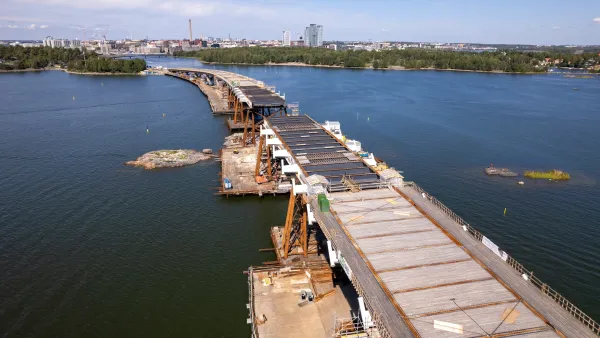
The world's longest car-free bridge opens in Finland, Amtrak's new Mardi Gras line shatters ridership predictions, and Bay Area commuters could lose a third of Caltrain stations.
How Global Cities Are Working to Electrify Transit
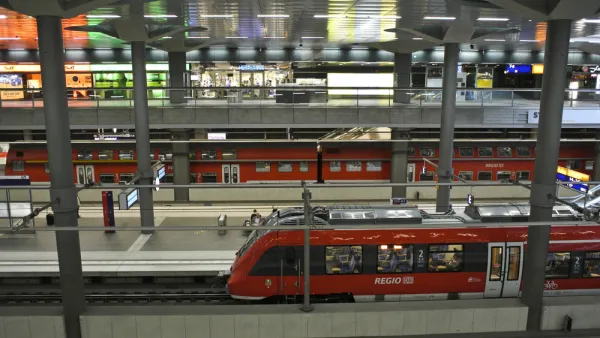
With the transportation sector accounting for a third of urban carbon emissions, cities around the world are seeking new ways to electrify their transit fleets and reduce fossil fuel consumption.
Bogotá Uses 7,000 Public Design Proposals to Redesign its Main Artery
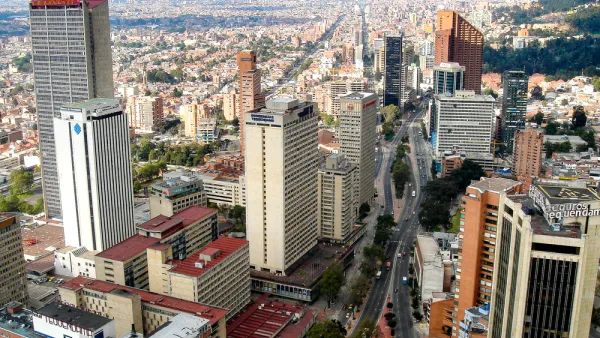
To reimagine the city's most important artery, Bogotá sought community input via an innovative online platform.

Planetizen Federal Action Tracker
A weekly monitor of how Trump’s orders and actions are impacting planners and planning in America.

Amtrak, CN end decades-long dispute with eight-year agreement
The new operating agreement establishes an updated framework for the companies to work together, including processes to resolve disputes.

Judges permit Denver to divert 77,000 acre feet from the Colorado River for reservoir expansion
Overuse and climate change have caused the Colorado River’s water levels to plummet.

NYC DOT wants faster, more permanent street upgrades
The city is examining ways to build more concrete infrastructure without getting entangled in 'decades-long' projects.

'Something we’ve never seen before:' rising utility rates could strain city finances nationwide
Data centers, climate change and other factors have caused utility rates in the United States to increase by 38% since 2020.

Trump to overrule local leaders, lease millions of acres of America’s Pacific Island territories’ seafloors to mining companies
International law says that the Indigenous people of America’s territories have a right to prior and informed consent regarding projects that impact their countries.

FREE Course: Walkable City 1: Why Walkability?
After describing his path towards focusing on walkability as the essence of good planning, Jeff Speck marches through his five principal reasons for making more walkable places.
Reinventing Malls: Planning Alchemy—Turning Gray Fields Into Gold
The course focuses on the opportunities and imperatives that shape reinvention of mall sites.

Harvard University Graduate School of Design
KFH Group Inc.
Greater Baltimore Committee
The Architects Foundation
University of Cincinnati Online
The Pocatello Development Authority
The Urban Renewal Agency of the City of Pocatello