One of the most enthusiastic advocates for the urban resurgence, Richard Florida turns his attention to the segregation, inequality, and housing shortages that threaten to tear cities apart in The New Urban Crisis.


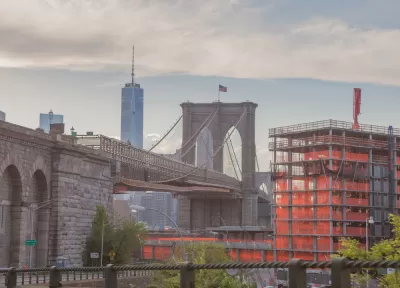
Richard Florida's latest book, The New Urban Crisis, comes out in April. Josh Stephens reviewed it for the California Planning & Development Report.
"The last great urban crisis – back in the 1960s and 1970s -- took place in plain sight. The Cuyahoga River caught fire. So did the Bronx. Downtown neighborhoods emptied out and then got torn down. What Florida realized is that the current crisis, while not nearly as grave as the last one, is profound in its own way. But it’s relatively invisible, hidden behind, and not nearly as exciting as, the prosperity of the past decade. He realized that 'the very same clustering force that drives economic and social progress also…. generates a lopsided, extremely unequal kind of urbanism. A relative handful of superstar cities…benefit while many other places stagnate.'"
"Florida fuses this data into what he calls the 'New Urban Crisis Index,' consisting of 'economic segregation, wage inequality, income inequality, and housing unaffordability.' The big winners/losers, are, in order: Los Angeles, New York City, San Francisco, San Diego, and Chicago."
"The New Urban Crisis lacks much of the dazzle that characterizes Florida’s earlier work — he’s like a Taylor Swift fan who just discovered Morrissey. Previously, Florida presaged, and encouraged, ebullient trends that hadn’t happened yet. This time, he’s describing depressing things of which many urbanites are all too aware. Whether Florida should have been aware of them — ahead of time — is the question that hangs over the book."
"If anything, the biggest mistake of Florida and other city boosters was to sell cities to creatives (and vice-versa) without fully impressing on creatives their obligation to be citizens."
Read the full story: Richard Florida's Reckoning: Review of The New Urban Crisis

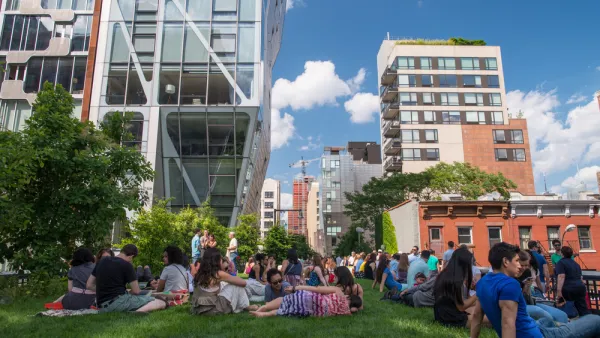
'The New Urban Crisis' and the High Line
A PBS NewsHour two-fer: an interview of urbanologist Richard Florida conducted in a walking tour of New York's famed High Line in the gentrifying West Chelsea neighborhood, a fitting backdrop for his new book, "The New Urban Crisis."
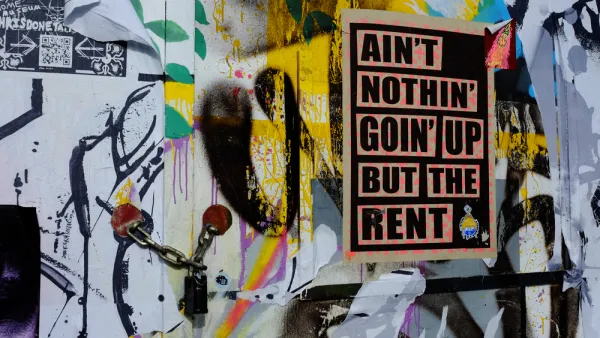
Florida, Florida, Florida
In his new book, Richard Florida worries about segregation and redefines "the creative class."
Florida Man Fails to Fix Everything, Reconsiders Position
Richard Florida was right about everything, except when he wasn't. Ben Brown brings us up to speed on the Creative Class.

Planetizen Federal Action Tracker
A weekly monitor of how Trump’s orders and actions are impacting planners and planning in America.

Amtrak, CN end decades-long dispute with eight-year agreement
The new operating agreement establishes an updated framework for the companies to work together, including processes to resolve disputes.

Northwest rail fans eager for Sept. 30 debut of Amtrak’s Airo fleet
Get ready for that new train smell and more seats. But they won’t go faster or run more frequently on the Cascades route in Washington and Oregon.

LAX SkyLink opening delayed again, contractor won’t commit to new deadline
The project was supposed to open its doors to the public in 2023.

Caltrain may slash over one-third of its stations
If Bay Area voters reject two transit tax measures, Caltrain, BART and AC Transit will see steep service cuts.

A 'dangerous' precedent: North Carolina successfully pressures communities into voting for toll roads
Two mayors resigned from the Charlotte Regional Transportation Planning Organization after it voted in favor of the toll roads.

FREE Course: Walkable City 1: Why Walkability?
After describing his path towards focusing on walkability as the essence of good planning, Jeff Speck marches through his five principal reasons for making more walkable places.
Reinventing Malls: Planning Alchemy—Turning Gray Fields Into Gold
The course focuses on the opportunities and imperatives that shape reinvention of mall sites.

City of Thousand Oaks
City of Wisconsin Rapids
Harvard University Graduate School of Design
The Architects Foundation
University of Cincinnati Online
The Pocatello Development Authority
The Urban Renewal Agency of the City of Pocatello