Few government programs are as misunderstood, with such high consequences, as public housing subsidies.


"A lot of Americans believe things about federally subsidized housing that simply aren’t true," according to the premise of a myth-busting article by Pete Rodrigue.
The article tackles five of the biggest myths about public housing and the people who live in it.
- Most public housing means big projects.
- Most housing assistance recipients don't have jobs, and they're all black.
- Subsidized housing generally lowers surrounding property values and increases crime.
- Housing subsidies worsen recipients' live.
- The middle class doesn't get these kinds of housing subsidies.
For each of these myths, Rodrigue presents multiple arguments for debunking the assumptions and falsehoods inherent in each.
Read the full story: Myths and misperceptions surrounding public housing and the people who live in it

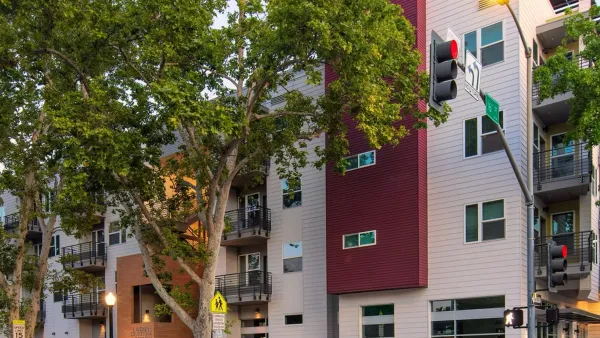
New Washington State Law Lets Cities Give Social Housing Developers City-owned Land
In its current form, HB 1687, which authorizes local governments to assist social housing agencies with land or other resources, only applies to Seattle.
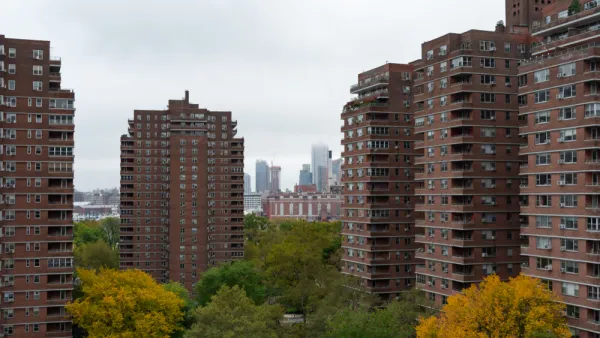
New York Residents Support Affordable Housing, Survey Says
Contrary to the dominant narrative about the negative perceptions of affordable housing projects among the public, a recent survey reveals widespread support for affordable housing in the New York-New Jersey-Connecticut metropolitan region.
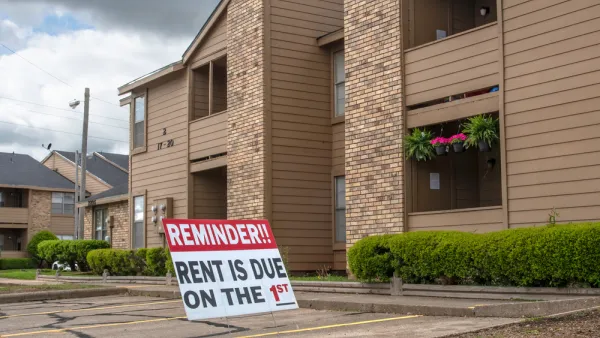
Federal Eviction Moratorium Expires This Week
The day that renters relying on public support to pay the bills have been dreading since March arrives tomorrow.

Planetizen Federal Action Tracker
A weekly monitor of how Trump’s orders and actions are impacting planners and planning in America.

Amtrak, CN end decades-long dispute with eight-year agreement
The new operating agreement establishes an updated framework for the companies to work together, including processes to resolve disputes.

Northwest rail fans eager for Sept. 30 debut of Amtrak’s Airo fleet
Get ready for that new train smell and more seats. But they won’t go faster or run more frequently on the Cascades route in Washington and Oregon.

Austin landlords only need to address mold when it covers 25 sqft. A resolution looks to change that
The city manager will propose updates to the city code regarding regulations around mold in May.

NYCHA’s green future? Officials open ‘showroom’ apartment with sustainable features
Heat pumps, inductions stoves and infrared heating panels: these are a few of the climate-friendly upgrades being installed at some public housing developments, with more to come, officials said Tuesday.

Newsom kills bill requiring polluting factories near schools to undergo environmental review
In his veto letter, Newsom wrote that protecting communities and strengthening manufacturing “were not mutually exclusive.”

FREE Course: Walkable City 1: Why Walkability?
After describing his path towards focusing on walkability as the essence of good planning, Jeff Speck marches through his five principal reasons for making more walkable places.
Reinventing Malls: Planning Alchemy—Turning Gray Fields Into Gold
The course focuses on the opportunities and imperatives that shape reinvention of mall sites.

.jpg)
City of Thousand Oaks
City of Wisconsin Rapids
Harvard University Graduate School of Design
The Architects Foundation
University of Cincinnati Online
The Pocatello Development Authority
The Urban Renewal Agency of the City of Pocatello