Facing backlash from hunting and angling groups, Utah Rep. Jason Chaffetz withdrew legislation that would have transferred millions of acres of federal lands to state governments in the West. But news wasn't good for other environmental bills.


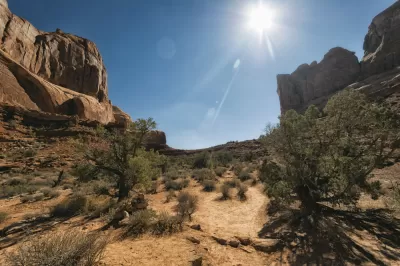
"Rep. Jason Chaffetz (R-Utah) withdrew legislation Thursday [Feb. 02] that would have transferred 3 million acres of land from federal to state ownership, citing objections from constituents who complained that the move would limit access to public hunting and fishing grounds," reports Juliet Eilperin for The Washington Post.
In addition to limiting access by the public, the land transfers would have affected the "$646bn each year in economic stimulus from recreation on public lands and 6.1m jobs," reported The Guardian (posted here) last month.
Chaffetz's change of mind may give encouragement to individuals and groups who have demonstrated against other proposed legislation.
"The Disposal of Excess Federal Lands Act [of 2017], which would have shifted federal holdings to state governments in Utah, Arizona, Colorado, Idaho, Montana, Nebraska, Nevada, New Mexico, Oregon and Wyoming, prompted an outcry among hunters and anglers’ groups," adds Eilperin.
Introduced three weeks after House Republicans enacted a rule change to make it easier to sell off federal land, the measure prompted two separate rallies in Santa Fe, N.M., and Helena, Mont., this week that drew hundreds of people opposed to the measure.
I am sensitive to the perceptions this bill creates in the current environment,” Chaffetz wrote in his letter to House Natural Resources Committee Chairman Rob Bishop (R-Utah).
Indeed! Backcountry Hunters & Anglers President and CEO Land Tawney offered the following response to the news:
“Representative Chaffetz should never have introduced this ill-conceived bill, but the instant and overwhelming response by sportsmen and women forced him to listen and ultimately abandon H.R. 621, which would have seized millions of acres of public lands. His fellow lawmakers should take note of the ire and rapid response by hunters and anglers. We aren’t going away.
However, the news may be more of the exception when it comes to legislation of interest to environmental and outdoors groups.
On Feb. 1, the House approved the repeal of the Stream Protection Rule using the Congressional Review Act. The Senate followed suit on Feb. 2.
"President Donald Trump is now poised to be the first president in 16 years to sign a regulatory repeal resolution," reports Bloomberg News.
It will be only the second rule overturned by the Congressional Review Act -- and for Republicans it’s just a start. They have a long queue of other rules they want to repeal the same way.
Hat tip to Mike Keenly.
Read the full story: Facing backlash, Utah Rep. Jason Chaffetz withdraws bill to transfer federal land to the states

Get Ready for a Wave of Federal Land Transfers in Western States
It's the antithesis of what former President Obama and his predecessors did when they gave federal lands and waters more protection. But don't blame Trump's executive actions for this one (not yet, anyway), as it's being proposed by Congress.
Energy and Environmental Regulations Under Attack—by Congress
Two environmental regulations enacted by the Obama Administration are expected to be rescinded under the Congressional Review Act: the Stream Protection Rule that protects water from mountaintop coal mining and limits on flaring methane emissions.
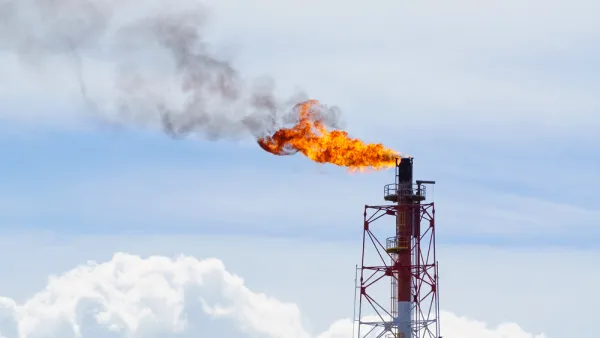
Congress Fails to Roll Back Obama-Era Methane Emissions Rule
Current events that have nothing to do with the environment but everything to do with politics might have caused the defeat of a bill to overturn an Obama-era rule designed to reduce methane emissions on federal lands.

‘Going backwards:’ Baltimore mayor, students rally against state's transit funding plan
Maryland's proposed six-year plan provides no funding for Baltimore’s BMORE bus program and reduces its road maintenance funding.

Detroit to transform waterfront with $2.2 billion investment
Developers will convert about 18 acres of unused parking lot space into civic spaces.

Mamdani sent nearly 6,000 pied-à-terre tax warnings to homes that didn’t qualify
A judge has ordered the administration to cancel thousands of pied-à-terre tax notices after it sent 35% of them erroneously.

25 states, cities sue the EPA over erased power plant emissions limits
The coalition also intends to sue the EPA for not regulating emissions from gas-fired power plants.

Newsom vetoes giving CA tribes greater voice in water projects
In his veto letter, Newsom said the bill would add ‘uncertainty’ to the state’s fight to secure Californians’ water supplies.

Michigan Senate votes to revise 'lax' dam safety laws
A Bridge Michigan investigation found more than 100,000 Michigan residents live in the floodpath of a high or significant-hazard dam.

FREE Course: Walkable City 1: Why Walkability?
After describing his path towards focusing on walkability as the essence of good planning, Jeff Speck marches through his five principal reasons for making more walkable places.
Reinventing Malls: Planning Alchemy—Turning Gray Fields Into Gold
The course focuses on the opportunities and imperatives that shape reinvention of mall sites.

City of Thousand Oaks
City of Wisconsin Rapids
Harvard University Graduate School of Design
The Architects Foundation
University of Cincinnati Online
Northern Illinois Transit Authority (NITA)
The Pocatello Development Authority
The Urban Renewal Agency of the City of Pocatello