Santa Monica is testing out a 'Tinder-like' application for approving or disapproving of developments.


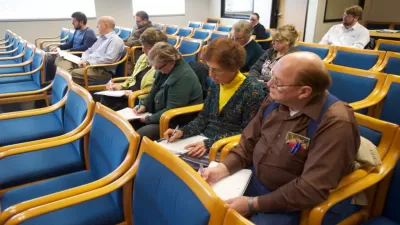
In an effort to lower the barrior to entry for participation in local planning, developers have created a mobile application called CitySwipe. "CitySwipe presents local residents with images of potential scenarios and simple yes/no questions, encouraging people to swipe through the options, as if assessing prospective partners," Oliver Wainwright writes for the Guardian. The program takes its basic mechanic from dating app Tinder. While some may complain that this approach dumbs down the process too much, others suggest that this process makes it easier to participate in debates that many would miss. "It makes the consultation process effortless, compared with the usual feedback mechanisms of filling in lengthy mailed-out response forms, downloading wordy PDFs, or being accosted by a chirpy volunteer with a clipboard," Wainwright writes.
Read the full story: Tinder for cities: how tech is making urban planning more inclusive
Planned Obsolescence for Denver Parking
Denver developers are building parking that can be converted into housing, anticipating radical changes that autonomous vehicles could bring to city life.

CA city to shut down airport, transform it into utopian park
The western side of the 200-acre park will feature a dog park, nature education center and arboretum.

Maryland county approves first agricultural use of composted human remains
Earth Funeral will grow a forest from human remains that have gone through a “natural organic reduction” process.

Planetizen Federal Action Tracker
A weekly monitor of how Trump’s orders and actions are impacting planners and planning in America.

California plans to bury El Niño’s downpour
If the state plays its cards right, it may be able to store a billion acre-feet of El Niño’s water in aquifers.

Desperate measures: Advocates weigh draining Lake Powell to fill Colorado River
Draining the reservoir could reduce evaporation losses by a couple hundred thousand acre-feet.

US buildings threatened, destroyed by fires set to triple by 2060
Researchers found a high fire risk for socioeconomically vulnerable neighborhoods in the American West.

LA residents may be allowed to paint their own crosswalks
Councilwoman Katy Yaroslavsky put out a motion instructing the Los Angeles Department of Public Transportation to study the feasibility of allowing volunteers to paint crosswalks.

Dallas moves to overhaul its zoning code
The city's zoning reform will allow more multi-family and mixed-use developments.

FREE Course: Walkable City 1: Why Walkability?
After describing his path towards focusing on walkability as the essence of good planning, Jeff Speck marches through his five principal reasons for making more walkable places.
Reinventing Malls: Planning Alchemy—Turning Gray Fields Into Gold
The course focuses on the opportunities and imperatives that shape reinvention of mall sites.

City of Rosemead
Rutgers University, Edward J. Bloustein School of Planning and Public Policy
One Hundred Miles
Hunter College, City University of New York (CUNY)
The Architects Foundation
University of Cincinnati Online
City of Cambridge
Montrose County
The Pocatello Development Authority