Denver developers are building parking that can be converted into housing, anticipating radical changes that autonomous vehicles could bring to city life.


In a forward-thinking move to anticipate some of the radical changes that could be coming from autonomous vehicles, Denver developers are building parking that can be converted into housing or retail. Their thinking, according to a story in the Denver Post by Emilie Rusch, is that as people switch to using autonomous vehicle services to drive them around, the need for personal vehicles will decrease dramatically and cities will be overstocked with parking.
Far from seeing this as the dreams of some far-fetched future, the development group, Denizen, has already started building for this eventuality. "The more than 700 above-ground parking spaces in the project’s first phase have been designed so they can be renovated into residential, office or retail space as future demand warrants," Rusch reports.
Thomas Fisher, Director of the Metropolitan Design Center at the University of Minnesota, hypothesizes that, "one shared autonomous vehicle, operating like today’s taxi or car-sharing services but without a human driver, could take as many as 11 conventional vehicles off the road." This vision of the future is more than academic in Denver; parking must be ready to be upgraded or, in some situations, it will be in violation of city code. "In Denver, the ground floor of stand-alone parking garages downtown are required to be suitable for conversion to an active, nonparking use in the future" according to City Planning and Development Supervisor Chris Gleissner.
Read the full story: Denver developers have seen the future of parking, and it is no parking at all

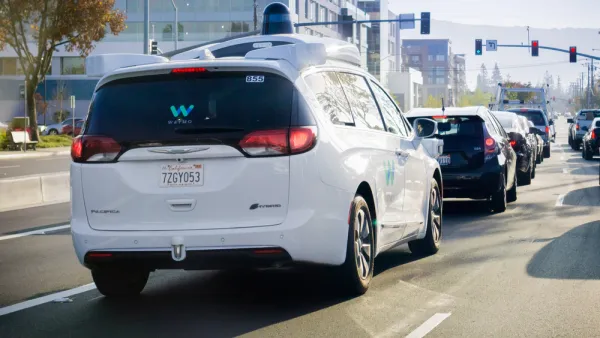
TEDx: How Will Autonomous Vehicles Transform Cities?
Nico Larco presents a TEDx Talk on the impacts AVs will have on cities, including impacts on land use, land valuation, and the environment. AVs are more than just a transportation issue, and planners need to prepare for the coming changes.
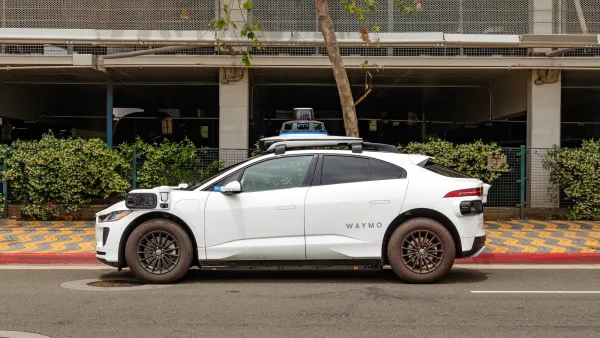
Austin Waymos rack up nearly $10k in parking tickets
The robotaxis have been cited for parking in tow zones and double parking, among other violations.

Denver mayor pushes for cheap downtown parking, says promoting transit is 'not our strategy'
The 'Mayor's Park $5' program encourages local businesses to reduce their parking prices to bring more people downtown.

Planetizen Federal Action Tracker
A weekly monitor of how Trump’s orders and actions are impacting planners and planning in America.

‘Going backwards:’ Baltimore mayor, students rally against state's transit funding plan
Maryland's proposed six-year plan provides no funding for Baltimore’s BMORE bus program and reduces its road maintenance funding.
Mamdani sent nearly 6,000 pied-à-terre tax warnings to homes that didn’t qualify
A judge has ordered the administration to cancel thousands of pied-à-terre tax notices after it sent 35% of them erroneously.

Alaska takes public comment on new long-term plan for roads, bridges and more
Alaska's draft Statewide Transportation Improvement Program includes over $1 billion for the Alaska Marine Highway System.

A Colorado neighborhood is the testing ground for the future of home energy
A start up may have found a way to quickly bring geothermal energy to new communities.

Mamdani sent nearly 6,000 pied-à-terre tax warnings to homes that didn’t qualify
A judge has ordered the administration to cancel thousands of pied-à-terre tax notices after it sent 35% of them erroneously.

FREE Course: Walkable City 1: Why Walkability?
After describing his path towards focusing on walkability as the essence of good planning, Jeff Speck marches through his five principal reasons for making more walkable places.
Reinventing Malls: Planning Alchemy—Turning Gray Fields Into Gold
The course focuses on the opportunities and imperatives that shape reinvention of mall sites.

City of Thousand Oaks
City of Wisconsin Rapids
Harvard University Graduate School of Design
The Architects Foundation
University of Cincinnati Online
Northern Illinois Transit Authority (NITA)
The Pocatello Development Authority
The Urban Renewal Agency of the City of Pocatello