In the wake of a deadly cold spell, Portland Mayor Ted Wheeler and the city's government searches for ways to protect the city's homeless.


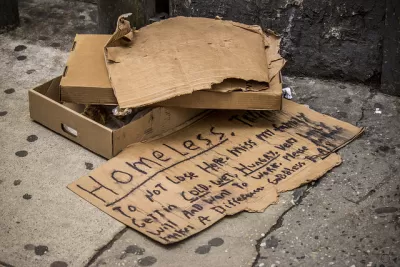
It's been a cold winter in Portland, and after four homeless people died during a cold snap, the city has been pushed into action. "These deaths rattled the residents of a city that — like Seattle — has seen its urban landscape defined not only by a burst of new construction, but a backdrop of tent cities and, each night, bedrolls unfurled in store entryways," reports Hal Bernton in the Seattle Times. Among other measures, government buildings have been converted into emergency shelters. "This was the first time The Portland Building — adorned by the massive copper Portlandia statue of a kneeling woman holding a trident — had ever welcomed the homeless," Bernton writes.
Mayor Ted Wheeler was sworn into office December 30, just before the deaths took place. "Homelessness was a big issue in the mayoral campaign, and Wheeler has proposed policies that include a push to increase shelter space and experimentation with clusters of tiny houses with running water and other amenities," Berton reports. The emergency shelters are now closed as temperatures have moderated, but many in the community hope the response is part of a lasting change to policy toward the homeless.
FULL STORY: Portland responds after 4 homeless people die in cold snap

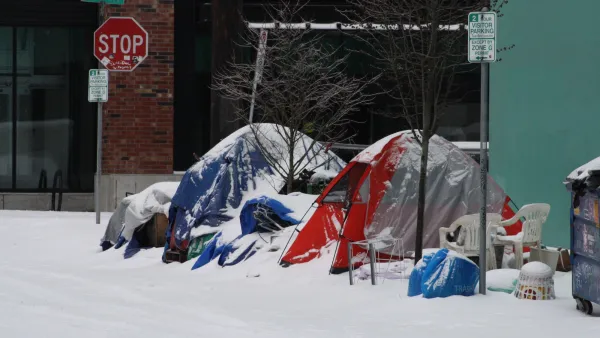
Portland Service Providers Say Mayor’s Methods for Ending Homelessness ‘Least Effective’
Experts say the mayor’s focus on overnight-only shelters fails to get people into long-term housing with the supportive services they need.
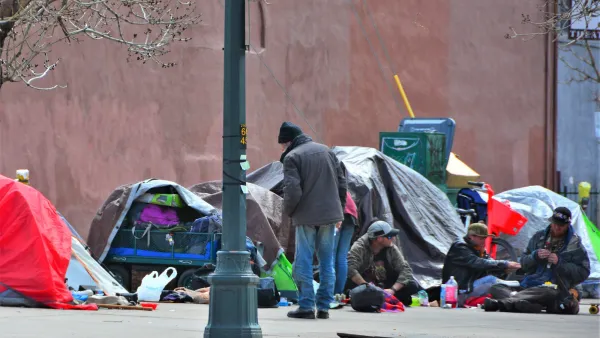
Denver Cut Unsheltered Homelessness Almost in Half Even as Unhoused Population Grows
While the total number of Denver residents without permanent housing is growing, the city has leveraged its resources to quickly create over 1,000 new emergency shelter beds.
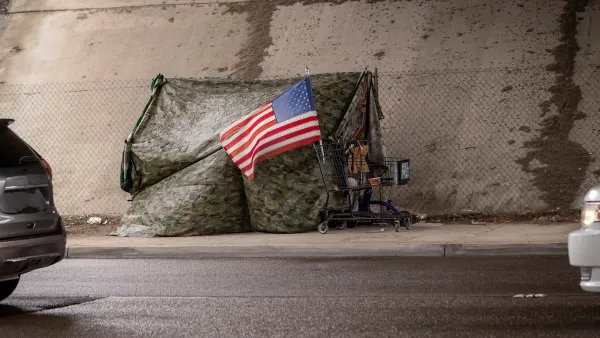
Investigation Reveals Just How Badly California’s Homeless Shelters are Failing
Fraud, violence, death, and chaos follow a billion dollar investment in a temporary solution that is proving ineffective.

Planetizen Federal Action Tracker
A weekly monitor of how Trump’s orders and actions are impacting planners and planning in America.

The state-sanctioned urbicide of Austin
People don’t kill cities. Freeways do.

US to reduce Colorado River water deliveries to Mexico
A new Colorado Treaty amendment reduces Mexico’s Colorado River water allocation by 250,000 acre feet.

5 New England states march closer to 800 megawatt wind energy project
Securing federal approval for the project may be complicated under the Trump administration, which has historically been hostile towards domestic wind power.

Baltimore to break ground on $50 million Transit Priority Project
The project will bring faster bus trips, safer streets and better bike connections to Baltimore.

Airbnb launches $250 million 'last-dollar financing' housing accelerator, makes first investment in Austin
The company will put $6.4 million towards affordable housing development in Texas’ capital.

FREE Course: Walkable City 1: Why Walkability?
After describing his path towards focusing on walkability as the essence of good planning, Jeff Speck marches through his five principal reasons for making more walkable places.
Reinventing Malls: Planning Alchemy—Turning Gray Fields Into Gold
The course focuses on the opportunities and imperatives that shape reinvention of mall sites.

Eagle County Government
Harvard University Graduate School of Design
Nashville Planning Department
The Architects Foundation
University of Cincinnati Online
The Pocatello Development Authority
The Urban Renewal Agency of the City of Pocatello
Journal of the American Planning Association