Yeah, this is a weird one.


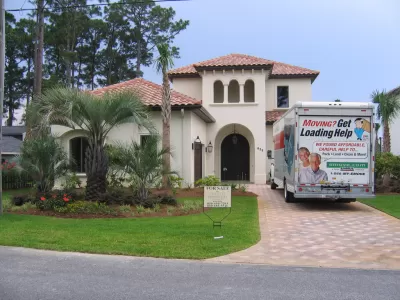
"Big or small, gravel or otherwise, see how your childhood driveway stacks up!"
So goes a satirical and surreal post for Clickhole (owned by Onion, Inc., the same The Onion that has been skewering planning and urbanism for years) that manages to satirize, in strange fashion, several aspects of modern life all once. There's the satire of Internet mediums and genres to be sure, but there's also the satire of suburban life.
Assumed in this article is the nagging American desire to live in a suburban home large enough to fit several large vehicles. Assumed also is that most Americans are aware of the status conferred by the symbols of suburban living.
So the post asks us to fill out a very strange survey to rate our childhood driveways, to find out if they were "strongly anti-communist," or they had "a ramp that would launch believers straight to heaven."
Read the full story: How Good Was Your Childhood Driveway?

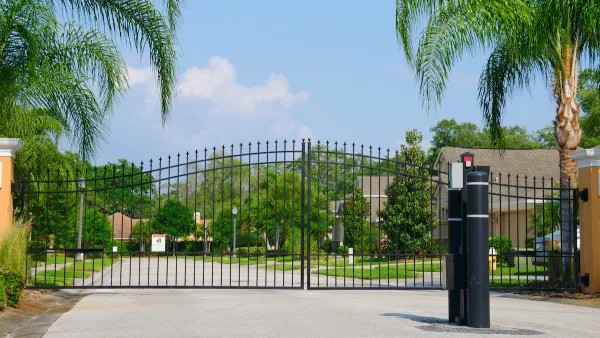
Friday Funny: Gated Community Doubles Down
The Onion skewers suburbia.
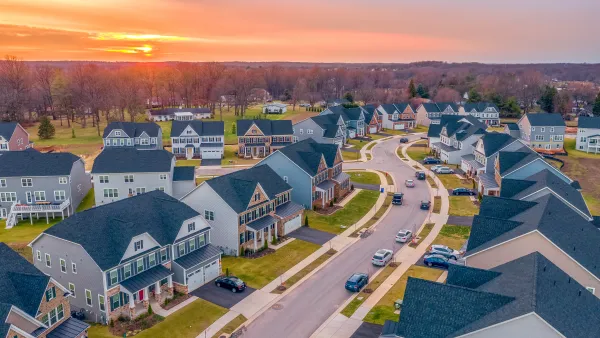
Remote Work and the Shift to Suburbia
Is the growth of working from home turning America into a ‘suburban nation?’

Friday Funny: How Much Parking Does That Parking Spot Need?
The Onion takes parking requirements to their logical conclusion.

Planetizen Federal Action Tracker
A weekly monitor of how Trump’s orders and actions are impacting planners and planning in America.

Amtrak, CN end decades-long dispute with eight-year agreement
The new operating agreement establishes an updated framework for the companies to work together, including processes to resolve disputes.

Colorado’s Largest Data Center Could Rise Next to Homes — Without a Public Hearing
The proposed campus would consume 11 times the power of Denver International Airport; as it has across the country, opposition mounts.

Despite court ruling, Trump is keeping nearly all wind projects in the US on hold
At least 110 wind energy projects have not heard from the government since a federal judge ruled that the Trump administration's freeze on wind turbine clearances was likely illegal.

Community feedback ushers in changes to NYC’s Park Avenue redesign
New aspects of the design include a two-way bike lane and separate paths for cyclists and pedestrians.

Road safety in Charlotte, NC, a 'public health crisis'
Twelve serious or fatal crashes happen in the region every week. Since 2021, over 900 people have been killed in accidents.

FREE Course: Walkable City 1: Why Walkability?
After describing his path towards focusing on walkability as the essence of good planning, Jeff Speck marches through his five principal reasons for making more walkable places.
Reinventing Malls: Planning Alchemy—Turning Gray Fields Into Gold
The course focuses on the opportunities and imperatives that shape reinvention of mall sites.

KFH Group Inc.
Greater Baltimore Committee
Eagle County Government
The Architects Foundation
University of Cincinnati Online
The Pocatello Development Authority
The Urban Renewal Agency of the City of Pocatello