If getting low interest rates from the federal government on money borrowed to finance transportation projects sounds like a national infrastructure bank, you're on the right track.


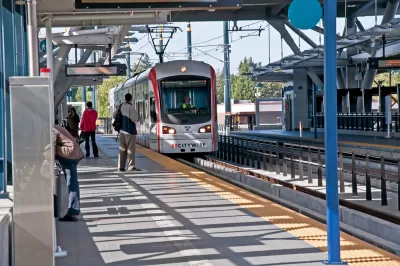
"The federal government signed an agreement Thursday that would allow Sound Transit to borrow $1.99 billion during the next few years at low interest rates to build 20 miles of light-rail extensions," reports Mike Lindblom.
The Master Credit Agreement, as the deal is called, is similar to a national infrastructure bank, explains Lindblom, "offering low rates and deferred repayment spread over 35 years." Sound Transit is the first signee on the Master Credit Agreement (MCA), which is administered by the Build America Bureau at the federal level. "Transportation Secretary Anthony Foxx is leveraging the pact for national publicity in hopes to encourage other regions to apply," adds Lindblom. A press release from the U.S. Department of Transportation has more details on the MCA with Sound Transit, and the potential of similar deals in other parts of the city.
With the agreement in place, "Sound Transit executives think they’ll save the equivalent of $200 million to $300 million worth of capital spending, and help make the vast construction plan recession-proof for several years."
FULL STORY: Feds agree to give Sound Transit $2 billion in low-interest loans for light rail

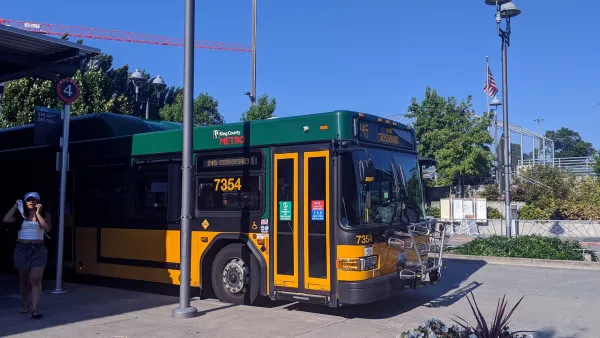
King County Metro adds 3,000 weekly bus trips, more connections to rail
King County Metro and Sound Transit are both making major adjustments to their bus networks to improve light rail connectivity across the region.
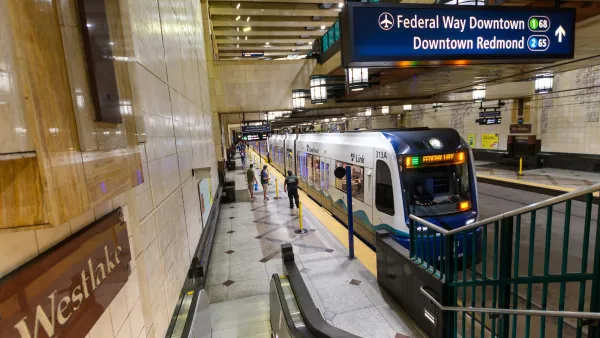
Commentary: Seattle's new transit wayfinding system is 'more confusing than clarifying'
Changes to Sound Transit signage could make it difficult to navigate the region's train system.
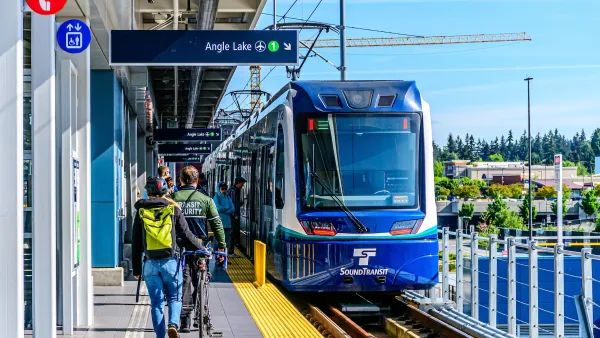
Sound Transit says train to Ballard is still coming
Agency officials say reports of the line's demise are exaggerated and that it remains in its plans.

Planetizen Federal Action Tracker
A weekly monitor of how Trump’s orders and actions are impacting planners and planning in America.

The state-sanctioned urbicide of Austin
People don’t kill cities. Freeways do.

US to reduce Colorado River water deliveries to Mexico
A new Colorado Treaty amendment reduces Mexico’s Colorado River water allocation by 250,000 acre feet.

5 New England states march closer to 800 megawatt wind energy project
Securing federal approval for the project may be complicated under the Trump administration, which has historically been hostile towards domestic wind power.

Baltimore to break ground on $50 million Transit Priority Project
The project will bring faster bus trips, safer streets and better bike connections to Baltimore.

Airbnb launches $250 million 'last-dollar financing' housing accelerator, makes first investment in Austin
The company will put $6.4 million towards affordable housing development in Texas’ capital.

FREE Course: Walkable City 1: Why Walkability?
After describing his path towards focusing on walkability as the essence of good planning, Jeff Speck marches through his five principal reasons for making more walkable places.
Reinventing Malls: Planning Alchemy—Turning Gray Fields Into Gold
The course focuses on the opportunities and imperatives that shape reinvention of mall sites.

Eagle County Government
Harvard University Graduate School of Design
Nashville Planning Department
The Architects Foundation
University of Cincinnati Online
The Pocatello Development Authority
The Urban Renewal Agency of the City of Pocatello
Journal of the American Planning Association