Portland's new inclusionary zoning policy will go into effect in February.



Elliot Njus reports: "The Portland City Council unanimously approved a citywide inclusionary zoning policy, requiring apartment and condo developers to set aside some units for low-income residents."
"The policy will require developments with 20 or more units to set aside 20 percent of those units for households making less than 80 percent of the median family income, which in 2016 was $58,650 for a family of four," adds Njus to describe the details of the city's inclusionary zoning policy.
The city's approval of the policy was somewhat expected, since the state had to clear the way for the city's action by passing legislation allowing local municipalities to approve inclusionary zoning legislation. Interestingly, the city of Portland is the first city in Oregon to approve inclusionary zoning, despite criticism from some prominent voices in the urbanism conversation, but not the first city named Portland to approve such a policy. Portland, Maine approved an inclusionary zoning policy in 2015.
FULL STORY: Portland City Council unanimously approves inclusionary zoning program


Portland's Inclusionary Zoning Effect Measured, Criticized
It's been over four years since the city of Portland implemented an inclusionary zoning policy that required all new apartment developments to set aside a portion of units for low- and moderate-income housing.
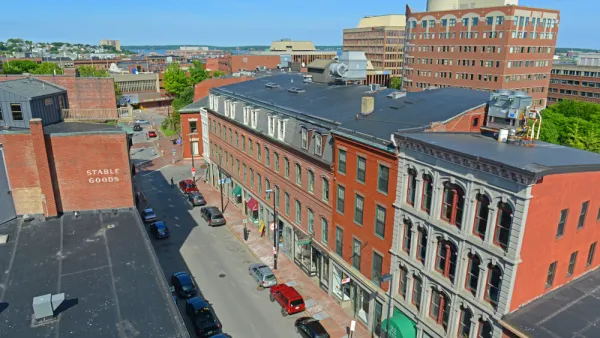
Inclusionary Zoning to Fund Workforce Housing, But for Hotel Developments
A new law in Portland, Maine could be the first to charge an affordable housing fee from new hotel developments.

Property Tax Exemption for Affordable Units Under Consideration in Portland
The proposed property tax exemption in Portland would be from the "carrot" school of affordable housing incentives.

Planetizen Federal Action Tracker
A weekly monitor of how Trump’s orders and actions are impacting planners and planning in America.

The state-sanctioned urbicide of Austin
People don’t kill cities. Freeways do.

US to reduce Colorado River water deliveries to Mexico
A new Colorado Treaty amendment reduces Mexico’s Colorado River water allocation by 250,000 acre feet.

Baltimore to break ground on $50 million Transit Priority Project
The project will bring faster bus trips, safer streets and better bike connections to Baltimore.

Airbnb launches $250 million 'last-dollar financing' housing accelerator, makes first investment in Austin
The company will put $6.4 million towards affordable housing development in Texas’ capital.

Guerilla urbanists are building DIY bus stop benches in Chicago
A before-and-after of one of the bus stops with a new bench. The new benches are not officially sanctioned or permitted, but the residents who placed them hope they will be the start of a network of DIY benches across the city.

FREE Course: Walkable City 1: Why Walkability?
After describing his path towards focusing on walkability as the essence of good planning, Jeff Speck marches through his five principal reasons for making more walkable places.
Reinventing Malls: Planning Alchemy—Turning Gray Fields Into Gold
The course focuses on the opportunities and imperatives that shape reinvention of mall sites.

Eagle County Government
Harvard University Graduate School of Design
Nashville Planning Department
The Architects Foundation
University of Cincinnati Online
The Pocatello Development Authority
The Urban Renewal Agency of the City of Pocatello
Journal of the American Planning Association