The future of transportation network companies is far from settled. While influential in the popular consciousness, companies like Uber haven't figured out how to make money.


Eric Newcomer reports on the "eye-popping" losses for Uber.
In the first nine months of this year, the ride-hailing company lost significantly more than $2.2 billion, according to a person familiar with the matter. In the third quarter, Uber lost more than $800 million, not including its Chinese operation.
A small silver lining for the company, according to an anonymous source reported in the story, is that the company has continued to grow its revenue—$3.76 billion in net revenue in the first nine months of the year, toward an expected $5.5 billion for the year.
According to Newcomer, 2016 was marked by the company's decision to leave China. The most recent bad news cycle came as the company rolled out self-driving cars to the streets of San Francisco without any regulatory clearance. On the first day of operations, one of Uber's self-driving cars failed to stop at a red light.
Read the full story: Photographer: ChinaFotoPress via Getty Images Uber's Loss Exceeds $800 Million in Third Quarter on $1.7 Billion in Net Revenue
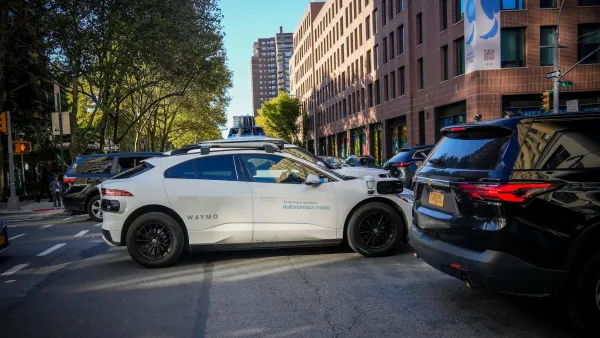
Uber says more Waymos are good for Uber too
The company believes robotaxis are spurring growth in the ride-hailing sector as a whole.

New Uber Feature Lets Riders Request Women Drivers — and Vice Versa
The feature debuted in Saudi Arabia in 2019 and is now available in 41 countries where Uber operates.
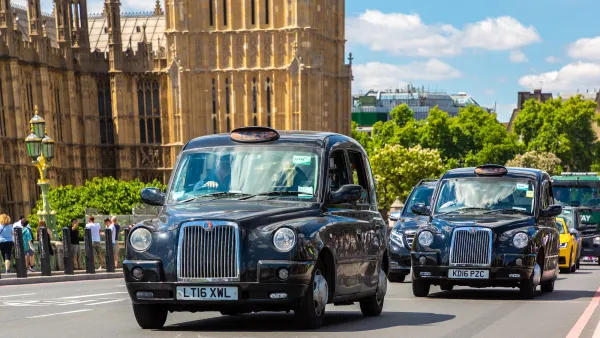
Can Robotaxis Handle London's Famously Tangled Streets?
Black Cab drivers say autonomous cars won’t be able to handle London’s unique conditions.

Planetizen Federal Action Tracker
A weekly monitor of how Trump’s orders and actions are impacting planners and planning in America.

Eastern Nebraska is running out of electricity
Data centers and electrification are straining eastern Nebraska’s grid, throttling economic development.

Move over, LA: St. Louis gears up for Olympics, invests millions in downtown redevelopment
The Missouri city will host the 2028 Olympic soccer group stage and knockout matches.

Dallas releases zoning code overhaul to officials
The drafted overhaul is over 400 pages long.

NYC renovations for dangerous, ‘mercilessly crammed’ street delayed until 2027
Construction was supposed to begin this fall.

San Diego’s Midway Rising project gets greenlight from city council
The project looks to become the largest affordable housing development in California's history.

FREE Course: Walkable City 1: Why Walkability?
After describing his path towards focusing on walkability as the essence of good planning, Jeff Speck marches through his five principal reasons for making more walkable places.
Reinventing Malls: Planning Alchemy—Turning Gray Fields Into Gold
The course focuses on the opportunities and imperatives that shape reinvention of mall sites.

City of Rosemead
Rutgers University, Edward J. Bloustein School of Planning and Public Policy
One Hundred Miles
University of Michigan School for Environment and Sustainability (SEAS)
Hunter College, City University of New York (CUNY)
The Architects Foundation
City of Cambridge
The Pocatello Development Authority
The Urban Renewal Agency of the City of Pocatello