Baltimore's still-new bike share system is off to a strong start, running 40 percent of its fleet on small electric motors.


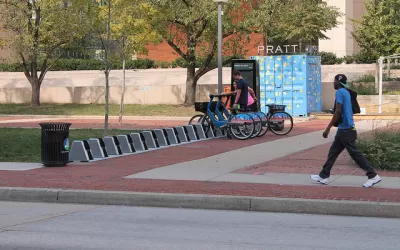
"A month ago, Baltimore got its first bikeshare system, Bmorebikeshare, and ridership is already high," according to an article by Jeff La Noue. "Forty percent of the fleet is made up of electric bikes that make it easier to go up hills, and as the system expands people are likely to want more of those."
The system has already facilitated nearly 6,000 rides on 175 bikes spread around 22 stations. The system is unique among bikeshare systems in U.S. cities thanks to its peerless number of e-bikes. In Baltimore's case, the e-bike employs "technology known as pedal-assist-technology, or pedelec." After giving the pedelec bikes a positive review, La Noue examines the question of whether its feasible to expand the existing fleet of e-bikes. Surprisingly, the pedelec technology only adds $300 to the normal $1,000 price tag for a bikeshare bike. That reasonable cost makes it easier to imagine attracting enough new riders to make the extra cost pay for itself in the long run, according to the article.
Read the full story: Baltimore just got bikeshare, and lots of its bikes are electric

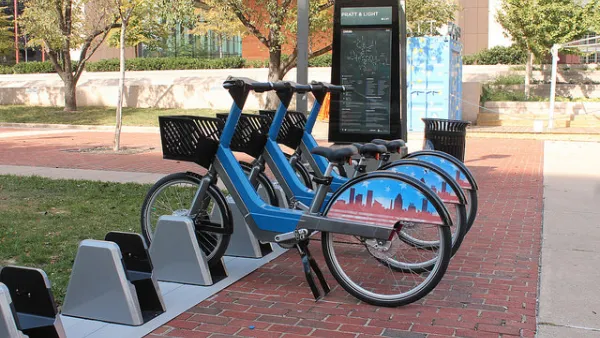
Bikeshare Launches in Baltimore
It took six years and two returns from the dead, but Baltimore now has its own bike share system.
Baltimore Approves Bikeshare System (E-Bikes Included)
The newly approved Charm City bikeshare system has a leg up on the competition: 200 of the system's 500 bikes will come with electric pedaling assistance.
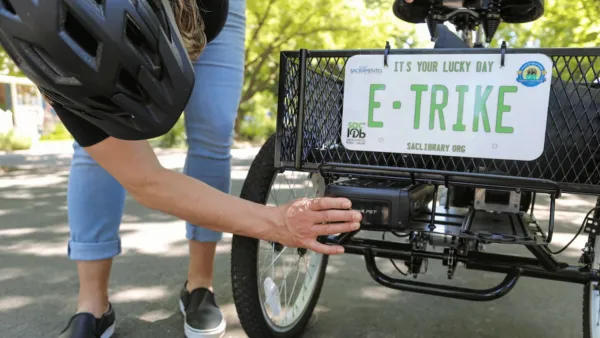
Bicycles and Books — In Sacramento, Libraries Now Offer Both
Adult library card holders can check out e-bikes and e-trikes for up to one week.

Planetizen Federal Action Tracker
A weekly monitor of how Trump’s orders and actions are impacting planners and planning in America.

Amtrak, CN end decades-long dispute with eight-year agreement
The new operating agreement establishes an updated framework for the companies to work together, including processes to resolve disputes.

Judges permit Denver to divert 77,000 acre feet from the Colorado River for reservoir expansion
Overuse and climate change have caused the Colorado River’s water levels to plummet.

NYC DOT wants faster, more permanent street upgrades
The city is examining ways to build more concrete infrastructure without getting entangled in 'decades-long' projects.

'Something we’ve never seen before:' rising utility rates could strain city finances nationwide
Data centers, climate change and other factors have caused utility rates in the United States to increase by 38% since 2020.

Trump to overrule local leaders, lease millions of acres of America’s Pacific Island territories’ seafloors to mining companies
International law says that the Indigenous people of America’s territories have a right to prior and informed consent regarding projects that impact their countries.

FREE Course: Walkable City 1: Why Walkability?
After describing his path towards focusing on walkability as the essence of good planning, Jeff Speck marches through his five principal reasons for making more walkable places.
Reinventing Malls: Planning Alchemy—Turning Gray Fields Into Gold
The course focuses on the opportunities and imperatives that shape reinvention of mall sites.

Harvard University Graduate School of Design
KFH Group Inc.
Greater Baltimore Committee
The Architects Foundation
University of Cincinnati Online
The Pocatello Development Authority
The Urban Renewal Agency of the City of Pocatello