A motion in City Council would open the door to new protections for gentrifying areas.



A motion from Atlanta City Councilmember Keisha Lance Bottoms would have the city study the feasibility of implementing Displacement-Free Zones in neighborhoods impacted negatively by ongoing "revitalization" efforts.
Displacement-Free Zones—sometimes called Eviction-Free Zones—are packages of neighborhood-level laws and initiatives designed to mitigate the impacts of gentrification on longtime or low-income residents and business owners. A 2015 report from Governing placed Atlanta fifth on the list of gentrifying cities in the nation.
DFZs often cap increases on rent and property taxes for housing and small businesses. The designation is also used by activists to concentrate eviction-defense work in a strategic area. Cities including Washington, D.C., New York, Los Angles, San Francisco, Miami, Portland, and Cincinatti have considered or adopted DFZs in some neighborhoods.
If the motion passes, the Department of Planning and Community Development would have 120 days to provide its findings to the Atlanta City Council.
FULL STORY: Atlanta City Councilmember Keisha Lance Bottoms introduces legislation for Displacement Free Zones

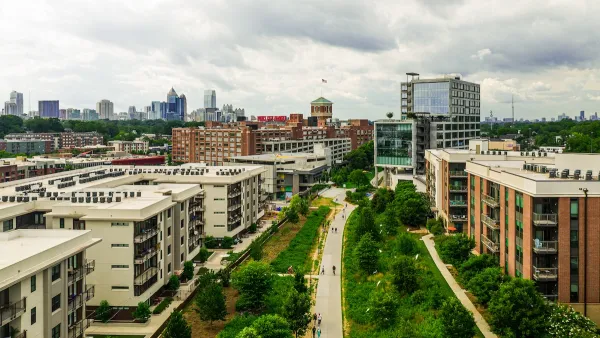
Beltline Surpasses Annual Affordable Housing Goal
The Atlanta Beltline agency is actively working to prevent the displacement of longtime residents along the trail system, where property values are rising rapidly.

Austin Employs Team to Help Residents Avoid Displacement
The city’s new Displacement Prevention Navigators will conduct outreach and assist with finding resources to help cost-burdened residents at risk of losing their housing stay in their homes.

How To Prevent ‘Green Gentrification’: Lessons from the BeltLine
For one author, the key is focusing on affordable housing from the start.

Planetizen Federal Action Tracker
A weekly monitor of how Trump’s orders and actions are impacting planners and planning in America.

The state-sanctioned urbicide of Austin
People don’t kill cities. Freeways do.

US to reduce Colorado River water deliveries to Mexico
A new Colorado Treaty amendment reduces Mexico’s Colorado River water allocation by 250,000 acre feet.

5 New England states march closer to 800 megawatt wind energy project
Securing federal approval for the project may be complicated under the Trump administration, which has historically been hostile towards domestic wind power.

Baltimore to break ground on $50 million Transit Priority Project
The project will bring faster bus trips, safer streets and better bike connections to Baltimore.

Airbnb launches $250 million 'last-dollar financing' housing accelerator, makes first investment in Austin
The company will put $6.4 million towards affordable housing development in Texas’ capital.

FREE Course: Walkable City 1: Why Walkability?
After describing his path towards focusing on walkability as the essence of good planning, Jeff Speck marches through his five principal reasons for making more walkable places.
Reinventing Malls: Planning Alchemy—Turning Gray Fields Into Gold
The course focuses on the opportunities and imperatives that shape reinvention of mall sites.

Eagle County Government
Harvard University Graduate School of Design
Nashville Planning Department
The Architects Foundation
University of Cincinnati Online
The Pocatello Development Authority
The Urban Renewal Agency of the City of Pocatello
Journal of the American Planning Association