New research finds that as more distracted drivers take the road, protected bike lanes are keeping bikers alive.


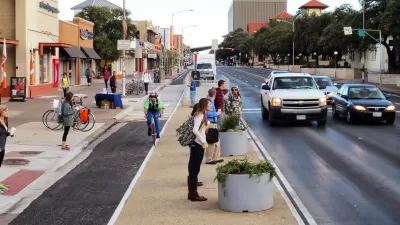
According to recent studies, bike infrastructure makes bikers safer. David Dudley writes in CityLab, "The transformative virtues of protected bike lanes have been the focus of much research lately. A 2014 study from Portland State University determined that segregated bike paths are not only demonstrably safer for riders, they have the power to lure lapsed riders back aboard their bikes." Moving travelers to these protected lanes is a double public health benefit as it brings more people to the physical act of biking and makes those rides safer.
Improvements to bike safety are on the minds of many, after a deadly start to 2016, "In the first six months of 2016, fatalities rose more than 10 percent from 2015, a reversal of a four-decade-long trend," Dudley reports. The streets are becoming more dangerous because of a rise in distracted driving and with a more dangerous driving public, design fixes to transit dangers become all the more important.
Read the full story: Why Protected Bike Lanes Save Lives
Complete Streets Policies Still Seeking Equity
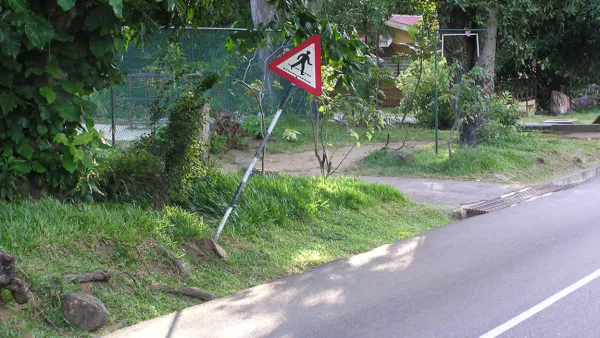
Though the quick expansion of complete streets policies is worth celebrating, minority and low-income communities are still being left behind, and killed at a disproportionate rate.
Op-ed: True bike safety requires more than the 'Dutch reach'
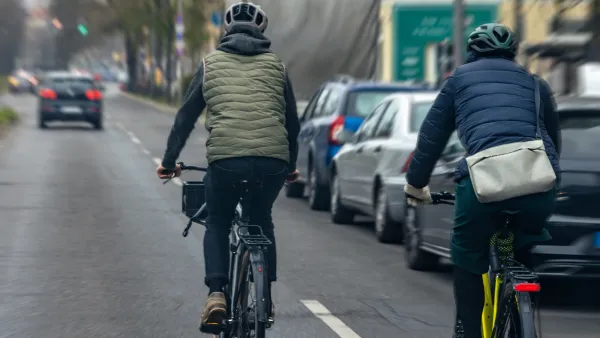
Making roads safe for all users takes policy and cultural changes that go beyond small behavioral interventions.
Cleveland to Boost Bike Safety With New Bike Lanes, School Programs
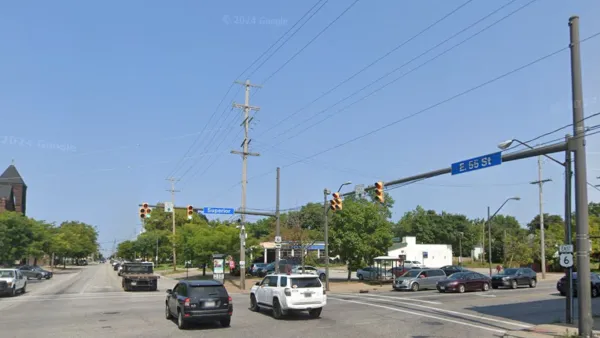
The program, using curriculum created by Cleveland Bikes, is part of a broader effort to improve safety along school routes.

Planetizen Federal Action Tracker
A weekly monitor of how Trump’s orders and actions are impacting planners and planning in America.

Washington state to charge fee to drivers with fuel-efficient cars
Revenue from the fee will go towards supporting the state’s highways.

Illinois considers spending $1 billion in taxpayer money on data center
A quantum computing campus and data center are currently under construction in Chicago.

People Mover delayed again, LAX and contractor trade barbs
The automated train was last slated to open in January 2027.

Trump to blast ‘hydrocarbon highway’ through ‘world’s longest art gallery’
Environmental and historic preservation groups are suing to stop the project.

25 states cast bids to be the home of U.S. Space Academy
The academy will train scientists, officers and astronauts for the U.S. Space Force.

FREE Course: Walkable City 1: Why Walkability?
After describing his path towards focusing on walkability as the essence of good planning, Jeff Speck marches through his five principal reasons for making more walkable places.
Reinventing Malls: Planning Alchemy—Turning Gray Fields Into Gold
The course focuses on the opportunities and imperatives that shape reinvention of mall sites.

City of Charlotte
City of Rosemead
Rutgers University, Edward J. Bloustein School of Planning and Public Policy
University of Michigan School for Environment and Sustainability (SEAS)
Hunter College, City University of New York (CUNY)
The Architects Foundation
University District Partnership