With the construction of a new community center and housing, Philadelphia's Chinatown sees a more secure future for the historic neighborhood


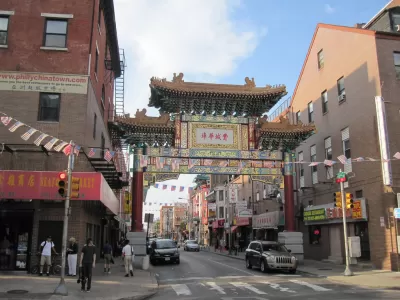
While economic forces have decimated some neighborhoods, forcing displacement of existing residents, Philadelphia's Chinatown has so far resisted significant changes. The neighborhood is getting additional stability thanks to the construction of the Eastern Tower, a new apartment complex that includes a community center - the first for the neighborhood.
Jared Brey of Philadelphia Magazine reports that the funding for the Eastern Tower comes from the same program that is helping to build the elevated park soon to take over the Reading Viaduct which runs adjacent to the neighborhood. The Eastern Tower has the potential to blunt some of the potential gentrification pressures created by the new elevated park; anchoring the neighborhood.
The streets and sidewalks are currently the only community spaces in Chinatown. The Eastern Tower will give residents their first recreation center, with space for the Philadelphia Suns, a youth basketball and lion-dancing group. Yeung hopes it gets people to cross the expressway more often, and goes a small way toward mending that open wound.
But the project is more than just housing and community space. It’s not hard to imagine the neighborhood north of the expressway taking on a new name in a few years — Viaductland, maybe, or Rail Park Place. As much as any neighborhood in Philly, Chinatown has had to fight for its right to exist. Refusing to allow the expressway to be its permanent boundary is a credit to its perseverance.
Read the full story: As Rail Park Rises, Chinatown Tries to Stay Chinatown

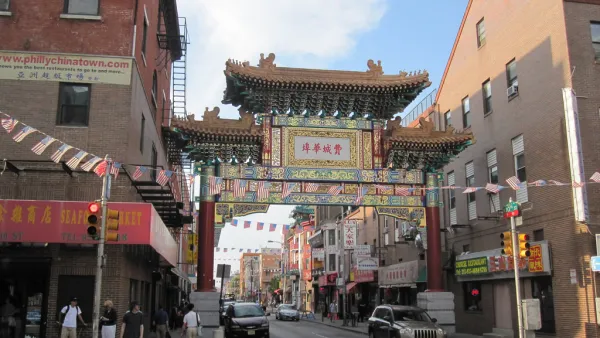
Equitable Development Plan Aims To Protect Philly's Chinatown
As the historic neighborhood experiences increased redevelopment around the new Rail Park, community activists are working to ensure older residents and businesses aren't displaced in the process.
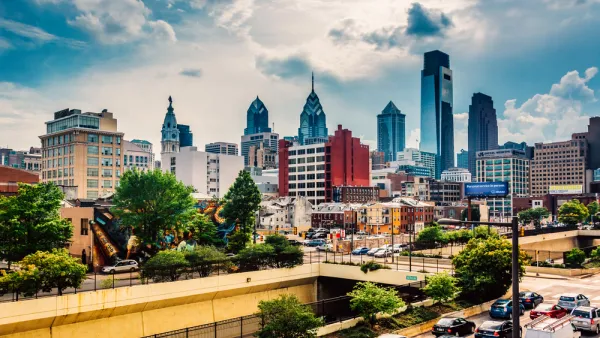
Working to Avoid the Pitfalls of the High Line
A highly anticipated linear park project in Philadelphia will open this year. Planners and activists have been working in anticipation of increased pressure on the local housing market.
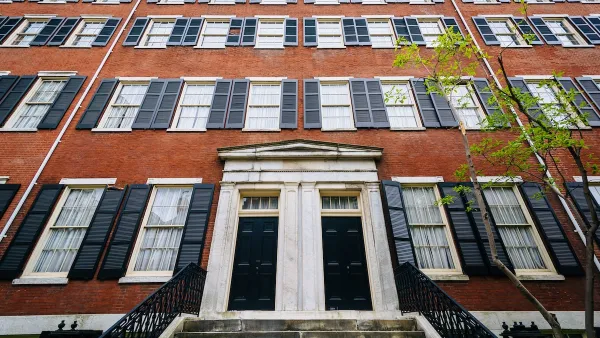
Philly Residents Push Back on New Historic Preservation District
Some residents of Philadelphia’s newly designated Washington Square West Historic District say the community was left out of the decision-making process that could impact housing costs and building requirements.

Planetizen Federal Action Tracker
A weekly monitor of how Trump’s orders and actions are impacting planners and planning in America.

Amtrak, CN end decades-long dispute with eight-year agreement
The new operating agreement establishes an updated framework for the companies to work together, including processes to resolve disputes.

Judges permit Denver to divert 77,000 acre feet from the Colorado River for reservoir expansion
Overuse and climate change have caused the Colorado River’s water levels to plummet.

NYC DOT wants faster, more permanent street upgrades
The city is examining ways to build more concrete infrastructure without getting entangled in 'decades-long' projects.

'Something we’ve never seen before:' rising utility rates could strain city finances nationwide
Data centers, climate change and other factors have caused utility rates in the United States to increase by 38% since 2020.

Trump to overrule local leaders, lease millions of acres of America’s Pacific Island territories’ seafloors to mining companies
International law says that the Indigenous people of America’s territories have a right to prior and informed consent regarding projects that impact their countries.

FREE Course: Walkable City 1: Why Walkability?
After describing his path towards focusing on walkability as the essence of good planning, Jeff Speck marches through his five principal reasons for making more walkable places.
Reinventing Malls: Planning Alchemy—Turning Gray Fields Into Gold
The course focuses on the opportunities and imperatives that shape reinvention of mall sites.

Harvard University Graduate School of Design
KFH Group Inc.
Greater Baltimore Committee
The Architects Foundation
University of Cincinnati Online
The Pocatello Development Authority
The Urban Renewal Agency of the City of Pocatello