Methane wells are the dirty little secret of greenhouse gas emissions. A new study says they're a bigger problem than previously recognized in the state of Pennsylvania.


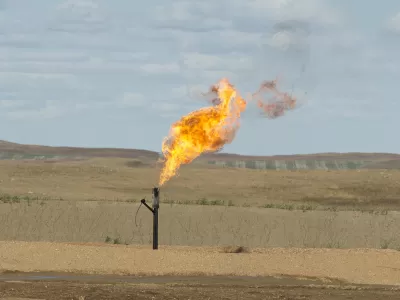
"Pennsylvania has more abandoned oil and gas wells than previously thought, and some are leaking large amounts of climate-damaging methane gas," reports Marie Cusick. Those findings come from a new study published by the Proceedings of the National Academy of Sciences.
Combining field observations with old books, literature, historical documents and modern databases, researchers from Stanford and Princeton estimate the number of abandoned well in the state of Pennsylvania between 470,000 and 750,000. Prior estimates had the number between 3000,000 and 500,000.
"The study found these abandoned wells collectively account for 5 to 8 percent of Pennsylvania’s annual man-made greenhouse gas emissions," writes Cusick to explain the significance of the increased number of wells. Wells are usually neglected by state and federal greenhouse gas inventories—thus emissions from wells are exacerbating an already large problem, and there's no mechanism to reduce their impacts.
Read the full story: Pennsylvania has more abandoned wells than expected, says new study

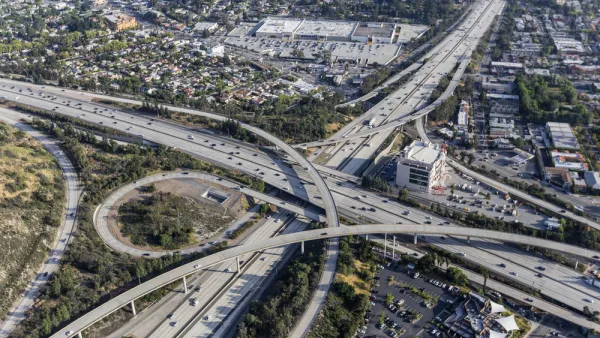
Report: Transportation Emissions Sully California's Environmental Reputation
There's good and bad news from an annual assessment on the Golden State's economy and environment. Gross domestic product per capita increases as emissions per capita decrease, with the major exception of emissions from transportation.
California Reaches Greenhouse Gas Emissions Target Four Years Ahead of Schedule
It is possible to achieve state-mandated global warming reduction goals after all. The nation's first such goal, signed into law by Republican governor Arnold Schwarzenegger in 2006, called for reducing emissions to 1990 levels by 2020.
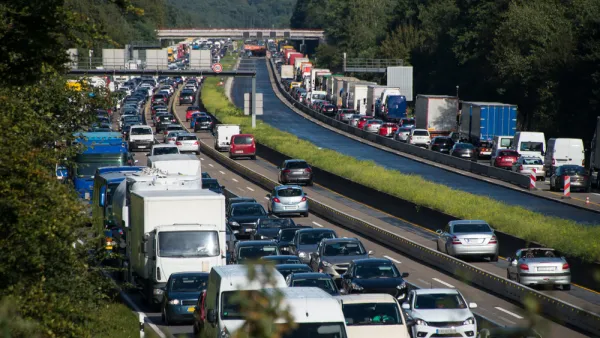
EPA Releases Draft Greenhouse Gas Inventory, 1990 to 2016
The inventory, a requirement from a 1992 U.N. treaty, shows emissions from most sectors are either decreasing or holding steady. The major exception: transportation.

Planetizen Federal Action Tracker
A weekly monitor of how Trump’s orders and actions are impacting planners and planning in America.

The state-sanctioned urbicide of Austin
People don’t kill cities. Freeways do.

US to reduce Colorado River water deliveries to Mexico
A new Colorado Treaty amendment reduces Mexico’s Colorado River water allocation by 250,000 acre feet.

Brightline West’s future may rely on $6 billion federal loan
The company has until Nov. 2 to make a $400 million equity investment into its proposed high-speed rail line.

LA Metro’s ultimatum: no extra buses for LA28 if federal funding isn’t imminently secured
If Metro does not provide additional buses, LA28 organizers will have to find a new way to manage Olympic traffic. LA28’s budget does not include a line item for transit.

Colorado’s Largest Data Center Could Rise Next to Homes — Without a Public Hearing
The proposed campus would consume 11 times the power of Denver International Airport; as it has across the country, opposition mounts.

FREE Course: Walkable City 1: Why Walkability?
After describing his path towards focusing on walkability as the essence of good planning, Jeff Speck marches through his five principal reasons for making more walkable places.
Reinventing Malls: Planning Alchemy—Turning Gray Fields Into Gold
The course focuses on the opportunities and imperatives that shape reinvention of mall sites.

Eagle County Government
Harvard University Graduate School of Design
Nashville Planning Department
The Architects Foundation
University of Cincinnati Online
The Pocatello Development Authority
The Urban Renewal Agency of the City of Pocatello
Journal of the American Planning Association