What will our cities look like in the year 2050?


In 2013, Arup created its own vision of the future: "It’s Alive" (a report published by Arup) depicted a high-rise building in the year 2050. The structure included features such as modular components assembled by robots, air-cleaning façades, and on-site food production. The illustration was envisioned as a tool to allow people to explore, imagine, and discuss. It was not intended as a prediction, but rather as a vehicle to contextualize the big trends shaping the future of the built environment, from robotics to climate change, by considering their possible impact on the future design, operation, and lived experience of buildings.
Read the full story: The future is fiction

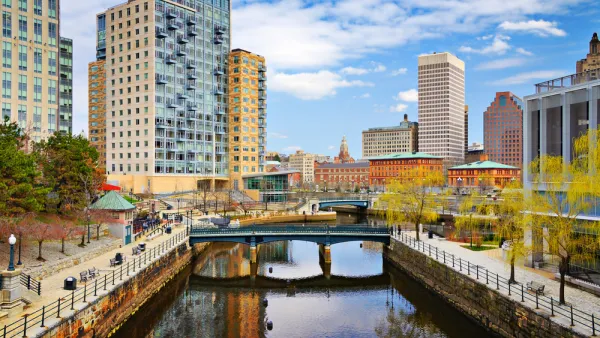
Providence Plans Ambitious Public Space Makeover
Take a virtual tour of the new public spaces proposed in the Providence Unified Vision Plan.

California's Push to Electrify Its Building Stock
Developers, environmentalists, and other experts discussed the challenge of achieving all-electric homes and businesses at VerdeXchange 2019.

Report: Walking to Work Pays Off for the Economy
A new report by Victoria Walks, an advocacy organization in Australia, quantifies the benefits of choosing to walk. The report also benefits the multiplier of the choice to invest in pedestrian infrastructure.

Planetizen Federal Action Tracker
A weekly monitor of how Trump’s orders and actions are impacting planners and planning in America.

‘Going backwards:’ Baltimore mayor, students rally against state's transit funding plan
Maryland's proposed six-year plan provides no funding for Baltimore’s BMORE bus program and reduces its road maintenance funding.

Detroit to transform waterfront with $2.2 billion investment
Developers will convert about 18 acres of unused parking lot space into civic spaces.

NYC building owners overwhelmingly comply with new emissions limits
The New York City Department of Buildings is fining owners who did not file emissions reports.

Trump-backed startup wants 9,000 acres of public land for data center
If approved, developers will build 456 small nuclear reactors on federally-owned land in Utah.

'Fertilization president' to reward areas with high birthrates more transit funding
The Federal Transit Association plans to cover up to 10% more of a transit project's costs if the community’s birth rates meet or exceed national thresholds.

FREE Course: Walkable City 1: Why Walkability?
After describing his path towards focusing on walkability as the essence of good planning, Jeff Speck marches through his five principal reasons for making more walkable places.
Reinventing Malls: Planning Alchemy—Turning Gray Fields Into Gold
The course focuses on the opportunities and imperatives that shape reinvention of mall sites.

City of Thousand Oaks
City of Wisconsin Rapids
Harvard University Graduate School of Design
The Architects Foundation
University of Cincinnati Online
Northern Illinois Transit Authority (NITA)
The Pocatello Development Authority
The Urban Renewal Agency of the City of Pocatello